
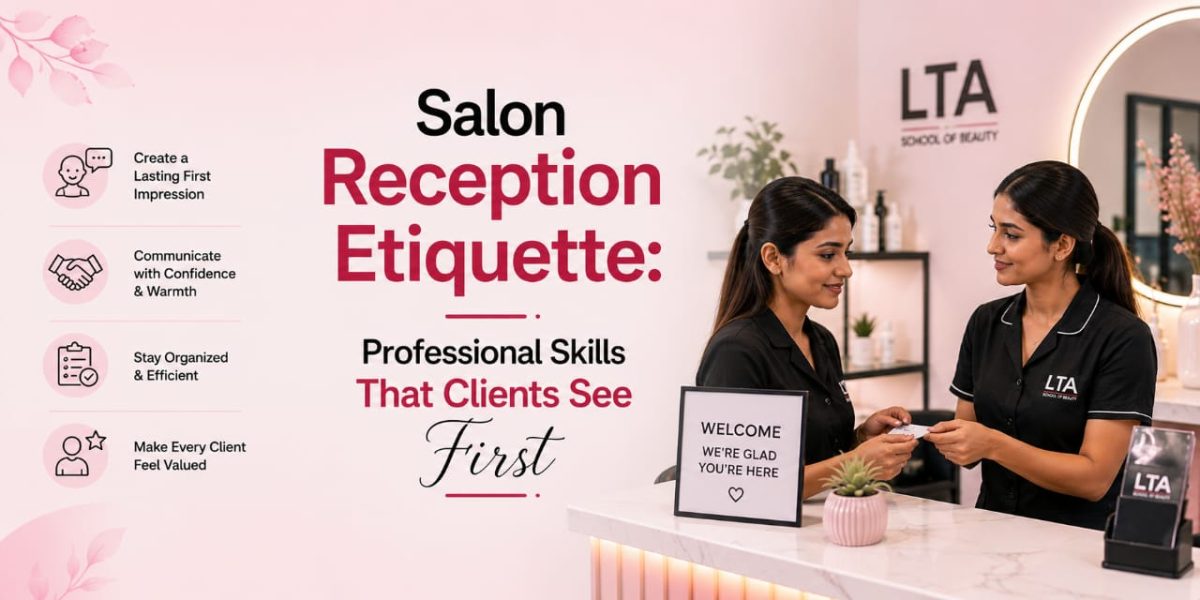
A client’s experience at a salon starts long before the consultation or service even begins. The moment a client starts developing the experience the moment they reach the salon reception desk. A warm welcome, a welcoming smile, and proper communication can set the perception of the salon in seconds. This is why salon reception etiquette is an essential skill for all beauty professionals and not just reception staff.
Whether you’re a hairstylist, a makeup artist, a beauty therapist, or a salon owner, knowing professional reception etiquette is equally important for all. It helps you make a positive first impression, build strong client relationships, and help with business’ long-term success.
Why Reception Etiquette is Important in the Beauty Industry
The first point of contact in a salon is the reception. It’s where a client forms a major chunk of impression about the salon’s professionalism, organisation, etiquette, and culture.
Clients today are observant. They see a lot more than good interiors. They deeply notice and care about whether they’re greeted properly and promptly, how warm or interested the receptionist is, how well appointments are handled, or how the staff behaves with each other.
Good reception etiquette reflects a lot of things that clients associate with overall high-quality services. It reflects respect, reliability, professionalism, and attention to detail.
How to Make a Good First Impression
Research shows that first impressions are formed very quickly and this is especially critical in service-based industries regarding the first interaction.
In a professional greeting you should include:
- Greet the client warmly and smile sincerely.
- Look at them. Acknowledge their arrival immediately.
- Addressing clients politely, preferably by name if an appointment has been booked.
- Show genuine interest in their appointment and refrain from one-word replies.
- Being helpful in a calm, friendly way.
- Maintaining the reception area in a clean, tidy and comfortable state.
Even during busy hours, clients should never feel neglected. “Welcome! I’ll be with you in just a minute.” A simple acknowledgement like this also reassures clients that you see them and you’ll be right with them.
Communication Skills to Build Client Confidence
Clear, respectful communication is one of the most useful professional skills in the beauty industry.
Reception staff, and often the beauty professionals themselves, should be confident but approachable in their communication. This includes:
- Confirming appointments accurately.
- Being upfront about wait times.
- Concise answers to service related questions.
- Using positive, courteous language.
- Listening attentively to client concerns before replying.
The words are as important as the tone of voice. When you talk about treatments or address concerns, a patient and professional tone makes clients feel valued. In no way they should be made to feel insecure about their appearance or unwanted in the salon through words or tone.
We also communicate effectively on the telephone, email and online bookings ensuring that our clients receive the same high standard of service whatever the contact.
Professional Behaviour Off the Front Desk
Reception etiquette does not end when the client is seated. Every interaction during the visit contributes to the experience.
Beauty professionals need to:
- Introduce themselves at the start of the consultation.
- Gently guide clients to the treatment area.
- Maintain professional grooming and hygiene
- Maintain client confidentiality and privacy.
- Do not disturb conversations with coworkers when you are with clients.
- Be mindful of how much you speak to the client.
- Do not be disrespectful or harsh about their features or looks.
Consistency is key. Clients expect professionalism from the minute they walk into the salon until the minute they walk out.
Simple gestures such as thanking clients for coming, confirming their next appointment and wishing them well leave a lasting positive impression.
Dealing with Tough Situations with Professionalism
Even the best-run salons sometimes encounter problems such as delayed appointments, scheduling errors or unhappy customers.
Professional etiquette is even more important during these situations.
Instead of getting defensive, beauty professionals should:
- Listen without interrupting.
- Show empathy for the client’s concern.
- When justified, make a genuine apology.
- Provide practical solutions where appropriate.
- Keep your cool and be respectful in your discussion.
Properly dealing with complaints usually builds client confidence, not destroys it. When clients believe their issues are taken seriously and handled fairly, they are more likely to come back.
How Reception Etiquette Helps Every Beauty Professional
Technical skill can yield beautiful results, but great service creates loyal clients. The reception manners reflect the professionalism that clients expect from modern beauty businesses.
For anyone looking to make a career in the beauty industry, developing customer service skills, in addition to technical training, can make a huge difference in employability and career advancement. Employers want professionals who can communicate well, interact confidently with clients, and help create a welcoming salon environment.
At LTA School of Beauty, students are trained with the fundamental abilities needed to excel in the workplace such as communication, consultation, client care and professional etiquette. This comprehensive strategy prepares graduates to deliver outstanding experiences that build trust, encourage repeat visits, and contribute to long-term success in the beauty industry.
Common Questions
1. What does salon reception etiquette mean?
Salon reception etiquette is the professional conduct, communication and customer service skills that will make clients feel welcome from the moment they walk into the salon.
2. Why is good reception etiquette important in the beauty salon?
Reception etiquette ensures that clients feel welcomed, respected and confident in the professionalism of the salon. It also leads to more satisfied clients, repeat business and positive word-of-mouth referrals.
3. Should reception etiquette be learned by beauty therapists?
Yes. Receptionists are often responsible for the front desk, but beauty therapists and hairstylists tend to have more interaction with clients before and after treatments. Professional etiquette is key throughout the client journey.
4. How can beauty professionals gain better skills in client service?
Beauty professionals are able to enhance their practice by employing active listening, straightforward communication, professional grooming, calm handling of concerns and ongoing development of customer service and consultation abilities through practical training and experience.