
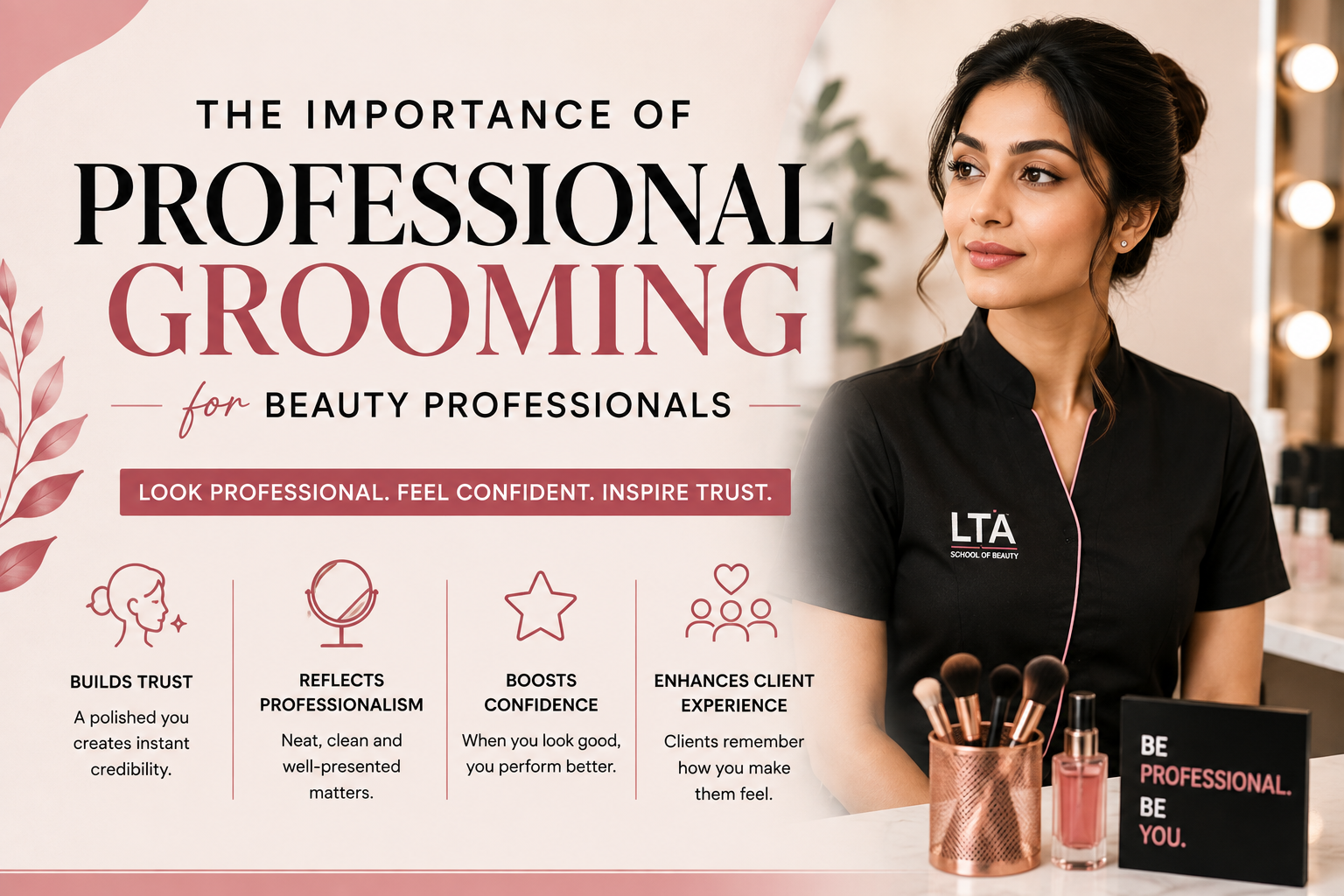
Imagine booking a facial with someone who has stained uniform, chipped nails and an untidy work station. Now imagine another therapist who is tidy, well-groomed and organised before you’ve even sat down. They may both have the same technical qualifications, but a client is more likely to feel comfortable with the second therapist. And, it all boils down to the professional grooming for beauty professionals.
In the beauty industry, professional grooming is not about unrealistic standards of beauty or being fashionable. It’s about projecting hygiene, attention to detail and professionalism. These are the qualities clients look for in the professional who’ll be trusted with their skin, hair or overall appearance.
As a beauty therapist, grooming is a major part of the service itself.
Professional Grooming Starts Before The First Chat
Psychologists say that people make first impressions within seconds of meeting someone. In service industries, such impressions often determine how clients perceive quality, competence, and trustworthiness.
What the beauty therapist looks like, quietly, answers some questions in the client’s mind:
- Is this professional detail orientated?
- Can I trust their standards of cleanliness?
- Will they handle treatments with care?
Clients rarely think about these questions consciously, but they affect comfort levels from the start.
Professional Grooming Practices for All Beauty Therapists
Getting professionally groomed isn’t about spending hours getting ready. It is about creating small habits that show consistency and respect for the client and the profession.
Here are a few essentials that every beauty therapist should practise:
- Wear a clean, well-fitting uniform each day. A clean, wrinkle-free uniform speaks volumes about professionalism and hygiene.
- Maintain hair neat and secured. Hair should be tied back or styled so that it does not get in the way of treatments or come into contact with clients.
- Keep your nails short and clean. Long nails, chipped polish or nail embellishments can be unsanitary and may get in the way of some beauty services.
- Opt for minimal jewellery. Rings, dangling earrings and bracelets can harbour bacteria, interfere with treatments or detract from a professional appearance.
- Take care of your personal hygiene. If you work very close to clients, looking well-groomed is just as important as fresh breath, clean hands and right use of deodorant.
- Wear discreet make-up and perfume. Makeup should enhance a polished look, not be the main attraction. Likewise, avoid heavy perfumes as some clients may be sensitive or allergic.
- Be aware of your posture and body language. The way you look is just as important to a professional appearance as good posture, eye contact, and a warm greeting.
The Little Details Clients Notice Right Away
Many students believe clients only see the dramatic. In fact, they often remember the smallest details.
For instance:
- Are your hands clean and moisturised before touching the client’s skin?
- Can they see your name tag?
- Is your uniform looking crisply ironed?
- Are your hair and nails clean and tidy?
- Do you have fresh breath for close contact services?
- Are your shoes tidy and suitable for a professional environment?
You don’t need expensive products or complicated routines for any of this. Instead, they are a reflection of readiness and reverence for the client experience.
These details may seem minor, but they accumulate to impact how clients view your professionalism.
Professional Grooming is a Habit, Not an Event
A lot of students spend some extra time on grooming before practical exams or job interviews. Veterans know grooming is a daily discipline.
You see it in preparing your uniform the night before, looking after your personal hygiene, replacing your worn-out workwear, keeping your workstation tidy and arriving ready to start the day with confidence.
While these practices may seem to be routine, they help to build the trust of your clients and your professionalism in the workplace.
Build Your Personal Brand Through Professional Presentation
Every time you interact with another person you are building your professional reputation. Clients remember how a therapist made them feel, and appearance is one of the ways they do that.
Over time, the association between regular grooming and dependability, professionalism and attention to detail has been cemented.
This is especially important for professionals who are aspiring to become salon managers, educators, entrepreneurs or independent beauty consultants. Personal presentation bleeds into their professional brand. It’s not about perfection. It’s consistency.
You want your clients to feel just as confident coming to see you for the first time as they do about the fiftieth time.
At LTA School of Beauty, grooming is not an afterthought, it is an integral part of professional practice and that is how students are trained to view it. They are taught workplace etiquette, hygiene protocols, client communication and presentation standards along with the technical education required for real salon environments and long-term career success.
Frequently Asked Question
Why is professional grooming important to beauty therapists?
Professional grooming builds client trust, shows high standards of hygiene and makes a good first impression. It also shows professionalism and attention to detail.
What are the minimum grooming standards for beauty therapists?
Standards include having good personal hygiene, wearing a clean uniform, having short and tidy nails, having hair tied back appropriately, not wearing strong fragrances and having a neat, professional appearance.
What is the impact of professional grooming on the client experience?
Clients often relate a therapist’s appearance to their professionalism. Good grooming helps to put clients at ease, make them feel confident and reassured even before treatment begins.
Does professional grooming only matter during job interviews?
No. Professional grooming is a daily routine in the workplace. Maintaining good appearance and hygiene standards at all times promotes client confidence, workplace safety and lays the foundation for long-term career growth.