
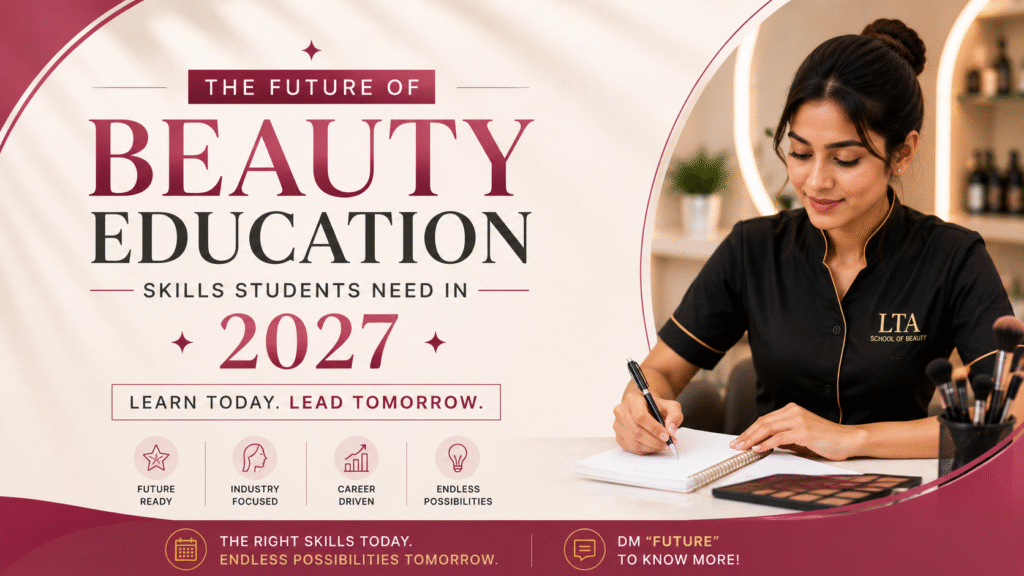
The beauty industry is evolving faster than ever. Discover the beauty skills that will define successful careers in 2027 and beyond.
A decade ago, a beauty professional’s success was largely measured by technical expertise. If you could perform a flawless facial, create a stunning bridal look, or deliver exceptional salon services, you were already ahead of the curve.
Today, the industry is changing—and quickly.
The beauty professional of 2027 will need much more than technical knowledge. Emerging technologies, evolving client expectations, global career opportunities, and changing workplace dynamics are reshaping what it means to succeed in beauty.
For students planning to enter the industry, the question is no longer “Which course should I take?” It’s “What beauty skills will employers and clients value in the future?”
The answer lies in developing a combination of technical expertise, digital confidence, business awareness, and global industry knowledge.
Beauty Education Is No Longer Just About Treatments
Traditionally, beauty education focused on practical services such as facials, makeup, hair, nails, and beauty therapy.
While these remain the foundation of the profession, today’s industry demands a broader skill set.
Modern beauty professionals are expected to understand:
- Client psychology
- Personal branding
- Digital communication
- Business fundamentals
- Global beauty trends
- Advanced technologies
In many ways, beauty education is becoming more holistic, preparing students not just for jobs but for long-term careers.
Advanced Skincare Knowledge Will Be Essential
Skincare continues to be one of the fastest-growing segments within the beauty and wellness industry.
Clients are becoming increasingly informed about ingredients, treatments, and skin conditions. They expect professionals to provide expert guidance rather than generic recommendations.
Future beauty professionals will need a strong understanding of:
- Skin anatomy and physiology
- Skin analysis
- Treatment planning
- Ingredient science
- Advanced facial technologies
- Personalised skincare solutions
According to Vaishali Shah, Founder & Director, LTA School of Beauty, “The future belongs to professionals who understand the science behind beauty. Clients today are seeking expertise, not just services.”
This makes advanced skincare education one of the most valuable investments students can make.
Digital Skills Will Become Non-Negotiable
Let’s consider a simple reality.
Most clients now discover beauty professionals online before meeting them in person.
Whether through Instagram, Google reviews, websites, or online consultations, digital platforms influence purchasing decisions more than ever before.
As a result, beauty professionals must become comfortable with:
- Social media communication
- Digital consultations
- Online appointment systems
- Content creation
- Personal branding
- Client relationship management tools
The ability to combine technical expertise with digital visibility will become a significant competitive advantage.
AI and Beauty Technology Are Reshaping the Industry
Artificial Intelligence is already beginning to influence skincare consultations, treatment recommendations, and client analysis.
Advanced clinics are using technology to assess skin concerns, track progress, and personalise treatment plans.
This does not mean technology will replace beauty professionals.
Instead, technology will enhance the work of professionals who know how to use it effectively.
Students entering the industry should become familiar with:
- AI-assisted skin analysis
- Digital treatment tracking
- Smart beauty devices
- Virtual consultations
- Beauty technology platforms
The future beauty professional will work alongside technology, not compete against it.
Soft Skills Will Differentiate Great Professionals
Technical expertise can get someone hired.
Soft skills often determine how far they progress.
Recruiters consistently rank communication, professionalism, adaptability, and emotional intelligence among the most valuable qualities in beauty professionals.
Why?
Because beauty remains a people-focused industry.
Clients want to feel understood, valued, and cared for.
Students should focus on developing:
- Active listening skills
- Client communication
- Professional etiquette
- Problem-solving abilities
- Teamwork
- Confidence
These qualities often influence client loyalty just as much as treatment results.
International Exposure Will Create More Opportunities
The beauty industry is becoming increasingly global.
Professionals today can build careers in luxury spas, cruise ships, international salon chains, wellness resorts, and aesthetic clinics across the world.
To compete globally, students need qualifications and training that meet international standards.
This is where internationally recognised programmes become important.
Qualifications such as VTCT, recognised in the UK, and CIDESCO, recognised globally across Europe and many international markets, help students develop skills that are relevant beyond local employment opportunities.
International exposure broadens career possibilities and often contributes to higher earning potential.
Business and Entrepreneurial Skills Will Drive Success
Not every beauty student dreams of working for someone else.
Many aspire to open their own salon, skincare clinic, makeup studio, or wellness business.
However, technical expertise alone does not guarantee business success.
Future beauty entrepreneurs will need to understand:
- Client acquisition
- Marketing strategies
- Pricing and profitability
- Customer retention
- Financial planning
- Brand building
Beauty education is increasingly incorporating business knowledge because entrepreneurship continues to be one of the most attractive career pathways within the industry.
Continuous Learning Will Be the Ultimate Skill
If there is one skill that will remain relevant regardless of how the industry evolves, it is the ability to learn.
Beauty trends change.
Technologies evolve.
Client expectations shift.
Professionals who commit to lifelong learning will continue to grow, while those who stop learning risk becoming outdated.
The most successful beauty professionals view education not as a one-time achievement but as an ongoing journey.
How LTA School of Beauty Is Preparing Students for the Future
At LTA School of Beauty, education goes beyond teaching treatments.
Students are encouraged to develop a combination of technical expertise, industry awareness, professional confidence, and global standards.
With access to internationally recognised pathways such as VTCT and CIDESCO, students gain exposure to the skills and knowledge required to succeed in an increasingly competitive and global beauty industry.
The goal is not simply to prepare students for their first job but to equip them for long-term success.
The beauty industry of 2027 will reward professionals who are adaptable, knowledgeable, digitally confident, and committed to continuous growth.
Technical expertise will always remain important, but future success will depend on a broader set of beauty skills that combine science, technology, communication, business awareness, and global standards.
For aspiring beauty professionals, the best time to start preparing for that future is now.
At LTA School of Beauty, we believe that today’s students are tomorrow’s industry leaders. With the right education, skills, and mindset, the opportunities are limitless.
Ready to future-proof your career? Book a consultation with LTA School of Beauty and discover how internationally aligned education can help you thrive in the beauty industry of tomorrow.
FAQs
1. What beauty skills will be most important in 2027?
Advanced skincare knowledge, digital literacy, communication skills, beauty technology awareness, and business understanding will be among the most valuable skills.
2. How is technology changing beauty education?
Technology is introducing AI-powered consultations, digital treatment tracking, online learning tools, and advanced beauty devices into professional training.
3. Why are soft skills important in the beauty industry?
Soft skills help professionals build trust, improve client experiences, and create long-term client relationships.
4. Are international certifications important for future beauty careers?
Yes. International certifications demonstrate professional competence and can support local as well as global career opportunities.
5. How can students prepare for the future beauty industry?
Students should focus on technical training, digital skills, professional development, industry awareness, and continuous learning.