
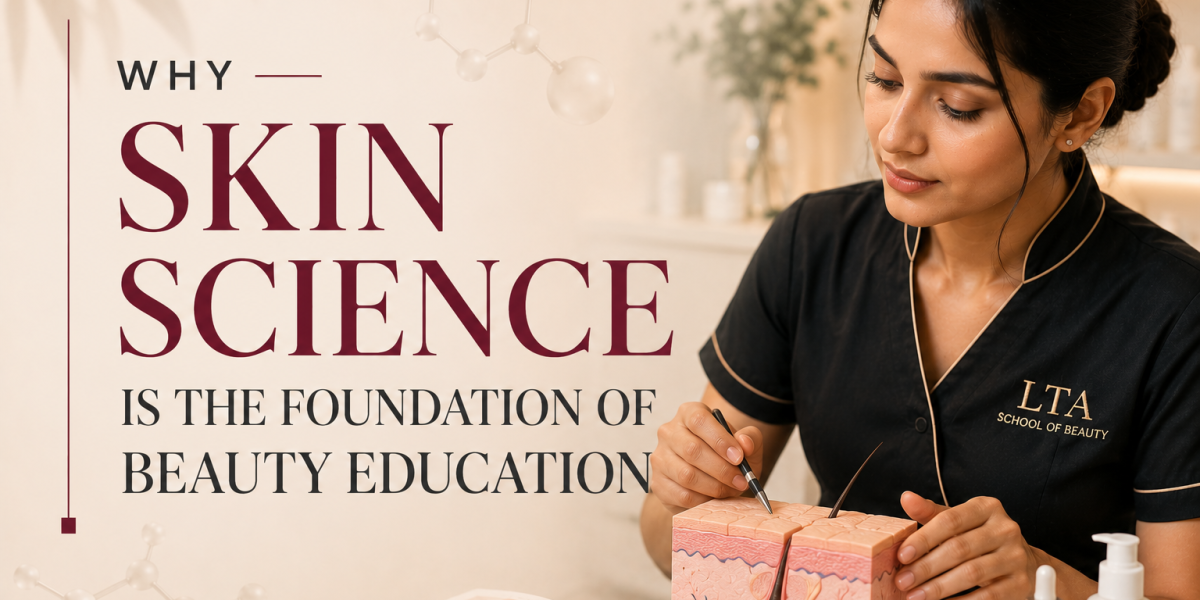
Discover why skin science is the heart of beauty education and how it helps students become confident, ethical and globally recognised professionals.
When most people think about beauty education, they imagine learning facials, makeup, hairstyling or beauty treatments. While these practical skills are undoubtedly important, they are only one part of becoming a successful beauty professional. Behind every effective facial, every personalised skincare recommendation and every safe treatment lies one essential subject—skin science.
Whether you dream of becoming a beauty therapist, skincare specialist, aesthetician or salon entrepreneur, understanding how the skin functions is what separates a trained professional from someone who simply follows a procedure. In today’s beauty industry, clients expect more than treatments—they expect knowledge, safety and personalised care. That is why skin science forms the foundation of quality beauty education.
“Great beauty professionals don’t just know how to perform a treatment—they understand why they’re performing it. That knowledge begins with skin science”, says, Vaishali Shah, Founder & Director, LTA School of Beauty
Beauty Is More Than What You See on the Surface
The skin is the body’s largest organ and one of the most complex.
Every client who walks into a salon has a different:
- Skin type
- Skin condition
- Medical history
- Lifestyle
- Environmental exposure
No two skins respond exactly the same way.
This is why professional beauty education teaches students to analyse before they treat.
Without understanding skin structure and function, professionals risk recommending unsuitable products or performing treatments that may do more harm than good.
Why Skin Science Matters Before Every Treatment
Imagine two clients arriving for a facial.
Both want brighter, healthier skin.
However:
One has dehydrated skin.
The other has a compromised skin barrier.
Applying the same treatment to both would be a mistake.
Understanding skin science helps professionals identify:
- Skin types
- Skin conditions
- Contraindications
- Product compatibility
- Treatment suitability
It enables therapists to customise treatments rather than simply following a routine.
That is what clients increasingly expect from qualified professionals.
Building Client Trust Through Knowledge
Clients today are more informed than ever.
They research ingredients.
Compare treatments.
Read reviews.
Ask questions.
A beauty professional who confidently explains:
- Why a treatment is recommended
- How ingredients work
- Expected results
- Home-care advice
instantly builds trust.
Knowledge inspires confidence—and confident clients are more likely to return.
As the beauty industry evolves, consultation skills have become just as valuable as practical skills.
Skin Science Helps Prevent Costly Mistakes
One of the greatest responsibilities of a beauty professional is client safety.
Without a proper understanding of skin science, mistakes can occur, such as:
- Recommending the wrong products
- Performing unsuitable treatments
- Ignoring contraindications
- Over-exfoliating sensitive skin
- Misidentifying skin concerns
Professional education teaches students to think critically before beginning any procedure.
This scientific approach protects both the client and the therapist.
The Link Between Skin Science and Advanced Beauty Careers
As students progress in their careers, skin science becomes even more valuable.
Professionals specialising in:
- Advanced skincare
- Medical aesthetics
- Wellness therapies
- Luxury spas
- Skin consultations
rely heavily on scientific knowledge.
It forms the basis for advanced treatments, technology-driven procedures and evidence-based skincare recommendations.
Students who understand skin science often find it easier to adapt to new technologies and industry innovations.
International Education Places Science First
One of the reasons internationally recognised qualifications such as CIDESCO and VTCT are respected worldwide is their balanced approach to learning.
Students don’t simply memorise treatment steps.
They understand:
- Skin anatomy
- Skin physiology
- Cosmetic chemistry
- Hygiene protocols
- Client consultation
- Professional ethics
This comprehensive education prepares graduates to work confidently in salons, luxury spas, wellness centres and international hospitality brands.
It also develops professionals who can adapt as new ingredients, technologies and treatment methods emerge.
Why Future Beauty Professionals Need Scientific Thinking
The future of beauty is becoming increasingly personalised.
Artificial intelligence can analyse skin.
Advanced machines can assist treatments.
New ingredients are launched every year.
But technology cannot replace professional judgement.
Beauty professionals who understand skin science can:
- Interpret analysis correctly.
- Recommend suitable treatments.
- Explain procedures confidently.
- Deliver safer results.
- Build long-term client relationships.
Scientific knowledge will remain one of the industry’s greatest competitive advantages.
Beyond the Classroom: A Skill That Lasts a Lifetime
Unlike beauty trends that change every season, skin science remains relevant throughout a professional’s career.
Whether you become:
- A beauty therapist
- A skincare specialist
- A salon owner
- A beauty educator
- A medical aesthetician
The principles of skin science continue to guide every client interaction.
It is one subject that students never stop using.
The future of beauty belongs to professionals who combine technical expertise with scientific understanding. While treatments, machines and trends will continue to evolve, the ability to understand the skin will always remain at the heart of exceptional client care.
That is why skin science is not just another subject—it is the foundation of beauty education.
Students who invest time in mastering it don’t simply become better therapists; they become trusted professionals capable of building lasting careers in India’s growing beauty industry and across international markets.
Ready to Build Your Beauty Career on the Right Foundation?
At LTA School of Beauty, students learn far more than beauty treatments. Through hands-on practical training, internationally recognised CIDESCO and VTCT qualifications, and a curriculum rooted in skin science, they develop the knowledge, confidence and professionalism needed to succeed anywhere in the world.
Book your consultation NOW and discover how quality beauty education can transform your passion into a global career.
FAQs
1. Why is skin science important in beauty education?
Skin science helps students understand skin structure, conditions and treatments, enabling them to provide safe, personalised and effective beauty services.
2. Is skin science necessary to become a beauty therapist?
Yes. A strong understanding of skin science is essential for analysing clients’ skin, selecting appropriate treatments and delivering professional care.
3. How does skin science improve client outcomes?
It allows beauty professionals to recommend suitable products, avoid contraindications and customise treatments based on individual skin needs.
4. Do internationally recognised beauty courses include skin science?
Yes. Programmes such as CIDESCO and VTCT include comprehensive training in skin anatomy, physiology, consultation and professional ethics.
5. Can students without a science background learn skin science?
Absolutely. With structured teaching, practical demonstrations and regular practice, students from all educational backgrounds can successfully understand and apply skin science.
6. How does skin science support long-term career growth?
Professionals with strong scientific knowledge can confidently work in advanced skincare, medical aesthetics, luxury spas, wellness centres and international beauty brands.