
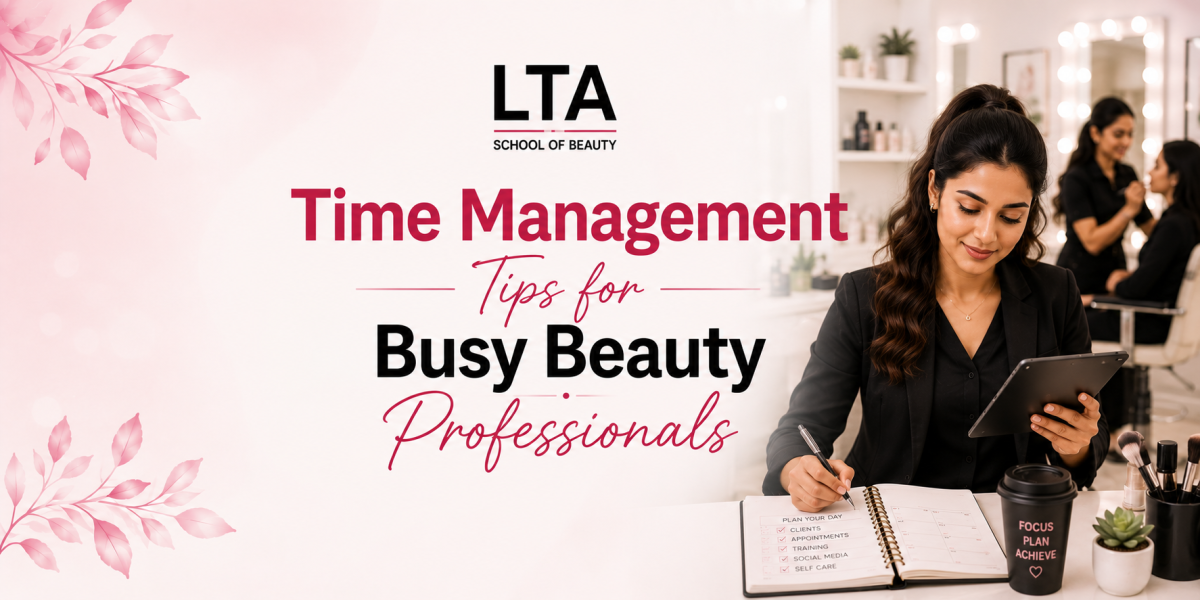
Every minute counts in a salon. Being five minutes late to an appointment can affect the next client, delay the consultations, reduce the treatment time and make the client and the professional feel rushed. Those little delays add up over the course of a day, not just in time lost, but in stress. This is why time management isn’t just about being organised. It’s about consistent service without sacrificing quality. Let’s learn some simple time management tips for beauty professionals.
The most successful beauty professionals are not necessarily the busiest people in the salon. They know how to manage their time, energy and workflow, ensuring that each client receives the attention they deserve.
Time Management Is A Professional Skill, Not A Personal Habit.
Many students think they will simply get faster with practice. You get faster by practicing but you get efficient by planning.
Experienced professionals know how long consultations usually take, when a colour service is likely to take extra time and why rushing through a finishing consultation can impact client retention.
Managing time is not a matter of cramming the calendar. This is about building a schedule that lets you consistently do your best work. Here are some time management tips for beauty professionals:
Build Your Day Around Your Energy, Not Just The Clock
Some tasks require more focus than others. Bridal make-up, colour corrections and advanced facials are detailed services that need a lot more attention than regular admin.
If you can, arrange the most difficult appointments for the time of day when you are most energetic and able to concentrate. Administrative duties, stock checks and dealing with enquiries can often be done at less busy periods.
Managing your energy is as vital as managing your diary.
All Appointments Begin Before The Client Arrives
A mistake that a lot of beginners make is thinking that an appointment starts when the client sits in the chair. In fact, it starts much earlier.
You can save precious minutes and create a less stressful working environment by preparing tools, checking client notes, reviewing colour formulas and making sure products are ready in advance.
Preparation also helps professionals focus on the client, rather than looking for equipment halfway through a service.
Know the Difference Between Being Busy and Productive
Having a full calendar doesn’t always mean you’re working efficiently. For example, repeatedly answering the phone during a treatment or looking for lost tools diverts attention and slows down service.
Workflow improvements like having frequently used products readily accessible, maintaining organised workstations and adopting consistent consultation routines can save time during the day.
Generally, the best way to be productive is not to work faster, but to stop being interrupted.
Give Buffer Time As Salons are Unpredictable
Every day in the salon is different. Clients can be late, consultations can unearth unexpected concerns and a colour correction might take longer than anticipated.
Also, you can build in short buffer periods between selected appointments. This gives you some flexibility without throwing off your entire schedule.
It also lets professionals sanitise equipment, write client notes and prepare for the next service without feeling rushed.
Those few extra minutes often make every appointment that follows a little better.
Stop Doing All The Tasks Yourself
Sometimes, with experience, professionals get caught in the trap of trying to do it all themselves. But successful salons depend on teamwork.
By delegating the right tasks such as preparing treatment stations, stock or appointment confirmations, specialists can focus on providing excellent services.
Asking for help when you need it is a sign of professionalism, not weakness.
Do a 10-Minute Reset at the End of Each Day
One of the easiest habits that experienced pros pick up is something that happens after the last client leaves the door.
Before you pack up for the day, take some time tidying and getting your workstation organised, restocking any essential products, checking the next day’s appointments and noting down any client follow-ups.
This little routine helps to relieve stress the next morning and create a smoother start to the day.
It’s often these quiet habits, not dramatic productivity hacks, that make the biggest difference over time.
Good Time Management Means Better Client Experiences
Clients might not care if you’ve colour-coded your schedule or planned your day in 30-minute blocks. But they do notice on-time appointments, consultations that don’t feel rushed and services that get your full attention.
These time management tips for beauty professionals helps them to be calm, attentive and present. It opens the door to meaningful conversations, personalised recommendations and considered aftercare advice, all of which build stronger client relationships.
Students at LTA School of Beauty are taught that time management is a skill just as important as technical knowledge in the workplace. They learn to organise their workflow, manage appointments efficiently and deliver exceptional client experiences in fast-paced salon settings through hands-on sessions, simulated salon environments and professional etiquette training.
Frequently Asked Questions
1. Why do beauty professionals need time management?
Good time management keeps beauty professionals organised, reduces stress, avoids appointment delays and guarantees consistent, quality service for every client.
2. How can beauty pros increase productivity without rushing clients?
Workstations prepared in advance, structured consultations, organised tools and buffer time between appointments can all increase efficiency without compromising the quality of service.
3. What is the biggest mistake in time management in salons?
One of the most common mistakes is to overbook appointments, without leaving room for consultations, clean-up or unexpected delays, which can affect quality of service and the client experience.
4. Do you learn time management in beauty training?
Yes. Beyond technical abilities, professional beauty education is increasingly focused on workplace readiness, including appointment management, client communication, teamwork and efficient salon workflows.