
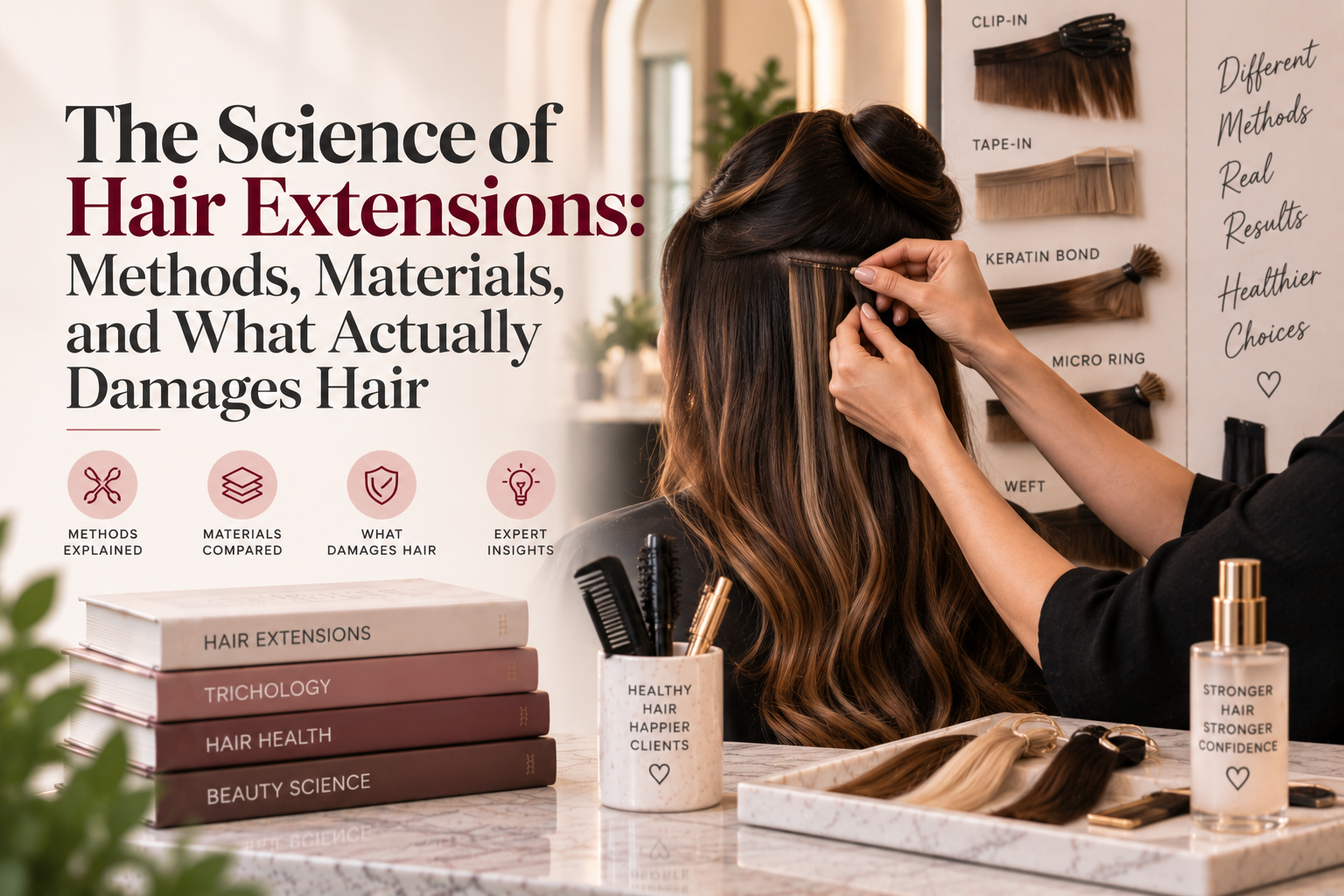
Hair extensions can add length, volume and density almost instantly. But beneath the colour matching, seamless blending and styling lies a simple bit of science: you are adding extra weight to existing hair and attaching it to the scalp or hair shaft in some way. That does not mean hair extensions are inherently damaging. The risk depends on how the extensions are attached, how much they weigh, how long they are worn, the condition of the natural hair and how carefully they are removed.
Understanding this is more useful than simply asking which type of extension is “best”.
How Hair Extensions Interact With Natural Hair
The visible part of hair is made primarily of keratin and is not living tissue. The follicle beneath the scalp is where hair is produced.
This distinction matters because extensions can cause two different types of problems:
- Hair-shaft damage: breakage, splitting, dryness and weakening of the existing hair.
- Follicle damage: excessive or prolonged tension can affect the follicle and contribute to traction alopecia, a form of hair loss caused by repeated pulling.
The British Association of Dermatologists notes that hair extensions and weaves can contribute to traction alopecia when they create repeated tension. Early traction-related hair loss may improve after the tension is stopped, but prolonged traction can permanently damage follicles.
This is why a set of extensions can look perfectly healthy while still putting stress on the hair underneath.
Hair Extension Methods: What Actually Changes?
The major difference between extension methods is how the added hair is secured to your natural hair.
1. Clip-In Extensions
Clip-ins consist of wefts fitted with small clips that attach to sections of natural hair. They are temporary and can be removed at the end of the day.
Because there is no adhesive, heat or permanent attachment, they can be a relatively low-commitment option. However, repeatedly placing heavy clips in exactly the same area can still create localised tension.
They are generally more suitable when you want extra length or volume for occasional styling rather than continuous wear.
2. Tape-In Extensions
Tape-ins use thin adhesive strips. A section of natural hair is sandwiched between two extension panels, creating a relatively flat attachment close to the scalp.
Their flat profile makes them popular for a more discreet finish. However, the adhesive has to be removed properly during maintenance. Pulling apart bonded sections or removing them aggressively can take natural hairs with them.
3. Sew-In Or Weft Extensions
With a sew-in, the natural hair is usually formed into a braided or structured base, and wefts are sewn onto it.
This method does not necessarily require heat or adhesive, but the foundation itself can create tension. If the braids are too tight or the weft is too heavy, the scalp and follicles can be placed under considerable stress.
The British Association of Dermatologists specifically recommends that sewn-in extensions should not be installed too tightly.
4. Micro-Links And Micro-Rings
These extensions use small sections of natural hair and secure the extension with a tiny bead or ring. They do not require heat or adhesive.
The advantage is that individual sections can be adjusted and repositioned. The potential problem is concentration of weight and tension in small sections of hair. This matters particularly when the natural hair is fine, fragile or already chemically processed.
5. Fusion Or Keratin-Bond Extensions
Fusion extensions attach individual strands or small bundles using a keratin-based bond, usually activated with heat.
The strand-by-strand application can create a natural-looking result and allows considerable styling flexibility. But there are more variables involved: the heat used during application, the size and weight of each bond, the condition of the natural hair and, importantly, the removal process.
Trying to pull or break off bonded extensions instead of having them professionally removed can cause unnecessary breakage.
Human Hair Vs Synthetic Hair: Does The Material Matter?
Yes, but not in the way people sometimes assume.
Human hair extensions behave more like natural hair. Depending on their processing and quality, they can generally be washed, blow-dried and heat-styled. They also tend to offer more natural movement and blending.
Synthetic extensions are made from manufactured fibres. Common extension fibres include nylon, acrylic and Kanekalon. Their ability to tolerate heat varies, and many cannot be coloured or restyled like human hair.
But choosing human hair does not automatically make an extension installation safer.
A heavy human-hair extension attached too tightly can still create traction. Conversely, a lightweight synthetic piece that is used occasionally and removed correctly may place relatively little stress on the natural hair.
The material affects how the extension behaves; the attachment and weight affect how it interacts with your hair.
So, What Actually Damages Hair Extensions?
There are five factors worth paying attention to.
1. Excessive Weight
The longer and fuller the extensions, the more weight the natural hair has to support.
This is particularly important if the natural hair is fine or already weakened. Adding a large amount of hair to a small number of natural strands concentrates the load rather than distributing it.
2. Constant Tension
This is one of the biggest concerns.
Hair that is repeatedly pulled at the root can develop inflammation and, over time, traction alopecia. Warning signs include pain, tenderness, itching, redness, bumps or a persistent feeling of tightness.
Pain is not something you should simply “get used to” after an extension appointment.
3. Heat And Chemical Processing
Extensions are often combined with other styling practices: straightening, curling, bleaching, colouring or chemical relaxing.
Heat and chemical treatments can weaken the hair shaft. When weakened hair is then subjected to additional pulling or weight, the risk of breakage increases. Research on traction alopecia also identifies chemically relaxed hair combined with high-tension styling as a particular risk.
4. Friction And Excessive Manipulation
Extensions can encourage more brushing, detangling and styling because there is simply more hair to manage.
Rough brushing, aggressive detangling and repeated friction around the attachment points can weaken the hair further. The British Association of Dermatologists also cautions against excessive manipulation and heat when caring for hair with extensions.
5. Poor Removal
An installation can be perfectly fine and still cause damage if it is removed incorrectly.
Adhesive should not be ripped off. Bonds should not be forcibly pulled apart. Sew-ins should be carefully cut out without cutting the natural hair, and beaded extensions should be opened rather than dragged through the hair.
In practice, removal is part of the extension service, not an afterthought.
How To Make Hair Extensions Safer
There is no completely risk-free extension method, but the risk can be reduced considerably.
Before getting extensions, consider:
- Is the natural hair strong enough to support additional weight?
- Are the extensions being attached to enough natural hair?
- Does the installation feel comfortable rather than tight?
- Is the chosen method appropriate for the hair’s density and condition?
- Can the scalp still be cleansed properly?
- Is there a clear maintenance and removal schedule?
- Will the same sections of hair be repeatedly stressed?
- Are extensions being combined with frequent bleaching, relaxing or high-heat styling?
It is also worth giving the natural hair periods without extensions, particularly if there are signs of breakage or scalp discomfort.
If there is persistent pain, visible thinning, broken hairs around attachment points or hair loss, extensions should be removed and a dermatologist should be consulted. Early traction-related damage has a better chance of recovery than longstanding follicular damage.
Which Hair Extension Method Is Safest?
There is no universal answer.
A lightweight clip-in worn occasionally may place less ongoing stress on the hair than a heavy semi-permanent installation. But a properly fitted professional installation can also be well tolerated when the weight is appropriate, the tension is low and maintenance is handled correctly.
The real question is not simply “Which extension method causes the least damage?”
It is “Which method places the least unnecessary stress on this particular person’s hair?”
That depends on hair density, texture, existing damage, lifestyle, desired length and how frequently the extensions will be worn.
Frequently Asked Questions
Are hair extensions bad for your hair?
Not necessarily. Hair extensions can be worn without significant problems when the method, weight and installation are appropriate. Damage becomes more likely when extensions are too heavy, attached too tightly, worn continuously or removed incorrectly.
Can hair extensions cause hair loss?
Yes. Repeated tension from extensions can contribute to traction alopecia. Early traction-related hair loss may be reversible after the source of tension is removed, but prolonged traction can permanently damage the follicles.
Are tape-in or clip-in extensions better for damaged hair?
Clip-ins can offer more flexibility because they are removed regularly and do not require a semi-permanent bond. However, even clip-ins can create tension if they are heavy or repeatedly attached to the same area. Hair that is already significantly damaged should be assessed before adding extensions.
How long should you keep hair extensions in?
The appropriate wear period depends on the method, the rate of hair growth and the condition of the natural hair. Extensions should not simply be left in until they become uncomfortable or visibly grown out. Regular professional maintenance and timely removal are important, and the scalp and natural hair should be checked for signs of tension or breakage.