
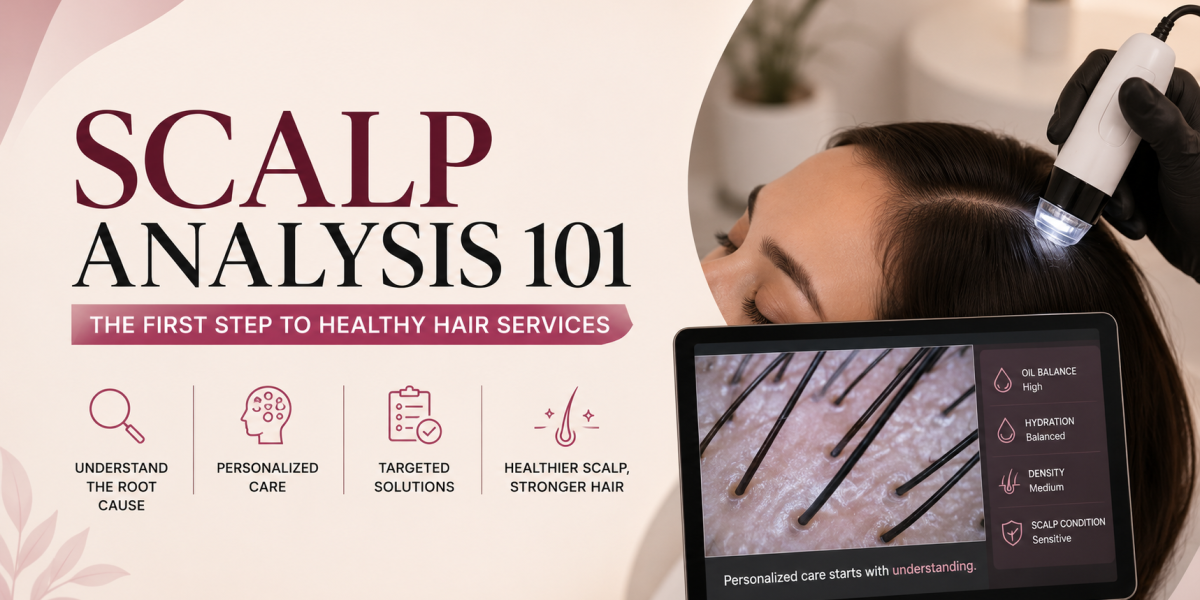
Everyone wants beautiful, healthy hair. While people work on their strands, with a variety of products and treatments, real hair health starts with the scalp. It plays an important role in hair growth, strength, shine, and health. This is the reason why scalp analysis should be the first step before any hair professional service.
As a professional, whether you’re doing a haircut, colour, spa, or chemical treatment, understanding the client’s scalp will help you do a deeper analysis and provide a personalised treatment and care plan.
What Is Scalp Analysis?
This process helps the professionals to examine the scalp and hair health to get an overview of the overall health. It helps to identify core concerns that cause hair issues, such as excessive oil, dandruff, sensitivity, product build-up, hair thinning and more.
Rather than making decisions based on the hair appearance alone, taking a deeper look at the scalp can help a professional figure out the main reason behind hair problems. This information, in turn, leads to identifying suitable and personalised treatments and hair care routines.
A professional consultation combined with scalp analysis ensures that services are tailored to the client’s individual needs and doesn’t follow a one-size-fits-all approach.
Why a Healthy Scalp Matters
Scalp is living skin that it supports thousands of hair follicles. A healthy and balanced scalp allows the hair to grow out healthier and stronger.
However, when the scalp is unhealthy, it leads to to issues such as:
- Excessive oiliness
- Dryness and flaking
- Itching or irritation
- Product build-up
- Weak or brittle hair
- Increased hair fall
If the scalp concerns are detected at an earlier stage, it can improve the effectiveness of professional hair services and enhance overall long-term hair health.
What Beauty Professionals Look for During a Scalp Analysis
An in-depth examination is more than checking for dandruff and oiliness. Thorough scalp assessment allows professionals to evaluate several factors before recommending a treatment, including scalp type and condition, hair density, history of hair and scalp, and more.
Let’s understand in depth.
Scalp Type
A scalp can be oily, dry, combination, or balanced. Understanding the scalp type helps to determine suitable cleansing and treatment options.
Hair Density and Thickness
The amount of hair and thickness of each strand gives an overview of the overall hair condition.
Scalp Condition
Assessing scalp conditions like redness, flaking, sensitivity, inflammation, or excessive sebum production helps understand if the client needs any specialised care. It also helps to avoid products that can cause further sensitivity, itching, build-up, or oiliness.
Hair and Scalp History
Consultations also include questions about medical history, lifestyle, stress, diet, previous chemical services and home-care routines. These factors can significantly influence scalp health and impact the choice of treatments and products.
This comprehensive approach enables beauty professionals to make informed recommendations instead of relying on guesswork.
How Scalp Analysis Improves Hair Services
Scalp analysis benefits both the client and the beauty professional.
It helps professionals:
- Recommend treatments based on actual scalp needs.
- Choose suitable shampoos, conditioners and scalp-care products.
- Determine whether the scalp is ready for colouring, smoothening or other chemical services.
- Identify concerns that may require referral to a dermatologist.
- Identify if certain products or ingredients can back fire or cause further irritation or sensitivity.
- Track improvements over time through follow-up consultations.
For clients, personalised recommendations often lead to healthier hair, improved comfort and better long-term results.
Professional Tools Used for Scalp Analysis
Rather than simply skimming through the hair and manually looking at the scalp, many modern salons now use technology for accurate scalp assessments.
One commonly used tool is a digital scalp analyser. It magnifies the scalp and hair follicles, allowing professionals to observe concerns that may not be visible to the naked eye. High-resolution imaging can reveal excess oil, clogged follicles, dryness, product residue and early signs of scalp imbalance.
However, it’s important to remember that technology should complement and not replace a professional consultation. Experienced beauty professionals must combine visual assessment with client history and technical knowledge to provide comprehensive recommendations.
Why Every Beauty Professional Should Learn Scalp Analysis
Today’s clients expect personalised services backed by knowledge and expertise. Scalp analysis enables beauty professionals to understand the “why” behind hair concerns before recommending treatments.
For aspiring hairstylists, mastering scalp analysis strengthens consultation skills, improves treatment outcomes and builds client confidence. It also encourages a more scientific, evidence-based approach to hair care rather than simply following trends.
At LTA School of Beauty, students develop a strong foundation in hair science, scalp health and professional consultation techniques. Through hands-on training and industry-focused education, they learn to assess individual client needs and deliver tailored hair services that prioritise both hair health and client satisfaction.
Frequently Asked Questions
1. What is scalp analysis?
Scalp analysis is the professional assessment of the scalp and hair to identify concerns such as dryness, oiliness, dandruff, sensitivity, hair thinning and overall scalp health before recommending treatments.
2. Why is scalp analysis important before hair treatments?
Scalp analysis helps beauty professionals understand the client’s specific needs, ensuring that hair treatments, products and services are safe, effective and personalised.
3. What tools are used for professional scalp analysis?
Many salons use digital scalp analysers or scalp microscopes to examine the scalp closely. These tools are often combined with visual assessment and a detailed client consultation.
4. Can scalp analysis detect serious hair or scalp conditions?
Scalp analysis can help identify early signs of common scalp concerns. However, if professionals notice symptoms that require medical attention, they may recommend that the client consult a dermatologist for further evaluation.