
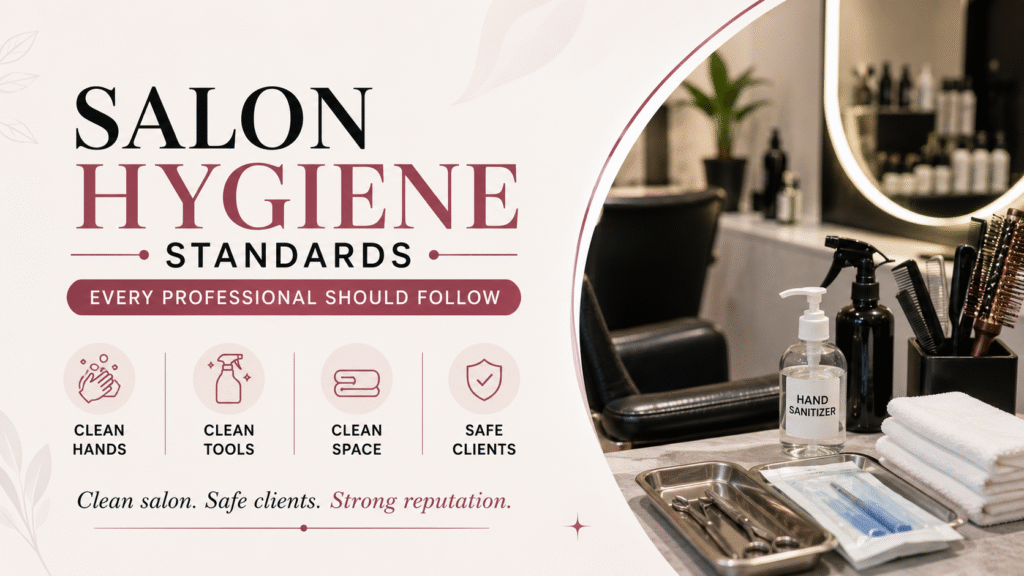
A spotless-looking salon and a genuinely hygienic one aren’t always the same thing. A station can look absolutely clean with fresh towels, polished mirrors, everything in its place. It can still expose clients to an infection risk if the tools weren’t disinfected properly between the last appointment and this one. Hygiene in a salon isn’t housekeeping. It’s a technical protocol that needs same seriousness as in any other hands-on profession. Unfortunately, a lot of times, this part of training usually gets rushed past in favour of the more exciting technical skills.
Sanitising, Disinfecting, and Sterilising Are Three Different Things
When it comes to salon hygiene standards, these words get used interchangeably on the salon floor. They describe three different levels of germ control. Mixing them up is where standards quietly slip.
Sanitising reduces microorganisms to a safe level and is what a general surface wipe-down achieves.
Disinfecting kills a broader range of bacteria, fungi, and viruses and is what metal tools need after every single client.
Sterilising eliminates all microbial life, including bacterial spores. It is reserved for anything that could break the skin. This is why proper salons keep an autoclave for tools used in nail and skin services rather than relying on a disinfectant soak alone.
Tool Care Has to Happen Between Every Client, Not Every Shift
Tweezers, cuticle nippers, combs, clippers, blackhead remover, and any reusable metal tool need cleaning and disinfecting after every single client. It should not be kept for the end of the day.
The correct sequence is:
- First physically clean off visible debris, since disinfectant solutions don’t work through organic material.
- Then submerge the tool in a hospital-grade disinfectant for the full contact time printed on the label, usually ten minutes. A tool pulled out early hasn’t actually been disinfected, it’s just been wet.
Single-Use Items Are A Boon, Even When They Feel Wasteful
Nail files, buffers, pumice stones, wax applicator sticks, and extraction tools with a porous surface can’t be fully disinfected once used. This is because bacteria and fungal spores work their way into the material itself. These need to be single-use. Or they can be client-specific, kept in a labelled bag and returned only to that client. One should never use them for multiple people across the floor no matter how lightly used they look.
Salons that reuse porous tools are one of the most common sources of fungal nail infections traced back to a service. It’s one standard that should always be maintained, even when cost cutting is required elsewhere.
What a Nick or Cut Actually Requires
Skin breaks happen, even with most experienced professionals. How it’s handled in the next sixty seconds matters. The affected tool is immediately set aside and must go through full disinfection or disposal, never reused even on the same client without it.
The client’s skin gets an antiseptic and, if needed, a bandage. Any surface or linen that came into contact with blood needs to be treated as a biohazard. It should be cleaned accordingly, not just wiped with the same all-purpose spray used on the counter.
Resetting a Station Means More Than Wiping the Surface
Between clients, a proper reset covers the chair, armrests, and any surface touched during the service. Fresh linens should be placed rather than reusing old ones. Ventilation must be checked if a chemical service like colour or a keratin treatment just happened.
Salons doing heavy chemical work also need to think about air quality generally. Prolonged exposure to fumes from bleach, ammonia, and setting sprays affects staff health over years of daily exposure, not just the client sitting in the chair for one appointment.
At LTA School of Beauty, students will learn about salon hygiene standards and how to apply them. Through understanding how sanitising, disinfecting, and sterilising each interrupt infection differently, they are able to confidently maintain safe, compliant workstations and protect every client who sits in their chair.
Frequently Asked Questions
What’s the difference between sanitising and disinfecting in a salon?
Sanitising lowers microorganisms to a generally safe level and is used for surfaces. Disinfecting kills a wider range of bacteria, fungi, and viruses and is required for metal tools between every client.
How should tools like tweezers and cuticle nippers be disinfected between clients?
Clean off visible debris first, then fully submerge the tool in a hospital-grade disinfectant for the full contact time on the label, typically around ten minutes, not a brief rinse or spray.
What should a professional do if a client is nicked during a service?
Set the tool aside for full disinfection or disposal, apply antiseptic to the client’s skin, and treat any surface or linen that contacted blood as a biohazard rather than a normal cleaning item.
Why do single-use items matter for something like a nail file?
Porous tools absorb bacteria and fungal spores into the material itself. They can’t be fully disinfected between clients. Reusing them across different clients is a common cause of fungal infections traced back to a salon visit.