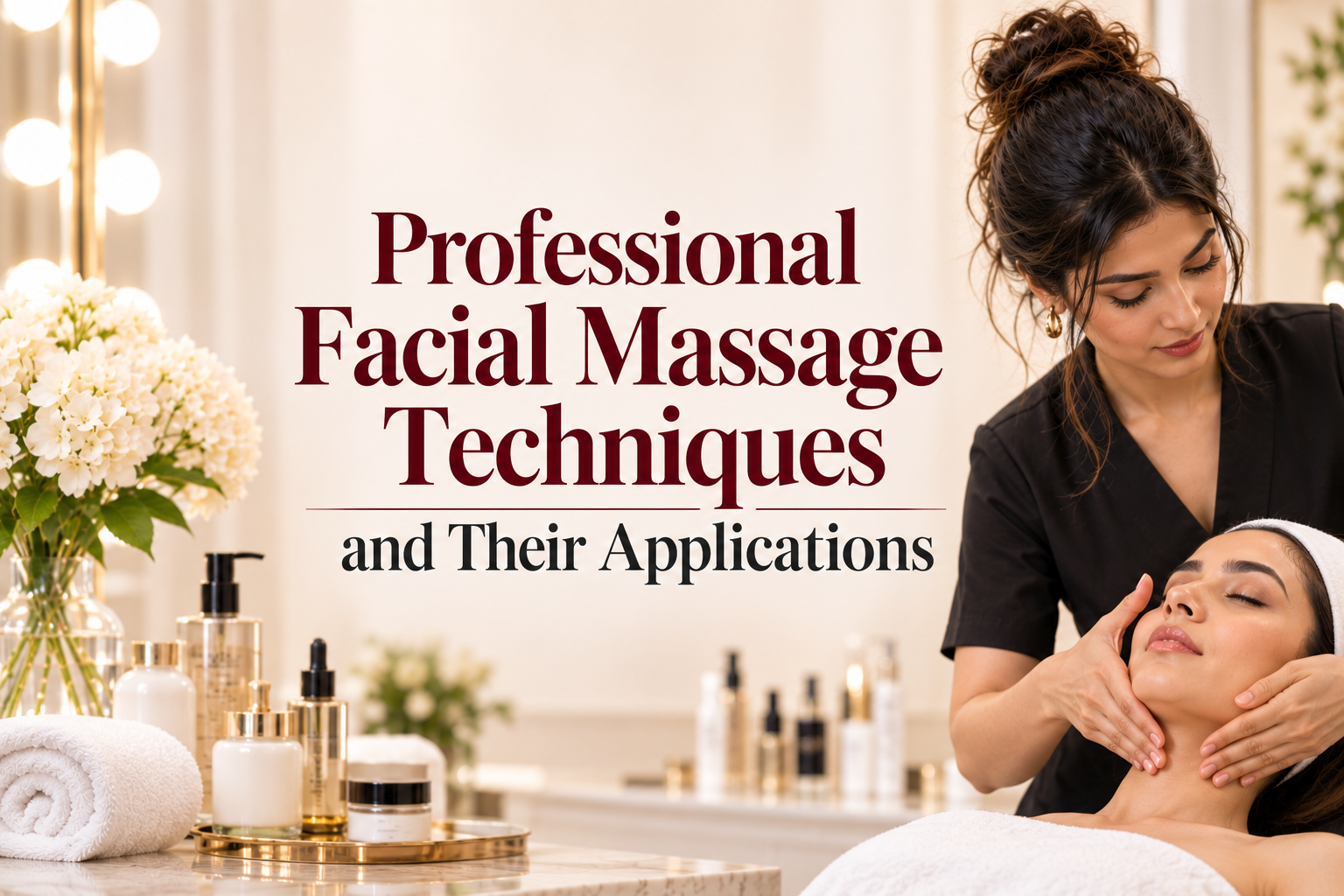
Ask clients what they remember most about a good facial, and many will say the massage. It is the part where they relax, their shoulders drop and they stop checking their phones. But massage is not only about feeling nice. Each movement has a purpose, and using the wrong one on the wrong skin can cause irritation or worse. So what are the main professional facial massage techniques?
Professionals use five classic movements: effleurage (gliding strokes), petrissage (kneading), friction (small circular pressure), tapotement (light tapping) and vibration (fine shaking). Each affects the skin and muscles differently. Used in a planned order, with the right pressure and on suitable skin, they relax the client, boost circulation and help products spread evenly.
What Professional Facial Massage Can And Can’t Do
Be honest with clients about this.
What it can do:
- Relax the muscles of the face, jaw and neck
- Increase blood flow, which gives skin a warm, fresh look for a short time
- Help products spread evenly
- Create a calming, pleasant experience
- Temporarily reduce puffiness, especially with light lymphatic work
What it can’t do:
- Permanently lift or reshape the face
- “Detox” the skin
- Cure acne, pigmentation or scars
- Replace medical or cosmetic procedures
Strong promises set up a client for disappointment. Describe benefits as short-term and supportive.
Before You Begin
- Consult first. Ask about skin concerns, allergies, medicines, recent procedures and any pain or sensitivity. See our consultation form post.
- Check the skin. Look for active infection, broken skin, sunburn or inflamed acne.
- Cleanse the skin and remove makeup.
- Wash and warm your hands. Cold, rough hands make the client tense.
- Use a suitable massage medium. Choose a cream, oil or balm that gives enough slip for the skin type. Oil-based products may not suit acne-prone skin, so choose with care.
- Position the client comfortably, with the head and neck supported.
- Keep your posture relaxed so your hands stay soft and steady.
The Five Classic Techniques
1. Effleurage: gliding strokes
What it is: Long, smooth, flowing strokes made with the palms or the pads of the fingers.
Pressure: Light to medium.
Effects: Relaxes the client, spreads product, warms the skin and links one movement to the next.
Where to use it: The start and end of a massage, and between other techniques. It suits almost every skin type.
Tip: Keep your hands in constant contact with the skin and move at a steady, slow rhythm.
2. Petrissage: kneading
What it is: Gentle lifting, squeezing and rolling of the skin and underlying muscle, usually between the thumb and fingers.
Pressure: Light to medium, depending on the area.
Effects: Eases muscle tension, improves circulation and gives a firm, working feel.
Where to use it: Cheeks, jawline, shoulders and neck. Use very lightly around the eyes.
Avoid: Fragile, thin, inflamed or very sensitive skin.
3. Friction: small circular pressure
What it is: Small circular or back-and-forth movements, done with the thumbs or fingertips, that move the skin over the tissue beneath.
Pressure: Light to medium.
Effects: Warms the area, loosens tight spots and helps with congested or tense areas.
Where to use it: Around the forehead, temples, nose, jaw and scalp margins.
Avoid: Inflamed spots, broken skin and rough pressure that drags the skin.
4. Tapotement: tapping
What it is: Quick, light tapping movements with the fingertips, also called percussion.
Pressure: Very light.
Effects: Stimulates the skin, feels refreshing and wakes up the face towards the end of a massage.
Where to use it: Cheeks, forehead and neck.
Avoid: Sensitive, thin or reactive skin, rosacea-prone skin and areas with broken capillaries, since it can increase redness.
5. Vibration: fine shaking
What it is: Rapid, fine, trembling movements made with the fingertips or palm, held in place.
Pressure: Very light.
Effects: Soothes and relaxes. Often used near the end of a sequence.
Where to use it: Cheeks, forehead and jaw.
Avoid: Overuse, which can tire both your hands and the client’s skin.
Quick Reference Table
| Technique | Movement | Pressure | Main purpose | Be careful with |
| Effleurage | Gliding | Light to medium | Relax, spread product, link movements | Rarely a problem, adjust pressure |
| Petrissage | Kneading, lifting | Light to medium | Release muscle tension, boost circulation | Thin or inflamed skin, eye area |
| Friction | Small circles | Light to medium | Warm and loosen tight areas | Inflamed or broken skin |
| Tapotement | Tapping | Very light | Stimulate and refresh | Rosacea, thin, sensitive skin |
| Vibration | Fine shaking | Very light | Soothe and relax | Overuse |
A Simple Sequence To Practise
Adjust this for the client’s skin and your training. A full facial massage usually runs for several minutes, depending on the facial.
- Effleurage to spread the medium and settle the client
- Neck and shoulders, with light gliding and gentle kneading
- Jaw and chin, with effleurage and gentle petrissage
- Cheeks, with upward and outward gliding and gentle kneading
- Nose and under-eye area, with very light movements only
- Forehead and temples, with light friction and gliding
- Tapotement and vibration, if suitable, for a refreshing finish
- Effleurage to close and calm
Many professionals work in upward and outward directions on the face, and downward toward the lymph nodes on the neck for lymphatic movements. Your training school will teach a specific routine. Follow that.
Special Applications
Lymphatic drainage massage
A very light, slow, rhythmic technique that follows the direction of lymph flow, usually toward the lymph nodes. The pressure is much lighter than a standard massage. Clients often choose it for puffiness. Results are temporary, and it needs proper training.
Facial massage with tools
- Gua sha: A smooth tool used with gentle, gliding strokes over a lubricated surface. Keep pressure light and never scrape hard enough to mark the skin.
- Kansa wand: A traditional Indian tool made of a metal alloy, used in Ayurvedic-style facial massage. Follow the same rules of light pressure and clean tools.
- Rollers: Used for cooling and relaxation. Clean them after each client.
Wash and sanitise tools between clients, and check the skin for any reaction.
Acupressure-style work
Some facials include pressing certain points on the face and head. Keep it gentle, ask about comfort and avoid it if the client has recent facial injuries or procedures.
Massage For Different Skin Types
- Dry skin: A richer medium and slower, longer strokes work well.
- Oily or acne-prone skin: Use a light, non-comedogenic medium and avoid massaging inflamed areas.
- Mature skin: Use gentle pressure, as the skin is often thinner.
- Sensitive or reactive skin: Keep movements light, short and soothing. Avoid tapping and strong friction.
When Not To Massage
Skip facial massage, or get a doctor’s advice first, if the client has:
- Active skin infection, such as pus, cold sores, impetigo or fungal infection
- Open wounds, cuts, or broken or very irritated skin
- Severe or inflamed acne, or deep cystic lesions
- Sunburn
- Recent facial surgery, laser, deep peels or injectables. Waiting times vary, so follow the practitioner’s guidance
- Fever or acute illness
- A recent injury to the face, jaw or neck
- Facial nerve conditions or severe facial pain
- Unexplained lumps, swelling or skin changes
When in doubt, do not proceed. A calm, gentle facial without massage is always an option.
Common Mistakes To Avoid
- Pressing too hard, which can bruise or irritate skin
- Pulling the skin downward
- Using too little medium, so hands drag
- Rushing through movements
- Ignoring the client’s feedback about pressure
- Massaging over inflamed spots
- Skipping hygiene on tools and hands
- Promising permanent lifting or “detox”
At LTA School of Beauty, students learn the science of skin care and how to apply it. Through understanding how different techniques affect skin and muscle, they are able to choose the right movements for each client and perform facials safely and confidently.
FAQs
What are the five basic facial massage techniques?
They are effleurage (gliding strokes), petrissage (kneading), friction (small circular pressure), tapotement (light tapping) and vibration (fine shaking). Professionals combine them in a planned order to relax the client, boost circulation and help products spread evenly.
How long should a professional facial massage last?
It depends on the type of facial and the client’s needs. Many facials include a massage of around 10 to 20 minutes, but the length varies. Focus on quality, steady pressure and the client’s comfort rather than on a fixed time.
Who should avoid facial massage?
People with active skin infections, open wounds, severe or inflamed acne, sunburn, fever or recent facial surgery, lasers, deep peels or injectables should avoid it, or get medical advice first. Clients with facial nerve problems, severe pain or unexplained lumps should see a doctor.
Does facial massage permanently lift the face?
No. Facial massage can relax muscles, boost circulation and reduce puffiness for a short time, but it does not permanently lift or reshape the face. Be honest with clients about what to expect.