
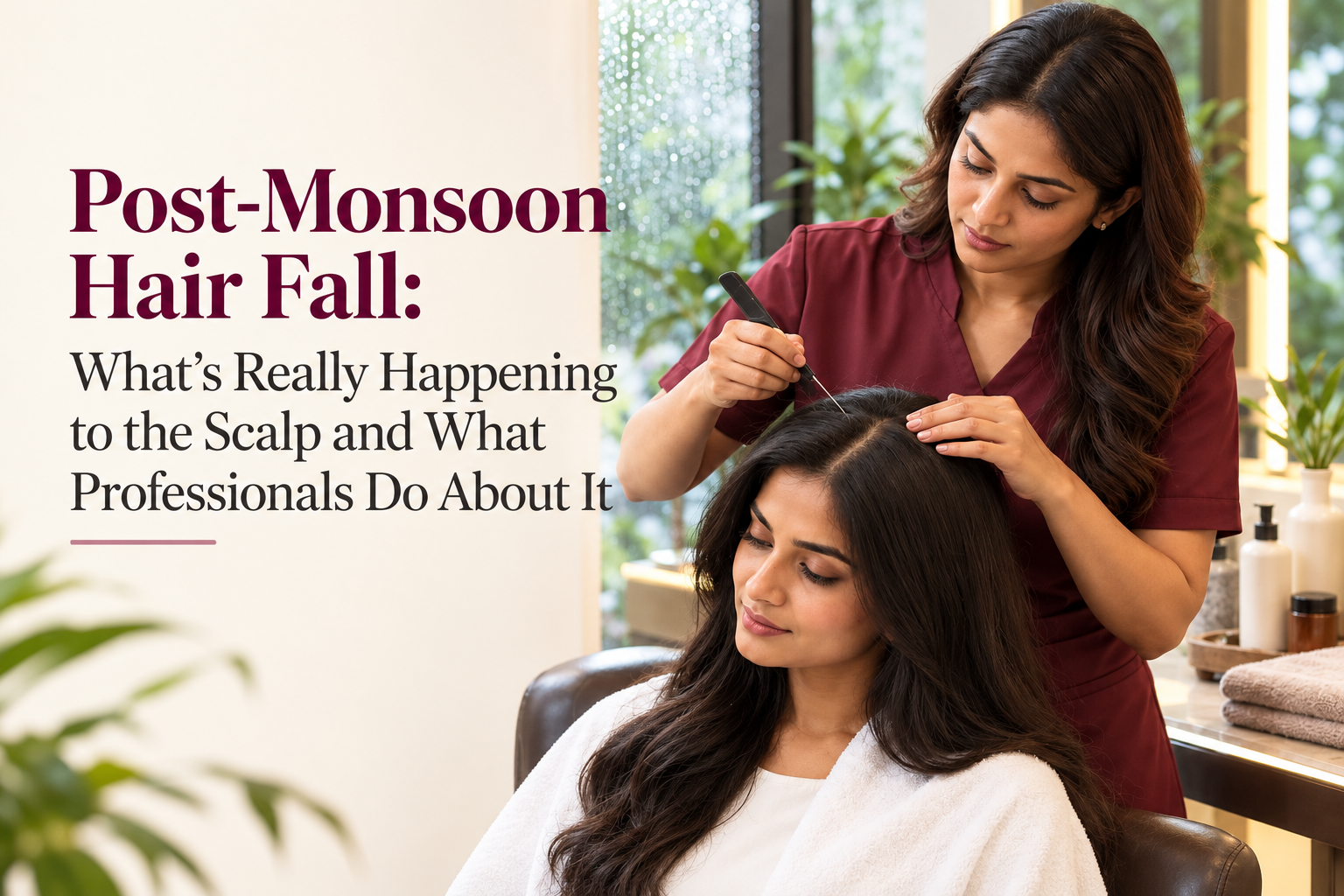
The rains end, the weather turns pleasant, and then the comb fills up. Clients walk into salons saying the same thing: “My hair is falling like crazy since the monsoon.” So why is post-monsoon hair fall so prominent? Weeks of humidity, damp hair and a sweaty, oily scalp can cause dandruff, itching, and weak strands that break easily. At the same time, some people shed more hair in the months after summer and the rains. In most cases the cause is manageable, but a few signs need a doctor. Let’s understand in depth.
First, What Counts As Normal
Everyone loses hair daily. Losing around 50 to 100 strands a day is generally considered normal, because hair grows in cycles and old hairs fall out to make room for new ones.
Worry begins when you notice any of these:
- Clumps of hair on the pillow, in the shower or on the comb every day
- A visibly wider parting or thinner ponytail
- Bald patches
- Hair fall that continues for several weeks
It also helps to separate breakage from shedding. A broken strand is short and snapped off. A shed hair is long and often has a small white bulb at the root. The two have different causes and different fixes.
What The Monsoon Does To Your Scalp And Hair
Humidity keeps the scalp damp
A sweaty, humid scalp is a friendly place for yeast that lives on the skin. When it overgrows, it can cause dandruff, itching and flaking. An itchy, irritated scalp makes people scratch, and scratching weakens hair at the root.
Wet hair is weaker hair
Hair absorbs water and swells. Repeated swelling and drying can stress the strand and lift the outer cuticle. The result is frizz, rough texture, more breakage and post-monsoon hair fall. Combing wet hair roughly makes it worse.
Rainwater and pollution leave residue
Rain can carry dust and pollutants. Left on the scalp, they mix with oil and sweat and can clog the follicle openings. Many people also wash less on rainy days because their hair won’t dry.
Seasonal shedding
Some studies suggest hair shedding increases in late summer and autumn for many people. It usually settles by itself after a few weeks to months. If shedding seems extreme, look for other causes rather than blaming the season.
Triggers that show up months later
A heavy shed can also follow physical stress such as a high fever, illness, surgery or rapid weight loss, as well as emotional stress. Doctors call this telogen effluvium. It often appears around two to three months after the trigger, so a monsoon fever may show up as hair fall in October.
Nutrition gaps
Low iron, low protein and low vitamin D are commonly linked with hair thinning. Only a blood test can confirm this, so this is for a doctor to check, not a stylist to diagnose.
What A Professional Does During A Scalp Consultation
A hair professional does not diagnose medical conditions. What they can do is observe, ask the right questions and decide what to do next.
Step 1: Ask about history. How long has the hair fall lasted? Any recent illness, stress or diet change? Which products and hair treatments are used? How often does the client wash?
Step 2: Examine the scalp. Check for flaking, redness, oiliness, tenderness, product build-up and visible thinning. A trichoscope or magnifier helps if available.
Step 3: Look at the hair itself. Is it breaking midway or falling from the root? Is there heat or chemical damage?
Step 4: Recommend a plan. This could include a clarifying or anti-dandruff shampoo, a gentler routine, a scalp treatment or professional advice on home care.
Step 5: Refer when needed. More on this below.
Which Post-Monsoon Hair Fall Issue Needs Which Approach
| What you see | Likely salon-level approach |
| Flakes, itch, oily scalp | Regular cleansing, scalp-friendly shampoo, gentle exfoliation |
| Frizz and snapping strands | Moisture, protein balance, gentle detangling, trims |
| Heavy build-up | Clarifying wash, lighter products |
| Dry, tight scalp | Mild shampoo, nourishing scalp care |
| Heavy shedding, patches or pain | Refer to a doctor |
Simple Monsoon Hair Care That Works
These steps suit most clients, and students can share them with confidence:
- Wash regularly. Wash every other day or as often as the scalp needs, using a mild shampoo.
- Focus shampoo on the scalp, and conditioner on the lengths.
- Dry hair properly. Pat with a soft towel and avoid tying wet hair tightly.
- Detangle gently. Use a wide-tooth comb, starting at the ends.
- Go easy on oil. If you use hair oil, keep it light and wash it out, since leaving thick oil on a humid scalp can add to build-up.
- Keep tools clean. Wash combs and brushes regularly.
- Eat well. A balanced diet with enough protein, iron and vitamins supports hair growth.
- Limit heat and harsh treatments while the hair is already weak.
When To Refer To A Doctor Or Trichologist
A professional should send a client to a doctor if they see:
- Patchy hair loss or smooth bald spots
- Sudden or very heavy shedding
- Redness, painful sores, thick scaling or pus
- Constant itching that does not improve
- Hair loss with other symptoms like tiredness, weight changes or irregular periods
- Hair fall that continues beyond a few months
Referring is not a failure. It is part of being a responsible professional, and clients trust you more for it.
At LTA School of Beauty, students learn to read the scalp and hair before choosing any treatment. By understanding how humidity, products and daily habits affect hair health, they are able to give clients honest, practical advice and know when a concern needs medical attention.
FAQs
Why post-monsoon hair fall happens?
Humidity can cause dandruff and scalp irritation, wet hair breaks more easily, and many people also shed more hair in the months after summer. Illness or stress earlier in the season can add to it. Most cases improve with good scalp care, but persistent loss needs a doctor.
How many hairs is it normal to lose in a day?
Losing around 50 to 100 hairs a day is generally considered normal. If you see much more than that for several weeks, or notice thinning or bald patches, get it checked.
How can I reduce hair fall during the monsoon?
Keep the scalp clean with a mild shampoo, dry hair properly, avoid tying wet hair tightly, detangle gently and eat a balanced diet. Avoid heavy oiling on a humid scalp and limit heat styling.
When should I see a doctor for hair fall?
See a doctor if you notice bald patches, sudden heavy shedding, a painful or very red scalp, or hair loss that lasts more than a few months. A doctor can check for causes like nutritional deficiency, thyroid issues or scalp conditions.