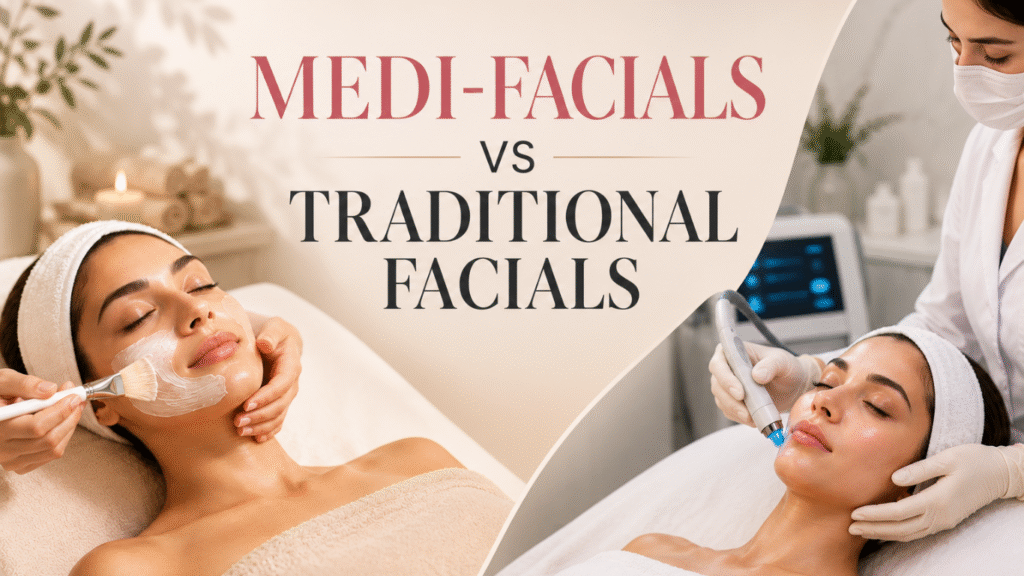
As skincare becomes more advanced, beauty students must understand the difference between traditional facials and modern medi-facial treatments. Priyanka Parshurami gets insights on what Should Beauty Students Learn about these facials.
The skincare industry is evolving rapidly, and clients today are becoming more aware of advanced skin treatments than ever before. While traditional facials continue to remain popular, medi-facials are emerging as a preferred solution for targeted skincare concerns.
This shift is creating exciting career opportunities for beauty students interested in advanced skincare and aesthetics.
Understanding the difference between traditional facials and medi-facials has become essential for aspiring skincare professionals.
What Are Traditional Facials?
Traditional facials focus on cleansing, exfoliation, hydration, relaxation, and improving overall skin appearance.
They are commonly used for:
- Basic skincare maintenance
- Relaxation and rejuvenation
- Skin cleansing
- Hydration treatments
Traditional facials are suitable for regular salon services and remain highly popular among clients.
What Are Medi-Facials?
Medi-facials are advanced skincare treatments performed using specialised technologies and professional-grade skincare solutions.
These treatments target specific skin concerns such as:
- Acne
- Pigmentation
- Ageing
- Dehydration
- Uneven skin texture
Medi-facials often involve advanced procedures like:
- LED therapy
- Oxygen infusion
- Hydradermabrasion
- Skin analysis technologies
This growing segment is increasing the demand for professionally trained skincare experts.
Why Advanced Skincare Education Matters
Modern beauty professionals must understand both beauty therapy and skin science.
At LTA School of Beauty, students receive practical training in skincare, facial techniques, hygiene standards, and advanced beauty education.
Students can also gain globally recognised qualifications through VTCT certifications valid in the UK and CIDESCO certifications recognised internationally.
Do’s & Don’ts Suggested by Vaishali Shah, Founder & Director, LTA School of Beauty
Do’s:
- Understand skin types before recommending treatments
- Maintain hygiene and consultation protocols
- Focus on continuous skincare learning
Don’ts:
- Avoid using advanced treatments without professional training
- Never recommend treatments without proper skin analysis
- Do not rely only on online tutorials for advanced skincare procedures
Future of Advanced Skincare Careers
As clients increasingly seek customised and technology-driven skincare treatments, beauty professionals with advanced facial training are likely to remain in high demand.
For students planning long-term beauty careers, investing in professional education can create stronger opportunities in salons, skincare clinics, and luxury beauty brands.
Ready to begin your skincare career journey? Book your consultation NOW with LTA School of Beauty.
FAQs
1. What is the difference between medi-facials and traditional facials?
Traditional facials focus on cleansing and relaxation, while medi-facials target specific skin concerns using advanced skincare technologies.
2. Are medi-facials becoming popular in India?
Yes, advanced skincare treatments are growing rapidly due to increasing skincare awareness and demand for customised treatments.
3. Why should beauty students learn advanced skincare?
Advanced skincare education improves career opportunities in luxury salons, clinics, and professional skincare businesses.
4. Does LTA School of Beauty offer skincare courses?
Yes, LTA School of Beauty offers professional skincare and beauty education programs with international certifications.
5. What certifications help skincare professionals globally?
VTCT and CIDESCO certifications are internationally recognised qualifications for beauty and skincare professionals.