
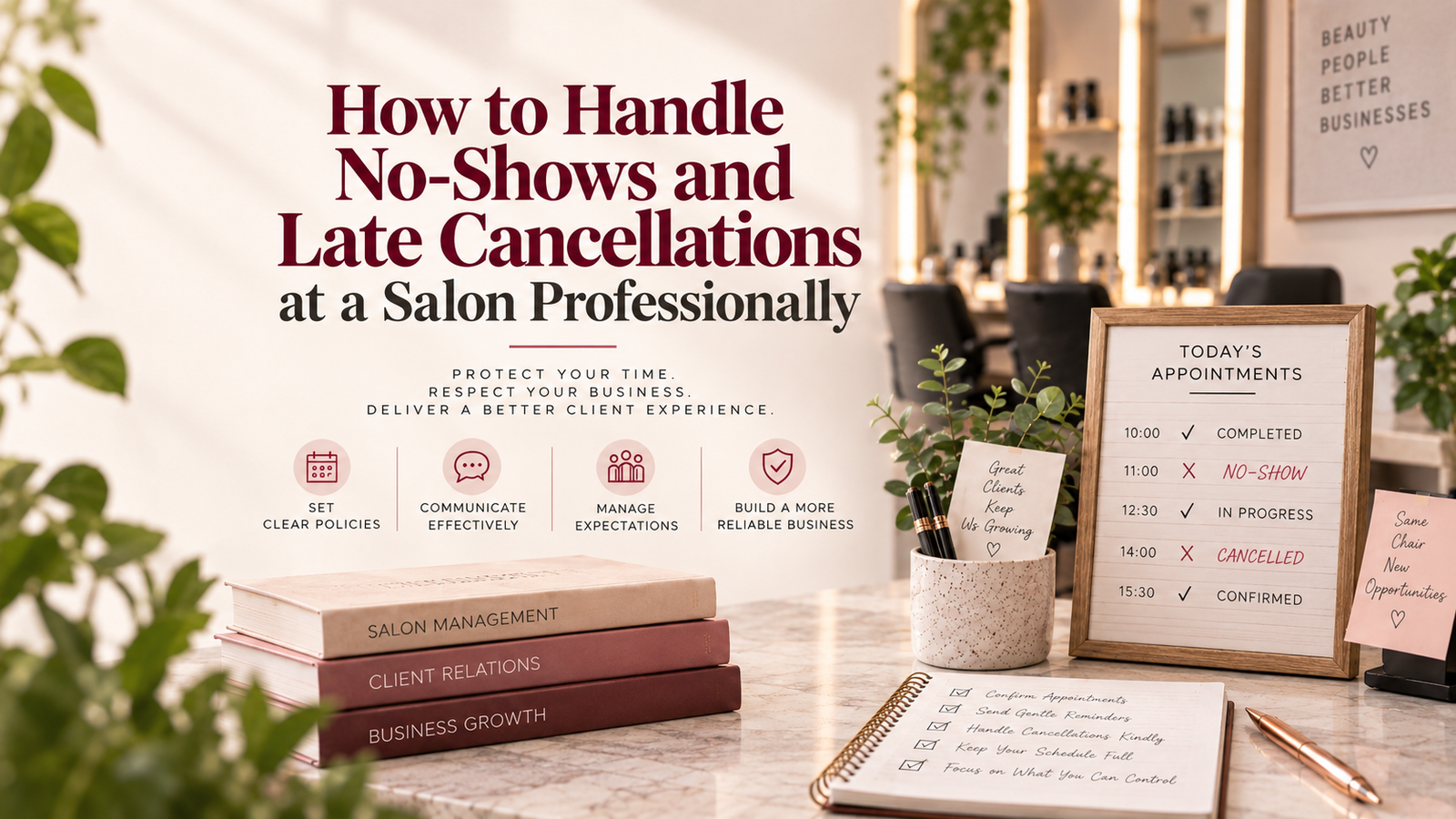
A no-show costs more than one missed appointment. That slot could have gone to another client. The product was often already prepped. The professional’s time was blocked and paid for, either way. Most salons handle this with frustration instead of a policy. That’s the problem. A clear, fair policy protects income. It also protects the relationship with the client, if it’s built and communicated properly. So, let’s understand how to handle no-shows and late cancellations at a salon professionally.
Define the Difference Between No-Shows And Late Cancellations At A Salon
There are three unique situations and each needs its own response.
- A no-show is a client who simply doesn’t arrive, with no notice at all
- A late cancellation is a cancellation that comes in after the policy’s notice window has already passed
- An acceptable reschedule is a change made with enough advance notice to actually refill the slot
A policy that treats all three the same will feel unfair. Clients notice that. It damages trust faster than the missed appointment itself.
Build a Policy That’s Fair But Firm
A written policy removes guesswork. It also removes emotion from the conversation later.
- Set a clear notice window. Twenty-four to forty-eight hours is standard for most salon services
- Consider a deposit or prepayment for longer or higher-value services, like colour or bridal bookings
- Decide the fee structure in advance. A percentage of the service cost is common. Keep it consistent across clients
- Allow one grace exception for first-time offenders. Treat repeat no-shows differently, with the fee applied automatically
Communicate the Policy Before You Need It
A policy only works if the client knew about it beforehand. Surprising someone with a fee after the fact feels punitive. It rarely lands well.
- State the policy clearly at the time of booking, not buried in fine print
- Include it again in the confirmation message sent right after booking
- Send a reminder message twenty-four hours before the appointment, and ideally a second one a couple of hours before
- Display the policy visibly in the salon itself, near reception or on a service menu
Reduce No-Shows Before They Happen
Prevention works better than enforcement. A few simple habits cut no-show rates significantly.
- Automated reminder messages are the single most effective, lowest-effort fix most salons haven’t set up yet
- Require a small deposit from new or first-time clients specifically, since they carry the highest no-show risk
- Keep a short waitlist for popular time slots, so a late cancellation can still be filled quickly
Enforce Without Burning the Relationship
Enforcement is where most salons get uncomfortable. It doesn’t have to damage the relationship, if it’s handled consistently and calmly.
- Keep the tone warm, not accusatory, when following up after a missed appointment
- Apply the fee the same way for every client. Inconsistency is what actually breeds resentment, not the fee itself
- Explain the reasoning briefly if asked. Most clients understand once they hear the slot was blocked and product was prepped
When It’s Fair to Make an Exception For No-Shows And Late Cancellations At A Salon
Genuine emergencies happen. Judgment still matters here.
- A one-time, clearly genuine emergency is reasonable grounds for a waived fee
- A long-standing, loyal client with a clean history has earned some benefit of the doubt
- A pattern of exceptions for the same client is not an exception anymore. It’s a policy that isn’t actually being enforced
At LTA School of Beauty, students learn the business side of running a salon floor, not just the technical skills. Through understanding how to set and enforce a fair cancellation policy, they are able to protect their income without damaging client relationships.
Frequently Asked Questions
How much notice should a cancellation policy require?
24 to 48 hours is standard for most salon services. Longer or higher-value services, like bridal bookings, often need more.
Should salons charge a fee for no-shows?
Yes, most professionals recommend it. A fee, often a percentage of the service cost, compensates for the blocked time and lost booking opportunity.
How do you enforce a cancellation policy without upsetting loyal clients?
Apply it consistently, communicate it clearly in advance, and keep the tone calm rather than accusatory. Save exceptions for genuine, one-time situations.
Do deposits actually reduce no-shows?
Yes. Deposits, especially for new clients and longer services, significantly lower no-show rates, since the client has already committed something upfront.