
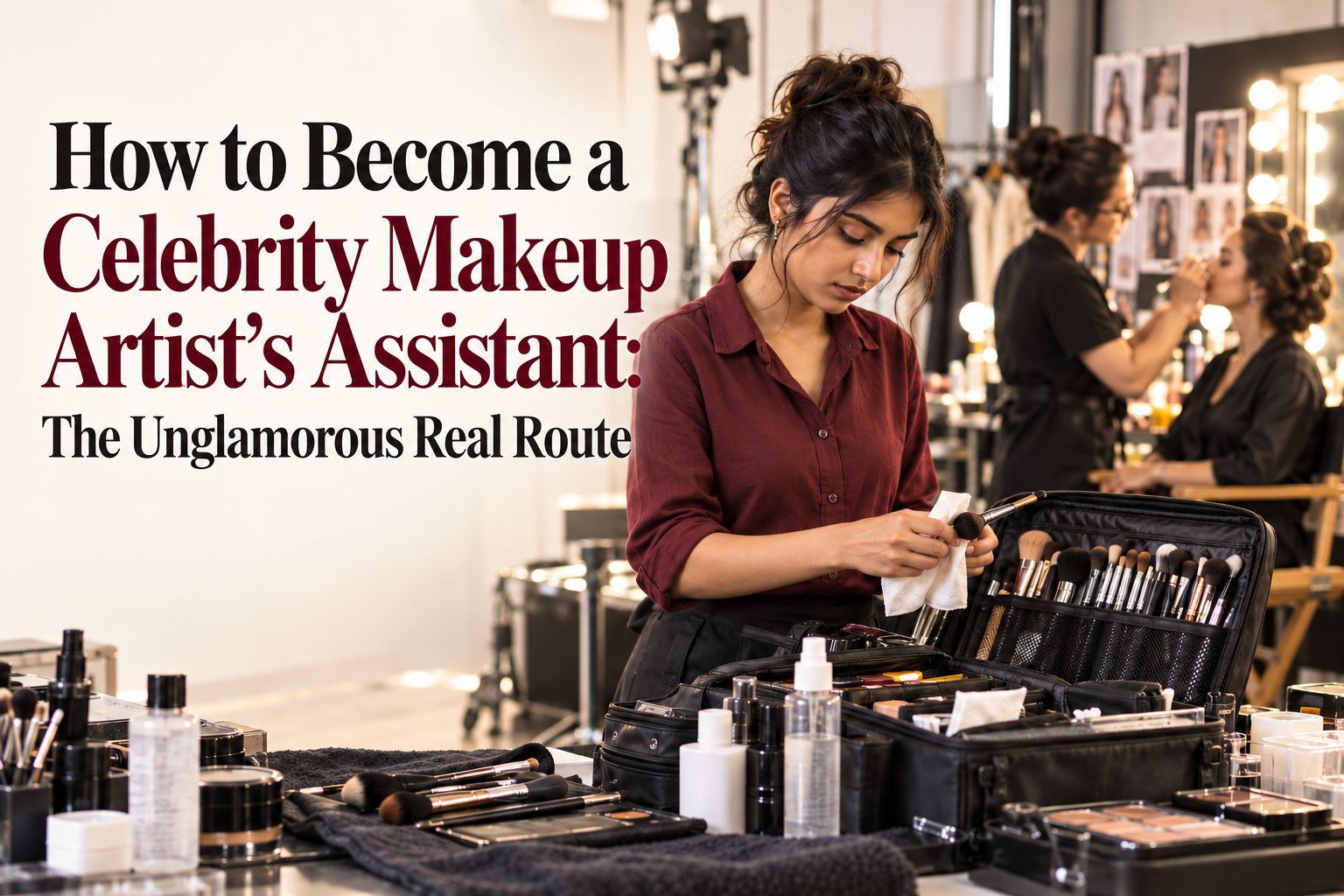
Most people see the finished look on a red carpet or a film poster. Few see the person holding the brush case, cleaning the sponges and standing in a corridor at 4 a.m. That person is the assistant, and almost every well-known makeup artist started there. So how do you become a celebrity makeup artist’s assistant? Build solid basic skills, learn hygiene and kit management, assist on smaller jobs to gain experience, and then approach artists with a clear, professional portfolio and a good attitude. There is no single entry route, and it usually takes patience. Let’s understand in detail.
What An Celebrity Makeup Artist’s Assistant Actually Does
The job is far less glamorous than it looks. On a typical shoot or event day, an assistant may:
- Carry, unpack and arrange the kit
- Sanitise brushes, palettes and tools between clients
- Prep the client’s skin before the artist begins
- Apply base makeup or do simple parts of the look when asked
- Keep track of products, shades and lashes
- Handle touch-ups on set under the artist’s direction
- Run errands, like fetching water or getting forgotten items
- Take notes and photos of the final look for continuity
- Pack up and restock at the end
Some days you may barely touch a face. Other days you may do a lot. Your job is to make the artist’s work smoother, which is why organised, calm assistants get called back.
The Skills You Need Before You Start
You do not need to be a star artist, but you do need a strong base.
- Clean, confident basics. Skin prep, base application, blending, brows, eyes and lips. Speed comes with practice.
- Knowledge of different skin tones and types. Productions include people of every complexion, so you must match and adjust properly.
- Hygiene habits. Washing hands, sanitising tools, using disposables and avoiding cross-contamination. This is non-negotiable.
- Kit organisation. You should be able to find any product in seconds.
- Colour and product knowledge. Know undertones, finishes and which products work under lights and cameras.
- Hair basics. Simple styling and touch-ups are a plus, especially on smaller teams.
- Good communication. Listen closely, ask smart questions and speak politely to everyone on set.
- Stamina. Long hours on your feet are normal.
Step By Step Route To Be A Celebrity Makeup Artist’s Assistant
Step 1: Train properly
A recognised course gives you structure, supervised practice and feedback. Choose one with a lot of hands-on work, and practise on different faces, not only your own or a few friends.
Step 2: Practise on real people
Offer your services to friends, family and local events. Try different looks, including simple everyday makeup, party looks and bridal basics. Each person you work on teaches you something new.
Step 3: Build a portfolio
Collect clear photos of your best work. Include a range of skin tones, ages and looks. Quality beats quantity, so ten strong images are better than fifty weak ones. Keep a short bio and your contact details ready.
Step 4: Start with smaller assisting jobs
Do not aim straight for the biggest names. Begin by assisting salon artists, bridal professionals, photographers’ teams or local fashion shoots. These jobs teach you how a working day runs, including timings, client handling and how to behave on set.
Step 5: Learn how sets work
Whether it is film, television, ads or fashion, each has its own rhythm. Watch how the team communicates. Learn terms like call time, wrap, continuity and touch-up. Ask questions at the right moment and not in the middle of a hectic prep.
Step 6: Network the right way
Most assistant roles come through recommendations. Meet photographers, stylists, other artists and production people. Be kind and reliable. Reach out to artists with a short message that includes your name, a link to your portfolio, what you can offer and your availability. Do not send long messages or ask for a job in the first line.
Step 7: Be ready to start small
Many assistants begin with unpaid or low-paid trial days. Be careful here. A short trial to show your skills is common, but you should not be working for free for months. Agree what is expected, how long the trial lasts and whether travel and food are covered. If you are unsure, ask.
Step 8: Make yourself easy to hire again
Be on time, stay calm, keep your area tidy and never gossip. Many artists say they rebook assistants who are reliable and have a positive attitude over those who are slightly more skilled but difficult.
How Film, TV And Fashion Differ
| Setting | What to expect |
| Film and TV | Long shifts, continuity work and strict looks to repeat daily |
| Fashion shows and shoots | Fast changes, many models and tight timing |
| Ad shoots | Polished, camera-ready finishes, with many people involved |
| Events and red carpet | Quick glam, touch-ups and time pressure |
In India’s film industry, makeup artists and hairdressers often work through professional associations that have their own membership rules, for example the Cine Costume Make-Up Artists and Hair Dressers’ Association. If you are aiming for film sets, find out early how membership works and what is required.
Realistic Expectations As A Celebrity Makeup Artist’s Assistant
- Pay may be modest at first. Early assisting often pays little, and some days may be unpaid trials. Plan how you will support yourself, perhaps with salon or freelance bookings on the side.
- It takes time. Moving from assistant to lead artist usually takes years of work and relationships, not months.
- Competition is high. Many people want these roles. Being reliable and skilled sets you apart.
- Travel and odd hours are normal. Call times can be before sunrise, and shoots may run late.
- Credit may be limited. Assistants often work in the background. The reward is learning, contacts and a growing reputation.
Mistakes To Avoid
- Treating the artist as a celebrity and not as a boss. Be respectful, but focus on the job.
- Posting set photos or client details on social media without permission. Privacy matters, and leaks can end a career.
- Skipping hygiene because you are in a hurry
- Arguing with the artist or the client on set
- Accepting unclear unpaid work with no end date
- Giving up after a few rejections
At LTA School of Beauty, students build the practical makeup skills, hygiene habits and professional conduct that assisting work demands. By practising on varied skin types and learning how to work in a team, they are able to prepare for set-ready careers in fashion, film and beyond.
FAQs
How do I become a makeup artist’s assistant?
Train in the basics, practise on different people, build a clear portfolio and start with smaller assisting jobs. Then contact artists politely with your portfolio and availability. Reliability and a good attitude help you get called back.
Do I need a makeup course to assist a celebrity makeup artist?
There is no single rule, but a recognised course gives you structured skills, hygiene training and supervised practice. Many artists prefer assistants who already know the basics, so formal training and a portfolio improve your chances.
Do makeup assistants get paid?
Some do, some begin with low-paid or unpaid trial days. Rates depend on the artist, project and city. Agree on pay, timing and expenses before the job starts, and avoid open-ended unpaid work.
How long does it take to go from assistant to lead makeup artist?
There is no fixed timeline. For most people it takes years of assisting, building a portfolio and earning trust from clients and colleagues. Steady, reliable work matters more than speed.