
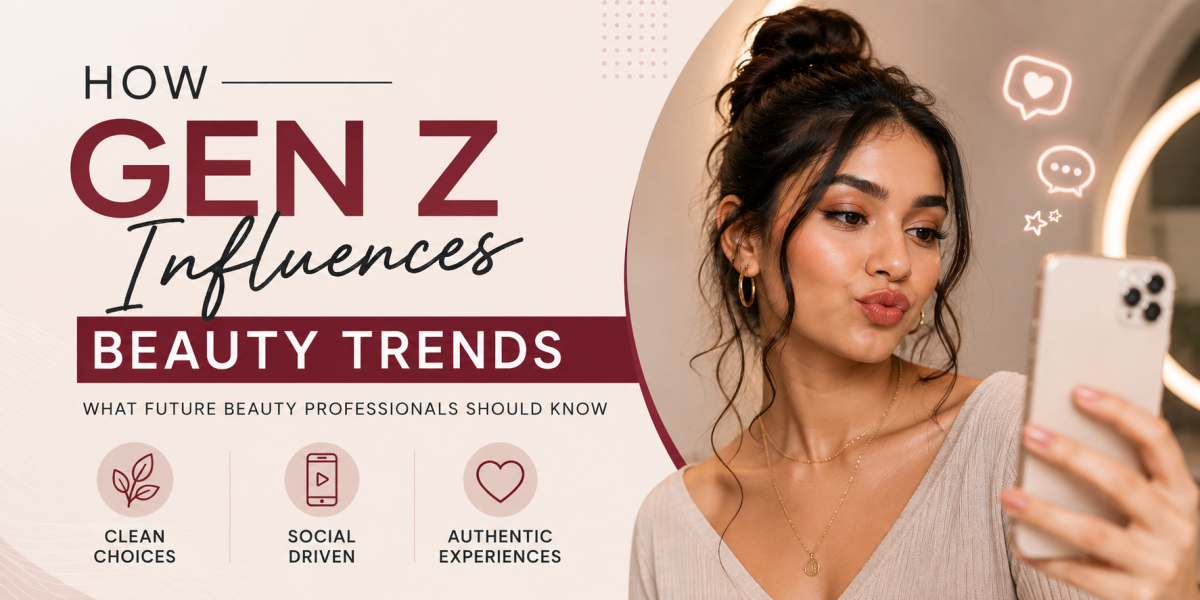
The beauty industry continues to evolve as per changing consumer desires. But no generation has impacted it as Gen Z has done. Gen Z, born in the late 1990s to early 2010s, has grown up with social media, instant access to information and a strong desire for authenticity. And with that, they’re influencing and bring a change in the definition of beauty, and how beauty professionals engage with clients.
For aspiring hairstylists, makeup artists, beauty therapists, and salon professionals, awareness of these changes is no longer optional, it’s absolutely fundamental. Keeping on top of Gen Z beauty trends can help professionals offer services that meet changing expectations and build sustainable careers.
Why Gen Z is shaping the future of beauty?
Gen Z, or today’s youth, isn’t just blindly following beauty trends. Instead, they are questioning everything and paving their own way. They have a knack for researching ingredients, comparing products, seeking professional advice, and they admire brands that share their values.
This generation also has a completely different way to consume beauty content. Back in the day, the benchmark was set by what TV showed, movies preached, and magazines editorially pushed. However, today the youth have access to tutorials, product reviews, expert advice, and product breakdown through social media and internet. This influences their purchasing decisions.
So, for beauty professionals, expertise, transparency and digital presence have become as important as technical skills.
Let’s delve into the trends that are rising because of Gen Z:
Trend 1: Skin Care Before Make-up
Gen Z has prioritised skincare like no other generation. They believe in a healthy glow that comes from within. They focus on healthy skin as the base of their beauty routine, rather than heavy makeup to get flawless skin.
This has resulted in a demand for services such as skin analysis, customised facials and ingredient-based skincare recommendations. Professionals who are well-versed in skin science are in a better position to advise clients on treatments that are appropriate for their specific needs.
Trend 2: The Strength of Authenticity Over Perfection
While buying products and seeking treatments, Gen Z is not looking at perfection, they are looking at authenticity. The young consumers embrace freckles, textured skin and unique facial features instead of hiding them. They want natural and authentic solutions to enhance their skin, rather than changing it.
Accordingly, makeup techniques are also getting increasingly personalised. Beauty professionals are expected to enhance individual features while respecting personal style and preferences instead of creating identical looks for every client.
This shift also emphasises the value of having realistic and honest consultations recommendations that can build trust with clients.
Trend 3: Inclusivity is the New Norm
The beauty industry is now more inclusive than ever. Clients want products, shades and services that are appropriate for different skin tones, hair textures, ages, and identities. Everyone wants representation.
This simply means that professionals need to learn the skills and know-how to work confidently with a variety of clients. Inclusive beauty isn’t just about offering more options, it’s about making sure each client feels seen, respected and understood during their experience.
Those days are gone when clients could suggest smoothening to curly hair clients. Now, they would want treatments to enhance and beautify their curls. Similarly, makeup artists can no longer change skin tones with makeup to make everyone look fairer. They need to learn working with different complexions to enhance the natural features.
Trend 4: Sustainability and Conscious Beauty
Environmental awareness is affecting many beauty choices. An increasing number of Gen Z consumers want brands that provide eco-friendly packaging, are cruelty free and practise responsible business practices.
Product choices still matter, but sustainability is also about how salons are run. Minimising waste, utilising resources wisely and making mindful product recommendations can help you create a more responsible beauty practice and appeal to eco-conscious clients.
Trend 5: Social Media Is the New Beauty School
Social media has changed the way beauty trends are created and disseminated. Hairstyle, makeup techniques or skincare routines can become world-wide phenomena in a matter of days creating new opportunities for beauty professionals to learn, showcase their work and engage with clients.
But online trends also make it important to separate viral advice from scientifically sound practices. Clients often come in with ideas they’ve seen on social media and it’s the professional’s job to explain what’s appropriate, safe and achievable.
What makes a skilled beauty professional is the combination of creativity and technical expertise.
What This Means for Future Beauty Professionals?
The beauty industry is not simply about technical skill anymore. Today’s professionals need to understand consumer behaviour, communicate effectively, adapt to emerging trends, and continue to learn throughout their careers.
Gen Z has pushed the beauty trends that are much more educational, transparent, inclusive, and personalised. Beauty professionals who embody these values will be better equipped to earn trust, deliver meaningful client experiences and stay relevant in a competitive market.
LTA School of Beauty trains students in practical beauty techniques, industry developments, client communication, and changing professional standards. Aspiring professionals are able to pair technical skills with a progressive vision of the beauty scene to build the skills necessary to thrive in an ever-changing industry.