
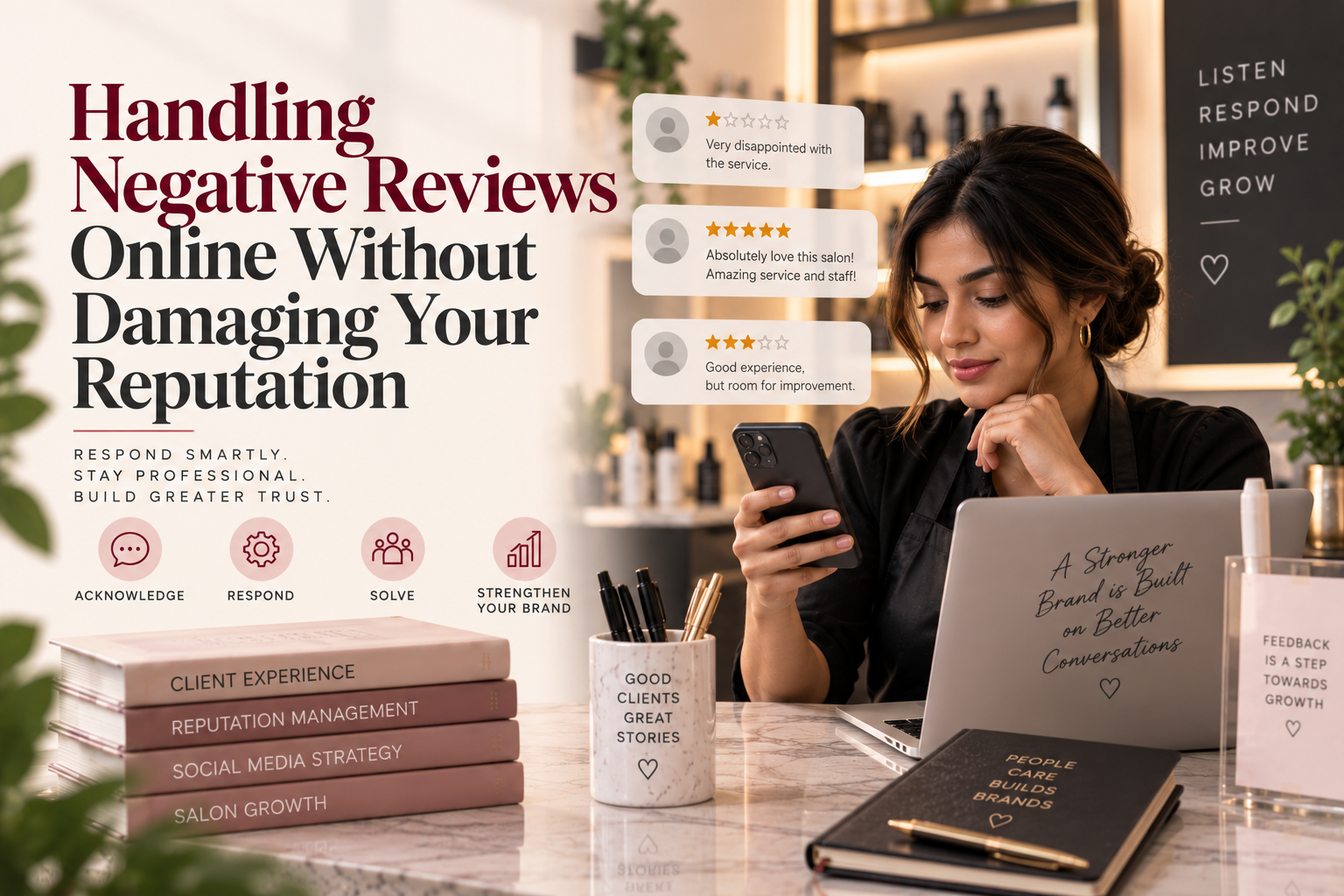
A negative review feels personal, because in beauty work, it usually is. The service happened on someone’s actual face or hair, in front of a mirror, often for an important day. That’s exactly why this deserves more than a generic “sorry to hear that” template. How a professional responds depends heavily on whether they’re running a salon, working freelance, doing makeup, or doing hair, since each of these carries different risks and different fixes. Here’s how handling negative reviews online works, without damaging your reputation.
The Core Framework, Before You Type Anything
A few rules apply no matter who’s responding.
- Respond calmly and factually. A defensive or emotional public reply almost always looks worse than the original review
- Acknowledge the client’s experience without publicly admitting fault or liability you haven’t actually confirmed internally
- Move detailed back-and-forth to a private message or call. A public comment thread arguing details helps no one reading it
- Respond promptly, ideally within a day or two. A months-old unanswered negative review looks worse than the review itself
- Never delete a genuine review just because it’s negative. Only report reviews that are actually fake, abusive, or clearly against a platform’s policies
How Salon Owners Should Be Handling Negative Reviews Online
- Respond as the business, not as an individual defending themselves. “We take this seriously” lands better publicly than a personal, emotional reply
- Involve the specific staff member privately before responding publicly. This is so the public reply isn’t contradicted by what actually happened internally
- Check whether this is a one-off or part of a pattern with a specific service or team member. A repeated complaint theme is a training issue, not a review problem
- Offer a concrete next step publicly, like inviting the client to contact the salon directly, rather than just apologising with no resolution path
What Freelancers and Independent Professionals Can Do
- One bad review carries disproportionate weight when there are only twenty or thirty total reviews, compared to a business with hundreds. This makes actively asking happy clients for reviews a genuine defensive strategy, not just marketing
- It’s harder not to take a review personally when it’s literally your name attached. But the public response still needs to stay professional rather than emotionally defensive
- Avoid over-explaining or justifying at length in a public reply. A short, calm response followed by a private conversation reads far better than a long public defence
The Right Approach For Makeup Artists
- “It didn’t look like the picture” is one of the most common and most subjective complaints in this field, since a reference photo was created on a different face structure and skin tone entirely
- If a consultation happened with an agreed reference look, it’s fair to calmly note that the look was discussed and approved beforehand, without sounding combative about it
- “The makeup didn’t last” complaints often involve event-day factors like heat, humidity, sweating, or crying, genuinely outside a professional’s control. It’s reasonable to mention this factually, without sounding like an excuse
- Photos posted publicly alongside a negative review need a measured response. Arguing about someone’s own photo in public rarely goes well. This is true even when the professional feels the photo is unflattering or poorly lit
Handling Negative Reviews Online For Hairstylists
- Colour and cut disputes often come down to a mismatch between a reference photo and what the client’s actual hair, level, porosity, or condition could realistically achieve in one session. Explaining this calmly and factually, ideally referencing what was discussed in the original consultation, is fair
- “You damaged my hair” claims are genuinely liability-sensitive. Avoid publicly admitting fault or negligence before it’s actually been assessed, but also avoid sounding dismissive of a real concern
- Offering a complimentary consultation or assessment, rather than arguing the point publicly, usually resolves this faster and looks better to anyone else reading the thread
- Keeping written consultation notes and, ideally, before photos for chemical services isn’t just good practice, it’s real protection if a dispute like this ever escalates
Platform-Specific Considerations For Handling Negative Reviews Online
- Google Business Profile has an official public response feature. Always use it rather than leaving a negative review unanswered, since the response is visible to every future visitor, not just the original reviewer
- On Instagram, don’t delete a critical comment just because it’s uncomfortable. Deleting without genuine cause, like abuse or spam, tends to escalate the situation rather than resolve it
- Review aggregator platforms usually have an official process for reporting reviews that are clearly fake, from a non-client, or that violate their content policies. Use that process rather than trying to argue the review down in the comments
Turning This Into a Long-Term Strength
- Proactively asking satisfied clients for reviews keeps the overall rating resilient, so one negative review doesn’t disproportionately shape a new client’s first impression
- Responding to positive reviews too, not just negative ones, signals genuine engagement rather than only showing up when there’s damage control to do
- A well-handled negative review, visible to future clients, can actually build more trust than having no negative reviews at all, since it shows how a professional behaves when something goes wrong
At LTA School of Beauty, students learn the reputation management skills that protect a beauty career long after training ends. Through understanding how to respond to criticism calmly, whether running a salon, working freelance, or building a personal client base, they are able to handle a bad review without letting it define their reputation.
Frequently Asked Questions
Should you ever delete a negative review?
Only if it’s genuinely fake, abusive, or clearly violates a platform’s policies. Deleting a real client’s honest negative experience usually causes more damage than the review itself once discovered.
How fast should you respond to a negative review?
Ideally within a day or two. A prompt, calm response signals active engagement, while a long-unanswered negative review looks worse than a timely, professional reply.
What’s the biggest mistake professionals make when responding publicly?
Getting defensive or arguing details in the public comment thread. It rarely changes the reviewer’s mind and often makes the professional look worse to everyone else reading it.
Can a bad review actually be reported and removed?
Only if it violates a platform’s policies, such as being fake, from a non-client, or abusive. A genuine but unflattering review generally can’t be removed just for being negative.