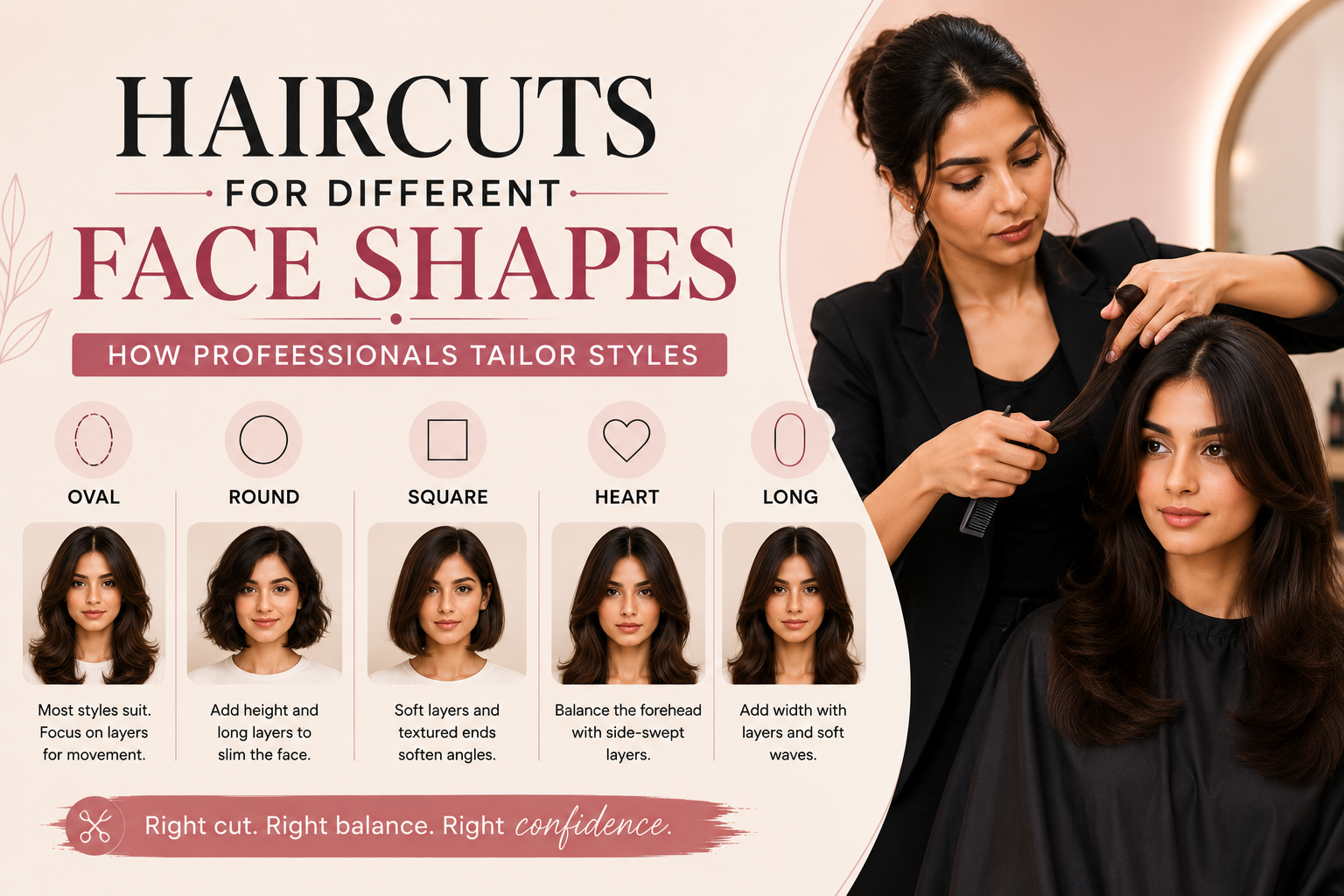
A client comes into the salon holding a picture of a celebrity haircut. And, their first question is, “Can you do this look for me?” A thorough professional knows that the answer is not a simple yes or no. First there is a proper consultation and only then they take out the scissors. One of the first things they look at is the clients face shape as there are different suitable haircuts for different face shapes.
The aim is not to follow strict rules but to make a cut that works with their natural features and makes them look all the more flattering.
Therefore, knowing face shapes is a basic skill for every hairstylist. It helps professionals give clients individual cuts, not just copy trends.
Why Face Shape Is Only the Beginning
Many people think that only the shape of face determines the perfect haircut. However, professionals actually consider a number of factors at the same time: hair texture, density, growth patterns, lifestyle, maintenance preferences and the client’s own style.
When we talk about suitable haircuts for different face shapes, it’s crucial to remember that the shape of the face only provides a framework for visual balance.
Let’s take a look at the most common face shapes and how stylists style them.
Oval Faces
Main features
- Even proportions
- Jaw slightly is narrower than forehead
- Rounded, soft shape
What professionals aim for
Oval faces are naturally well balanced so the aim is generally to maintain that harmony rather than change it dramatically.
Haircuts that work well
- Long layers
- Blunt bobs
- Pixie haircuts
- Lobs
- Curtain bangs
What to look out for
Avoid hairstyles that give too much height without balance, which can elongate the face.
Round Face
Main features
- Similar length and width
- Fuller cheeks
- Softer jawline
What professionals aim for
Since the face is well-rounded, the aim is to add definition around the face and create the illusion of length.
Haircuts that work well
- Long layers
- Angled lobs
- Side partings
- Face-framing layers below the jaw
What to look out for
Avoid very wide, rounded styles that emphasise facial width or heavy chin-length bobs with straight edges.
Square Face
Main features
- Prominent jawline
- Wide forehead
- Forehead and jaw equal in width
What professionals aim for
Soften sharp features without changing the natural shape of the face.
Haircuts that work well
- Soft layers
- Waves
- Textured Bobs
- Side swept fringe
What to look out for
Avoid very blunt cuts that end right at the jawline, as they can make the jaw appear more prominent.
Heart Face Shape
Main features
- Wider forehead
- Sculpted cheekbones
- Thin chin
What professionals aim for
Add softness and movement to the lower half of the face to create a harmony.
Hairstyles that work well
- Collarbone length cuts
- Bobs up to chin length
- Side swept fringe
- Gentle waves
What to look out for
Avoid heavy volume at the crown without fullness around the jaw.
Long Face (Oblong)
Main features
- Face significantly longer than it’s wide
- Long forehead
- Elongated chin
What professionals aim for
The aim is to create visual width and reduce the appearance of length.
Haircuts that work well
- Shoulder length looks
- Softly curled hairstyles
- Layers with volume at sides
- Curtain fringe or an all-over fringe
What to look out for
Avoid very long, straight styles with little movement, as they can elongate the face even more.
Diamond Face
Main features
- Narrow forehead
- Wide cheekbones
- A delicate jawline
What professionals aim for
Soften the forehead and jawline while balancing the width of the cheekbones.
Haircuts that work well
- Layered bobs
- Chin-length cuts
- Side parting
- Textured styles
What to look out for
Avoid flat haircuts make cheekbones look wider.
Conclusion
A great haircut isn’t about rules. It’s about balance. Why? Because no two clients are the same.
Two people may have the same face shape, but completely different hair textures, lifestyles or styling preferences. This is why experienced stylists don’t just read charts. They follow a holistic approach before suggesting haircuts for different face shapes
Instead, they combine face shape analysis with consultation, technical know-how and an understanding of the client’s goals.
The best haircut is not what’s trending on social media, it’s what’s tailored to the person sitting in the chair.
LTA School of Beauty trains students to view haircutting as a technical skill that requires a thorough consultation process. Understanding face shapes and hair characteristics, as well as knowing what the client wants, gives them the confidence to advise on styles that are bespoke, practical and professionally knowledgeable.
Frequently Asked Question
Why is face shape important when choosing a hairstyle?
Face shape is an important tool for hairstylists to create balance and suggest haircuts that enhance the client’s natural features. But that’s only one part of the consultative process.
Does each face shape require a different haircut?
No. Similar haircuts for different face shapes can also work. While there are some versatile styles that work for a lot of people, professional hairstylists do haircutting that is designed to fit face shape, hair texture, density, lifestyle and maintenance preferences.
How do hair stylists determine face shape of a customer?
In consultation, the professionals examine the proportions of the forehead, cheekbones, jawline and the overall length of the face and advise on suitable hairstyles.
Can I be given different haircut recommendations for the same face shape?
Yes. Hair type, styling routine, personal preferences and look desired may lead to different recommendations for two clients with the same shape of face.