
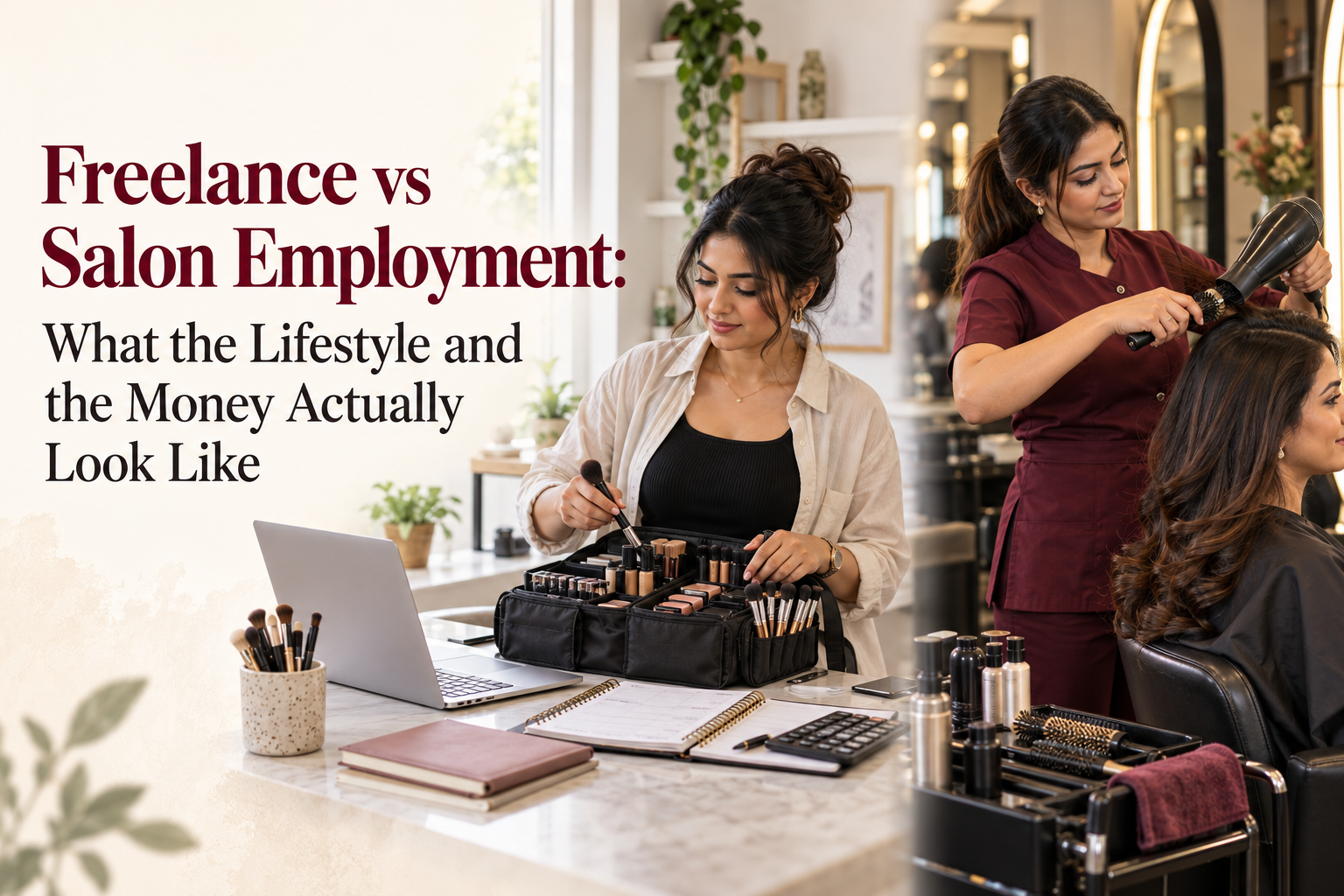
Every beauty student reaches this question sooner or later. Do you join a salon and draw a steady salary, or do you go freelance and run your own show? Social media makes freelancing look like freedom and big bookings. Salon jobs look safe but slow. So which is better? Neither, in every case. A salon job offers steady income, training and a ready client flow. Freelancing offers more control and higher earning potential, but with irregular income and more responsibility. So, when it comes to freelance vs salon job, the right choice depends on your skills, savings, personality and stage of career.
How The Money Works In A Salon Job
When you work in a salon, you usually earn through one of these models:
- Fixed salary: The same amount every month.
- Salary plus incentives: A base pay plus a bonus linked to targets, like service revenue or product sales.
- Commission: A percentage of what you bill, sometimes with a small base.
- Chair or booth rent: You pay the salon a fee and keep what you earn, which sits halfway between employment and freelancing.
The salon pays for rent, electricity, products, equipment, marketing and often your training. Many employers offer benefits such as paid leave, and eligible employees may also receive provident fund and insurance. Check what your offer actually includes.
The trade-off: Your income has a ceiling. Even if you are fully booked, the salon takes a share, and a rise in pay usually comes through promotion or a negotiated hike.
How The Money Works As A Freelancer
As a freelancer, you keep what clients pay you, but you carry every cost yourself.
Money in:
- Service fees from each booking
- Package or event fees, such as weddings
- Product sales or affiliate earnings, if you choose to sell
- Teaching, workshops or content income
Money out:
- Products, tools and disposables
- Kit maintenance and replacement
- Travel, parking and sometimes an assistant
- Marketing, photos and portfolio costs
- Insurance, taxes and accounting help
- Training and upgrades
- Slow-season gaps, when bookings drop
Your income may be higher in good months and much lower in quiet ones. One big wedding weekend can look like a large pay cheque, but divide it by the hours of prep, travel and admin to see the real figure.
Side-By-Side Comparison
| Salon employee | Freelancer | |
| Income | Steady, with a ceiling | Variable, with higher upside |
| Costs | Mostly paid by the salon | You cover everything |
| Clients | Provided by the salon | You find and keep your own |
| Schedule | Set shifts | Flexible, but often irregular |
| Benefits | May include leave, insurance and provident fund | None unless you arrange them yourself |
| Learning | Training and senior guidance | Self-driven, through experience |
| Risk | Lower | Higher |
| Control over prices | Little | Full |
| Growth | Promotion, specialisation | Brand-building, scaling or teaching |
Freelance vs Salon Jobs: What Lifestyle Actually Looks Like
Salon life
You turn up at a fixed time, work in a team and leave when your shift ends, though busy seasons often mean longer days. There are colleagues to learn from, a front desk to handle bookings and managers to deal with difficult clients. The structure is helpful, especially in the early years.
On the other hand, you follow the salon’s rules, prices and style. Weekends and festivals, the times others relax, are usually your busiest days.
Freelance life
You choose clients, services and, to an extent, hours. But “flexible” does not mean “easy.” Much of your time goes to unpaid work: replying to messages, travelling, shopping for products, editing photos, chasing payments and posting on social media. Peak season can mean very early mornings and back-to-back events, while quiet weeks can feel stressful.
You are the artist, the marketer, the accountant and the customer service team.
Who Tends To Do Well In Each Path
Salon job suits you if you:
- Are early in your career and want to build skill and speed
- Prefer steady income and a team around you
- Want to learn different services and meet many clients
- Are not yet confident in handling business tasks
Freelance work suits you if you:
- Already have solid skills and a few trusted clients
- Have some savings to cover slow months
- Enjoy marketing yourself and talking to clients
- Are comfortable with uncertainty and self-discipline
The hybrid route
You do not have to pick one forever. Many professionals combine them:
- Work in a salon full time and take weekend freelance bookings
- Rent a chair in a salon and bring your own clients
- Work part-time at a salon while building a freelance base
- Freelance in busy seasons and take salon shifts in quieter months
Check your salon contract first. Some employers restrict outside work or taking clients away.
Questions To Ask Before You Decide
- How many months of expenses do I have saved? A cushion of a few months makes freelancing far less stressful.
- Do I already have repeat clients? Starting from zero is hard.
- Can I price my work properly? Many new freelancers undercharge.
- Am I comfortable selling myself? Marketing is part of the job.
- What do I still need to learn? A good salon can teach you faster than going alone.
- What kind of life do I want in three years? Steady growth, or building your own brand?
Practical Steps If You Want To Go Freelance
- Build a portfolio with recent, clear photos of your work
- Set prices based on your real costs, not just competitors
- Keep a separate bank account for work income and expenses
- Track every rupee in and out, even in a simple sheet
- Keep records for tax purposes, and speak to a chartered accountant about registration and tax rules that apply to you
- Get a basic client agreement or booking confirmation
- Buy insurance if you can, since a client injury or product reaction can be costly
- Save in good months for slow ones
Practical Steps If You Take A Salon Job
- Ask how pay, incentives and targets work, and get it in writing
- Ask about training, growth and who you will learn from
- Check leave, working hours and weekly offs
- Look at how the salon treats hygiene and clients, since it shapes your habits
- Keep your own portfolio and build your reputation while you are there
Common Mistakes To Avoid
- Going freelance too early, with no savings or clients
- Staying in a salon job with no growth for years because it feels safe
- Comparing your income with a freelancer’s best month
- Ignoring costs when calculating freelance earnings
- Signing a salon contract without reading the exit and client terms
At LTA School of Beauty, students learn the technical and professional skills that open both paths. By building strong client-handling habits, hygiene standards and business awareness during training, they are able to choose the career route that fits their goals, whether that is a salon, a studio or their own practice.
FAQs
Is freelancing better than working in a salon for a beauty professional?
Not always. Freelancing offers more control and higher earning potential, but income is irregular and you pay all your own costs. A salon job offers steady pay, training and ready clients. Beginners often benefit from salon experience first.
Do freelance beauty professionals earn more than salon employees?
They can, but not guaranteed. Freelancers keep what clients pay but must cover products, travel, marketing and slow months. Compare your take-home income after costs, not just the booking fee.
Can I work in a salon and freelance at the same time?
Many professionals do. Check your employment contract first, as some salons restrict outside work or taking clients elsewhere. A hybrid approach lets you build a client base while keeping a steady income.
When should a beauty professional switch from a salon job to freelancing?
When you have strong skills, a few regular clients, savings to cover slow months and a basic understanding of pricing and marketing. Moving too early, without these, makes the first months much harder.