
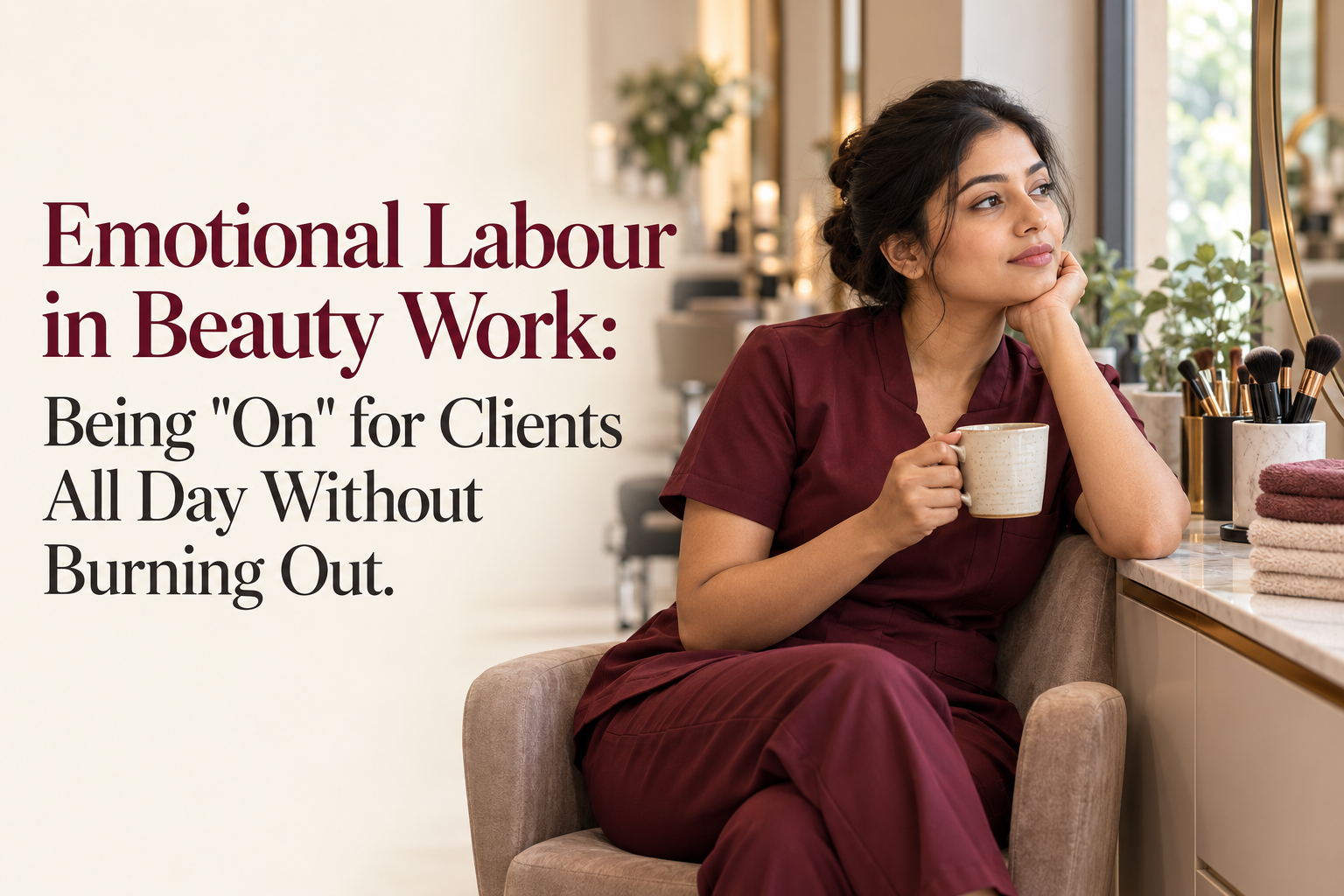
You wake up tired. The first client walks in and you smile like you slept for eight hours. You listen to her wedding stress, laugh at her jokes and stay calm when she says the colour is “not what I imagined.” By the sixth client of the day, your hands still work, but your energy does not. That is emotional labour in beauty work. It is the effort of managing your own feelings so that a client has a good experience. In beauty work, it is part of the job every single day, and it rarely gets talked about.
What Emotional Labour In Beauty Work Means
The term comes from sociologist Arlie Hochschild, who used it in the 1980s to describe jobs where workers must show certain feelings as part of their role. Think of a flight attendant staying cheerful or a nurse staying calm.
Beauty professionals do this all day. You are paid for your skill, but you are also expected to be friendly, patient and reassuring, whatever you feel inside. Your mood is part of the service.
This is different from ordinary tiredness. A haircut tires your arms. Emotional labour tires your mind.
Why Beauty Work Is So Emotionally Heavy
Beauty is a personal industry, and several things make it harder than it looks:
- Clients share a lot. Many people talk about their families, health, breakups and money while sitting in your chair.
- You touch people. Close, personal contact means trust matters more than in most jobs.
- Appearance feels emotional. A bad haircut or a breakout is not just a cosmetic problem for many clients. It affects how they feel about themselves.
- You cannot show a bad day. Clients pay for a good experience, so you hide yours.
- Reviews and ratings are public. One unhappy client can affect your reputation online.
- Long hours, few breaks. Back-to-back appointments leave little time to recover.
None of this means you are weak if you feel drained. It means the job asks for more than it admits.
Signs You May Be Heading Toward Burnout
The World Health Organization recognises burnout as an occupational phenomenon. It describes three parts: feeling exhausted, feeling distant or negative about your job, and feeling less effective at work.
In a salon or spa, it can look like this:
- Dreading the first appointment, even with clients you like
- Feeling irritated by small requests
- Going through the motions with no real interest in the result
- Feeling tired even after a day off
- Losing the joy you once felt in your craft
- Getting sick more often or sleeping badly
One tough week does not mean burnout. A pattern that lasts for weeks does need attention.
Surface Acting Vs Genuine Care
Researchers describe two ways people handle emotional labour. In surface acting, you fake the smile while feeling something different inside. In deep acting, you adjust your thinking so the warmth is more real, for example by remembering that this client is nervous about her wedding.
Surface acting tends to be more draining because you spend energy hiding what you feel. Deep acting is easier to sustain, though it takes practice. You do not have to love every client. You only need to find one honest reason to care about this appointment.
Practical Ways To Protect Your Energy
Use small resets between clients
Even two minutes helps. Wash your hands slowly, drink water, stretch your shoulders or step outside for a few breaths. Treat it as a reset, not as a break from work.
Set kind but clear boundaries
You can be warm without becoming a therapist. If a client’s story gets heavy, try lines like these:
- “That sounds really difficult. I hope things get easier.”
- “I’m glad you told me. Let’s make sure you enjoy this hour.”
Then bring the focus gently back to the service. Listening is kind. Carrying everyone’s problems home is not sustainable.
Handle difficult clients with a plan
When a client is upset, stay calm and follow three steps:
- Listen without interrupting
- Repeat the concern in your own words
- Offer a fix or a next step
A clear process takes the heat out of the moment, so you do not have to improvise under stress.
Protect your breaks
Take your lunch away from the treatment area when you can. Avoid answering client messages during your break. If your workplace has no break culture, talk to your manager about a simple schedule, even a short one.
Don’t carry the workday home
Create a small ritual that marks the end of work. Change your clothes, walk for ten minutes, listen to music on the way home or write down the one thing that went well. It helps your mind switch off.
Keep things outside work
Burnout is harder when work is your whole identity. Keep time for friends, family, movement, hobbies and sleep. These are not luxuries. They keep you able to do the job well.
Talk to someone
Share the load with a mentor, a trusted colleague or a friend in the industry. Many professionals feel they are the only ones struggling. Usually they are not.
If You Run A Salon Or Lead A Team
Owners shape how heavy the work feels. You can help by:
- Scheduling short gaps between appointments
- Avoiding back-to-back full days, if you can
- Handling abusive clients firmly and backing your staff
- Recognising good work out loud
- Rotating difficult clients where possible
Teams that feel supported also tend to deliver better service.
When To Ask For Professional Help
Self-care helps, but it has limits. If you feel constantly anxious, hopeless, unable to sleep or unable to enjoy anything for weeks, speak to a doctor or a qualified mental health professional. Asking for help is a sensible step, not a failure.
At LTA School of Beauty, students learn that professional success is about more than technique. Through training in client communication, professional conduct and workplace readiness, they are able to build the habits that help them serve clients with warmth while looking after their own wellbeing.
FAQs
What is emotional labour in the beauty work?
It is the effort of managing your own feelings to give clients a positive experience. In beauty work this includes staying friendly, patient and calm throughout the day, even when you are tired or a client is difficult.
What are the signs of burnout in beauty professionals?
Common signs include constant tiredness, dreading work, feeling irritated by clients, losing interest in your craft and feeling less effective. If these last for weeks and do not improve with rest, it is worth taking seriously.
How can I stay positive with clients all day without feeling drained?
Take short resets between appointments, set polite boundaries when conversations get heavy, protect your breaks and keep a habit that helps you switch off after work. Finding a genuine reason to care about each client also helps.
When should a beauty professional seek help for work stress?
If stress, anxiety or low mood continues for weeks, affects your sleep or stops you enjoying things you used to like, speak to a doctor or a qualified mental health professional. Early support makes a difference.