
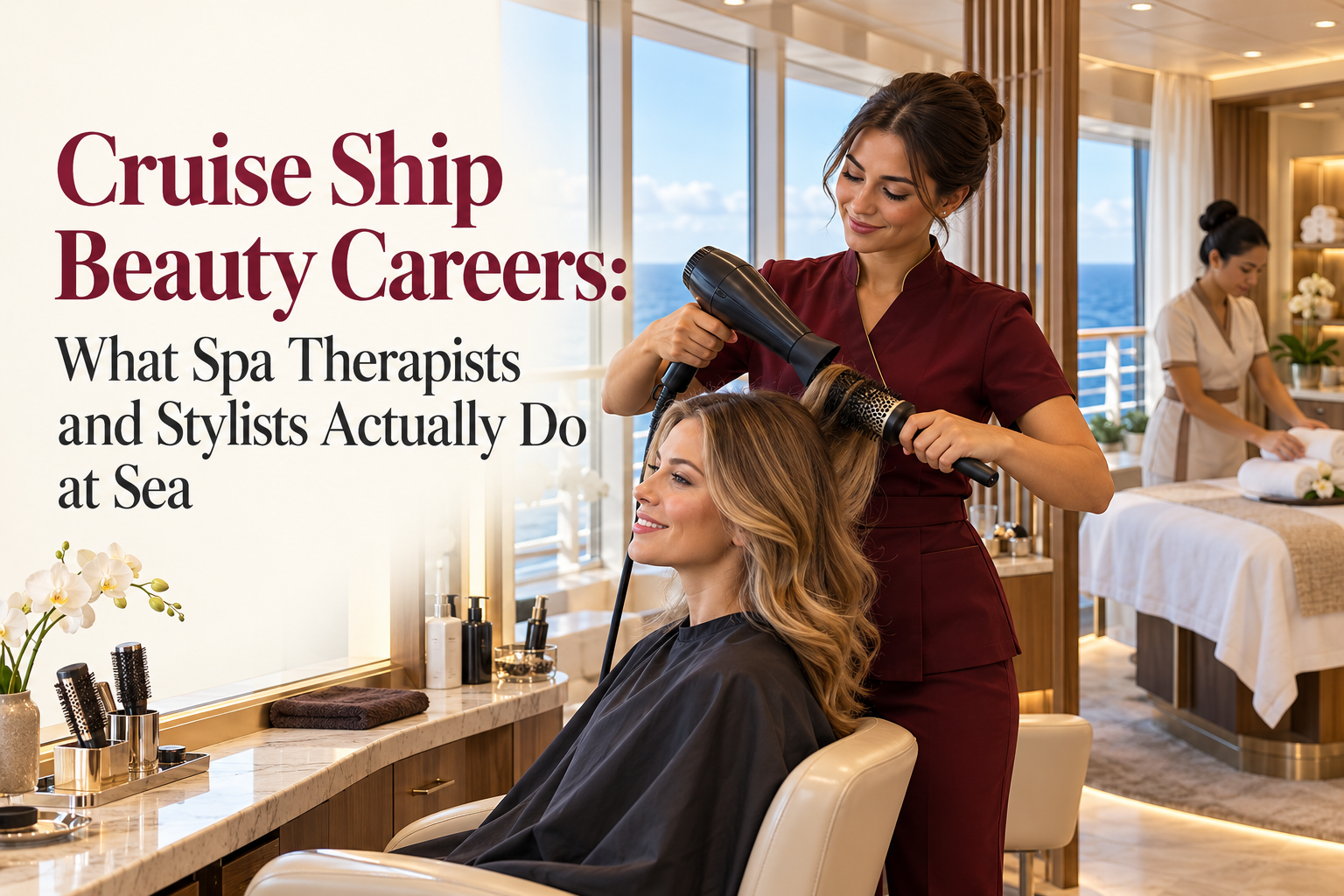
A lot of travel, sunsets from your workplace and a new port every few days. That is how most people picture a beauty job on a cruise ship. The real picture is more interesting, and a lot more demanding. So, what does a cruise ship beauty career involve? You work as a spa therapist, hair stylist, nail technician or barber, usually on a contract of a few months. You live on board, serve guests from around the world, and recommend products as part of the job. The travel is real, but so is the workload.
Who Hires Beauty Professionals For Ships
Most cruise lines don’t hire spa and salon staff directly. They give the job to specialist spa companies that run the spa and salon on board. Large operators like OneSpaWorld work with many cruise brands, and some luxury lines recruit their own spa teams. The details change from company to company, so always read the job post carefully.
Which Roles Are Available In Cruise Ship Beauty Careers
A cruise ship spa is a full beauty business floating at sea. Typical roles include:
- Massage therapist: Swedish, deep tissue, hot stone and aromatherapy treatments
- Beauty therapist or aesthetician: Facials, waxing, lash and brow tinting
- Hair stylist: Cuts, colour, blow-dries and styling for events like formal nights
- Barber: Haircuts, shaves and beard grooming
- Nail technician: Manicures, pedicures and nail art
- Acupuncturist, wellness and fitness roles: Found on larger ships
- Spa manager and assistant manager: Usually reached after experience on board
What A Normal Day Looks Like
Ship life runs on the ship’s schedule. On sea days, when the ship is travelling and guests are on board, the spa is at its busiest. Days in port are often quieter because many guests go ashore, though staff still work.
A typical day may include:
- Opening the treatment rooms and checking supplies
- Back-to-back appointments, often with short gaps
- Welcoming guests and doing a quick consultation before each service
- Recommending products or packages after the treatment
- Cleaning, restocking and keeping records
- Attending team meetings, product training and safety drills
Many people work long hours and several days in a row. Plan for a tiring routine, especially in the first few weeks.
The Part Nobody Mentions: Selling
Selling is a big part of the job. Spa companies expect therapists and stylists to recommend products and services, and your earnings are often linked to this. Many roles pay a base salary plus a share of what you sell, along with guest tips. That is why income can differ a lot from one person to another.
Selling at sea works best when it is honest. Guests are intelligent travellers and they spot a hard sell quickly. If you are good at consultation and genuine recommendations, you will do well. If you dislike selling, ask yourself whether this career suits you.
What The Work Environment Is Like
- Guests from everywhere: You may serve people from five continents in a single day. Different skin tones, hair types and expectations are normal.
- Cabins are shared: Crew usually sleep in small shared cabins, often away from guest areas.
- Meals and housing are covered: Accommodation and food are normally provided, which helps you save.
- Contracts have fixed lengths: Some are a few months, others stretch to nine. A break follows each contract.
- Internet can be slow or limited: Staying in touch with family takes planning.
- Weather happens: Rough seas can cause motion sickness, and you may have to work through it.
What Employers Usually Look For
Requirements vary, but most cruise spa employers ask for a similar set of basics:
- A recognised qualification: A proper qualification in your trade, such as a beauty therapy, massage or hairdressing certificate or diploma
- Work experience: Many employers ask for at least one or two years in a spa or salon
- Good spoken and written English: You should be able to communicate effectively and confidently in English with customers that come from different countries.
- Strong customer skills: You need to stay calm, warm and professional with many guests a day
- Practical skill in several services: Therapists who can do both facials and massage are easier to place
- Medical clearance and a valid passport
- Basic safety training: Some employers arrange this, so check who pays
Meeting these does not guarantee a job, since hiring is competitive. Treat the list as a minimum.
Pros And Cons At A Glance
| Good parts | Hard parts |
| Travel and new places | Long working hours |
| Housing and meals included | Shared cabin and little privacy |
| Chance to save money | Income depends on sales and tips |
| Exposure to global clients | Months away from family |
| Fast skill-building | Pressure to hit sales targets |
How To Prepare As A Student
- Build a strong skill base: Ships want people who can do more than one service well.
- Practise real client work: Every treatment you do before you apply counts as experience.
- Improve your English: Clear speech matters more than a perfect accent.
- Learn to consult and recommend: Practise explaining a treatment’s benefits in plain words.
- Keep your documents ready: Passport, certificates and a clean portfolio of your work.
- Look after your own health: Shipboard work is physically demanding, so build stamina and good posture habits.
Apply Safely: Avoid Recruitment Scams
Cruise ship beauty careers can easily attract fake agents. Follow these rules:
- Never pay a fee to get a job: Genuine spa and cruise employers do not charge candidates to hire them.
- Apply on the official website: Always look for jobs and apply on the official website of the employer or a spa company.
- Check the agency: In India, a recruitment agent for overseas ship jobs should hold a valid RPSL licence from the Directorate General of Shipping. Ask for the number and verify it.
- Read the contract fully: Read and verify the contract before signing. It should state your pay, contract length and duties clearly.
At LTA School of Beauty, students build the practical skills and client-handling confidence that cruise employers look for. Through hands-on training in skincare, hair, makeup and professional conduct, they learn to serve different guests with care and prepare for careers beyond India, including life at sea.
FAQs
Do you need experience to work as a spa therapist on a cruise ship?
Usually yes. Many employers ask for at least one to two years of experience in a spa or salon, along with a recognised qualification. Students can build this by working in a salon after training and by practising on real clients.
How long are cruise ship spa contracts?
It depends on the company and the role. Contracts commonly run for several months, followed by a paid or unpaid break. Your first contract is sometimes longer than the ones after it, so check the offer letter carefully.
Do cruise ship spa workers earn commission?
In many cases, yes. Pay is often a base salary combined with a commission on product sales and guest tips. This means earnings can differ between individuals, and employers explain the exact structure in the contract.
How can I tell if a cruise ship job offer is real?
Real employers do not charge candidates a fee. Apply through official company websites, and if you use an agent in India, check that they hold a valid RPSL licence from the Directorate General of Shipping. Read the contract before you sign.