
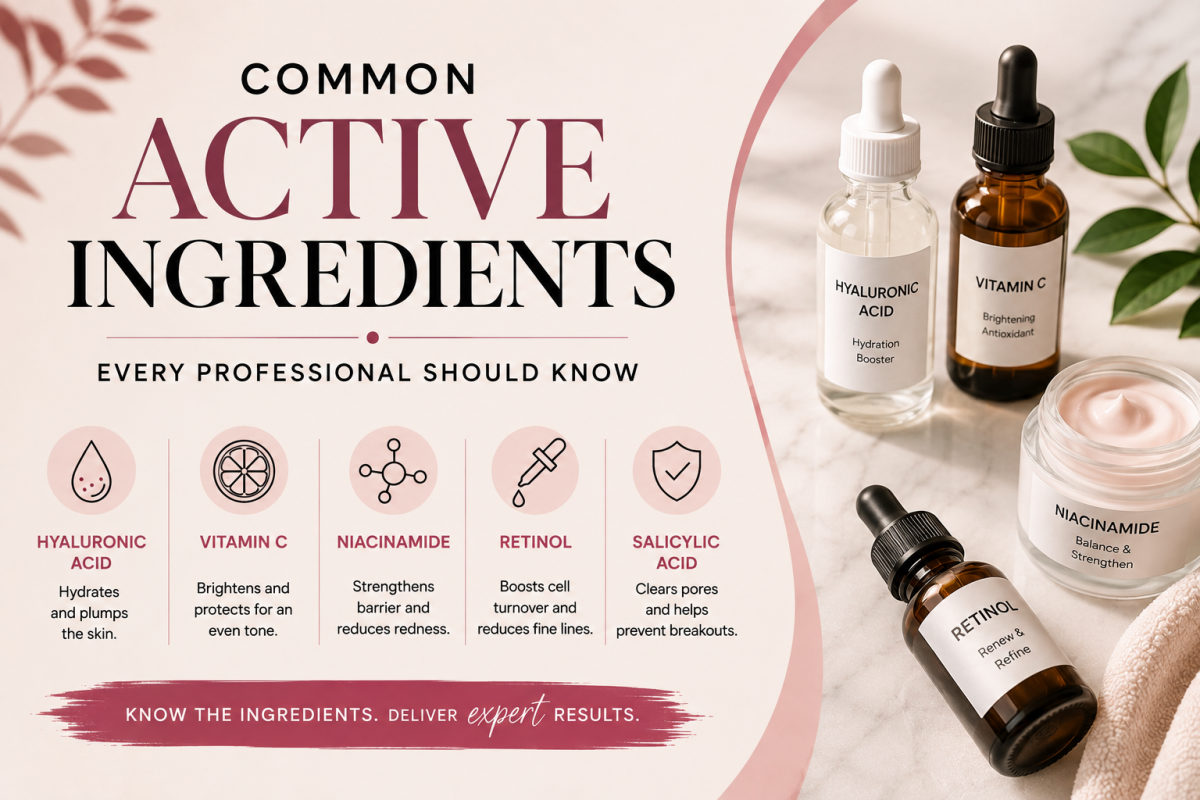
There are those who walk into a salon and ask for a “retinol facial.” Or, they saw the viral skincare clip and want to know about products with one of the active ingredients because it’s trending on the internet.
Knowing these names isn’t enough for a beauty professional. Your job is to tell clients what an ingredient does, who it’s for, and when to use it or not use it.
That’s why understanding the science behind ingredients is becoming just as important as mastering face techniques.
Why Beauty Professionals Should Know the Ingredients, Not Just the Products
Product changes and every year brands reformulate, launch new ranges and new packaging.
But ingredients are the foundation of skincare. If you understand how the key ingredients work, then you can look at products from different brands and evaluate them with confidence, rather than having to memorise hundreds of product names.
This is also handy for consulting purposes. It allows you to explain how it works for a client’s skin concerns, rather than recommending it because it is trending. That’s the difference between knowing skincare and selling skincare.
Hyaluronic Acid: The Hydration Hero
Despite the name, hyaluronic acid is not an exfoliating acid. It’s a humectant (which means it attracts water to the skin and helps increase hydration). Well hydrated skin often appears smoother, plumper and more comfortable.
However, hyaluronic acid is most effective when combined with ingredients that are moisturising and help lock in the hydration.
Best for: Dehydrated skin, dull-looking skin and skin that feels tight after cleansing.
Niacinamide: The Multi-Tasking Hero
If there was an all-rounder in skincare, niacinamide would be a strong contender. Niacinamide (Vitamin B3) helps to strengthen the skin barrier, control excess oil, reduce the appearance of enlarged pores and improve uneven skin tone.
Most skin types tolerate it well, so it’s a favourite recommendation of professionals for clients who have multiple concerns and not just one.
Best for: Oily, combination, sensitive or acne-prone skin and uneven skin tone.
Vitamin C: More Than Just a Brightening Agent
Vitamin C is often synonymous with glowing skin, but it does more than just enhance radiance. It’s a powerful antioxidant, meaning it can help protect the skin from damage from environmental factors such as pollution and UV exposure. It helps with collagen production and can also slowly improve the appearance of pigmentation.
Some forms of vitamin C are unstable, so proper storage and formulation is important in product efficacy.
Best for: Dull skin, pigmentation, post-acne marks, early signs of skin ageing.
AHAs and BHAs: Different Skin Exfoliants for Different Skin Needs
Many beginners think that all exfoliating acids work the same. They don’t.
Alpha Hydroxy Acids (AHAs) like glycollic acid and lactic acid work mainly on the surface of the skin. They help improve texture, smooth rough patches and brighten dull skin.
Beta Hydroxy Acids (BHAs) like salicylic acid are oil soluble. This enables them to penetrate the pores more deeply and are especially helpful for oily and acne-prone skin.
Best for: The choice between an AHA or a BHA should be based on the client’s skin type and concern, not on which ingredient is trending.
Retinol: The Ingredient That Commands Respect
Retinol is one of the most researched ingredients in skin care. Retinol is a vitamin A derivative often found in anti-ageing and acne skincare. It encourages skin cell turnover and collagen production. But it also must be used carefully.
Beauty pros should know that retinol can also make your skin more sensitive and it’s not for everyone. Clients on retinoids may require a slow introduction, sun protection and a well thought out skincare routine.
It’s just as important to know when not to use an ingredient as it is to know when to use it.
Ceramides: Supporting Your Skin Barrier
Healthy skin is not about fixing problems, but about protecting what is already working best.
Ceramides are natural lipids that help skin cells stick together, which strengthens the skin barrier and helps prevent moisture loss. When the skin barrier is compromised, clients can experience dryness, irritation or increased sensitivity.
Products with ceramides help restore the barrier function and improve skin comfort, especially after professional procedures or during seasonal changes.
Best for: Dry, sensitive or compromised barrier skin.
A Common Mistake Made By Beginners
One of the biggest misconceptions is that having more active ingredients means better results.
The truth is, skincare isn’t about slathering on as many ingredients as you can.
A client with sensitive skin wouldn’t be a good candidate for a retinol, exfoliating acids and vitamin C all at once without professional guidance, for example. The result can be annoyance, not enhancement.
Effective skincare isn’t about following social media trends but understanding the client’s skin type, concerns, lifestyle and treatment goals.
The right product, at the right time, often gives better results than an overcrowded routine.
Ingredient Knowledge Makes a Better Professional
Today’s customers are smarter than ever. They read ingredient lists, compare formulations and ask intelligent questions in consultations. Beauty experts who understand their ingredient science can answer those questions confidently, not just with marketing claims.
Most importantly, knowing ingredients leads to safer product recommendations, better treatment plans and personalised skincare advice.
At LTA School of Beauty, students will learn about the science of skin care and how to apply it. Through understanding how active ingredients interact with different skin types and concerns, they are able to confidently make informed recommendations and provide effective evidence-based treatments.
Frequently Asked Questions
What are the active ingredients in skin care?
The active ingredients are the parts of a skincare product that are designed to work on a specific skin issue, whether it’s dehydration, acne, pigmentation, sensitivity or the signs of ageing.
What is the best ingredient for oily or acne prone skin?
Niacinamide and salicylic acid (a BHA) are common ingredients for oily and acne-prone skin as they control excess oil and keep the pores clear.
Why should beauty professionals know about the ingredients used in skincare?
Knowing the ingredients enables beauty professionals to recommend the most suitable products, explain treatments with confidence and create personalised skincare routines that meet each individual client’s needs.
Can I use several active ingredients at once?
Some ingredients work well together, but others you have to watch out for, so they don’t irritate the skin. The best combinations will depend on the client’s skin type, concerns and overall skincare routine which is why professional guidance is important.