
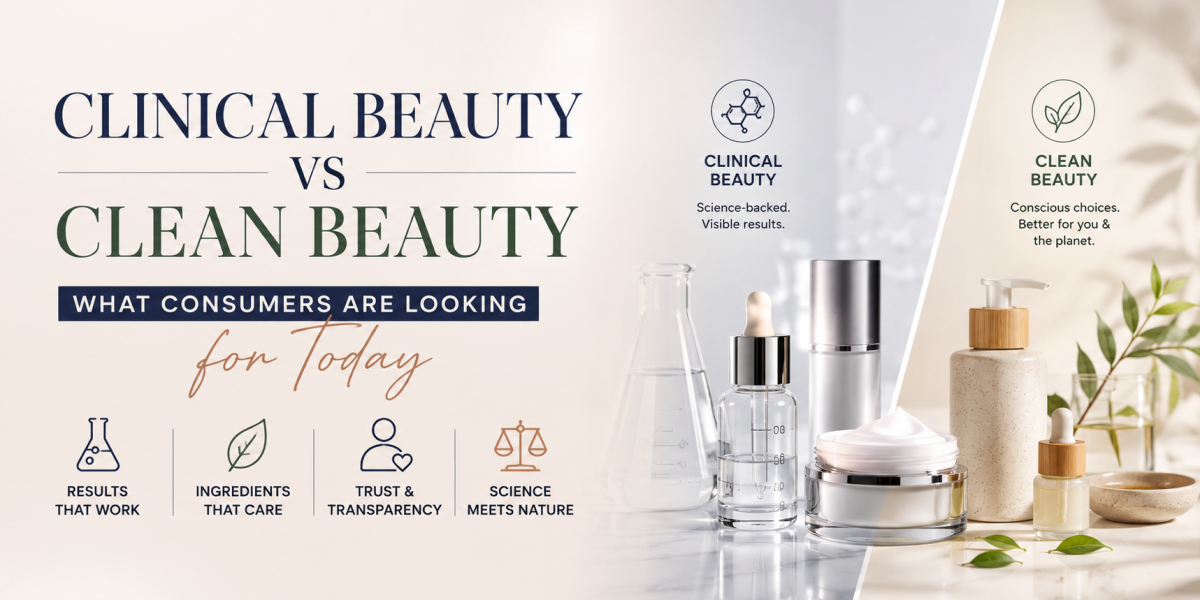
As of today, when you visit a beauty store, you’ll see two types of products dominating the skincare market. One part of the shelf is full of products that are made of plant-based ingredients, sustainable packaging, and clean formulas. The other half has products that are supported by active ingredients, backed by dermatological research and clinical tests.
The conversation around clean beauty versus clinical beauty has been a loud one. It shows a bigger shift in consumer preferences. As they become more educated and ingredient-conscious, consumers are keen to know what goes into their products and what works best for their skin and needs. The real results are more important to them than brand aesthetics and image.
Aspiring beauty professionals need to understand both the approaches. This will help them to understand the consumer preference, advice more holistically, personalise recommendations and build greater trust with clients.
What is Clean Beauty?
The term clean beauty is used to refer to products that are made without the use of ingredients that are harmful for skin or environment. Or, they are made with chemicals that are deemed unnecessary by brands or consumers. These may include some parabens, sulphates, phthalates or synthetic fragrances but there is no one global definition of ‘clean beauty’.
Many clean beauty brands also emphasise:
- Ingredients derived from nature or plants
- Responsible sourcing
- Cruelty-free practices
- Eco-friendly packing
- Ingredient list transparency
The movement is particularly popular with people who want to buy products that align with their personal values around wellness and environmental responsibility.
However, you need to understand just because something is natural, it doesn’t mean it’s always safe or effective. The same way, chemical ingredients aren’t always bad for skin. Each ingredient needs to be evaluated on scientific evidence, formulation, and intended use.
What Is Clinical Beauty?
Clinical beauty means products that are clinically tested and developed with scientific research. These formulations often include active ingredients designed to target specific skin concerns such as acne, pigmentation, ageing or dehydration.
Some ingredients found in clinical skincare include: Retinoid, vitamin C, niacinamide, salicylic acid, hyaluronic acid, or peptides.
Unlike traditional beauty products, clinical beauty products focus on measurable results, ingredient percentages, and evidence-based formulations. Several dermatologists, aesthetic clinics and skincare professionals actually recommend clinical products within a personalised treatment plan for better and lasting results.
Differences Between Clean Beauty and Clinical Beauty
The two categories are often seen as opposite to each other. However, both have the same goal: support healthier skin. The biggest difference is in the philosophy and communication. While clean beauty supports natural ingredients and a sustainable lifestyle, clinical beauty is based on scientific evidence and active chemical ingredients.
Another difference is the motivation behind buying a product. While clean beauty enthusiasts will be concerned about sourcing and impact on the environment, clinical beauty enthusiasts will focus on products that deliver targeted solutions to skin problems.
However, more and more brands are mixing these different approaches and creating formulations that are scientifically developed and environmentally responsible.
Today’s Consumers Want Both: Why
Modern consumers don’t fit into one neat category. The have skincare routines that include products from clean beauty and clinical beauty brands.
Maybe someone wants a gentle plant-based cleanser and a serum formulated clinically with retinol or niacinamide to treat signs of ageing or pigmentation.
Today’s buyers also expect transparency. They want to hear from brands and beauty professionals about why they recommend a product, how ingredients work, and what results can realistically be achieved. This evolution underscores the increasing importance of consultation skills and evidence-based recommendations in the beauty industry.
What Beauty Pros Need to Know
For beauty professionals, the focus should not be on choosing sides. It should be on understanding each client’s skin type, concerns, lifestyle and preferences. Professionals who understand both clean beauty and clinical beauty are more able to personalise treatments, explain ingredient choices, and recommend products responsibly.
And it is important to continue learning to keep up with what consumers want. As research advances, beauty trends change and professionals must stay up to date on new ingredients, technologies and environmentally friendly procedures while maintaining a science-based approach to skincare.
At LTA School of Beauty, students build a strong foundation in skin science, ingredient knowledge and professional consultation skills. Being educated on the latest beauty trends and evidence-based practices means future beauty professionals are able to provide informed recommendations that prioritise client safety, satisfaction and long-term skin health.
Frequently Asked Questions
1. What’s the distinction between clean beauty and clinical beauty?
Clean beauty is about transparency in ingredients, sustainability and formulations that steer clear of certain ingredients. Clinical beauty is about scientifically researched formulations and active ingredients to target specific skin concerns.
2. Clean beauty vs clinical beauty: which is better?
There is no single approach that is better in all cases. The best option depends on a person’s skin type and concerns and preferences. Many people successfully use products from both categories in their skincare routine.
3. Are natural ingredients always safer to use than synthetic ingredients?
No. Natural ingredients can still cause irritation or allergies and many synthetic ingredients have been thoroughly researched for safety and effectiveness. It’s more about how you formulate it and how you use it, rather than whether it’s natural or synthetic.