
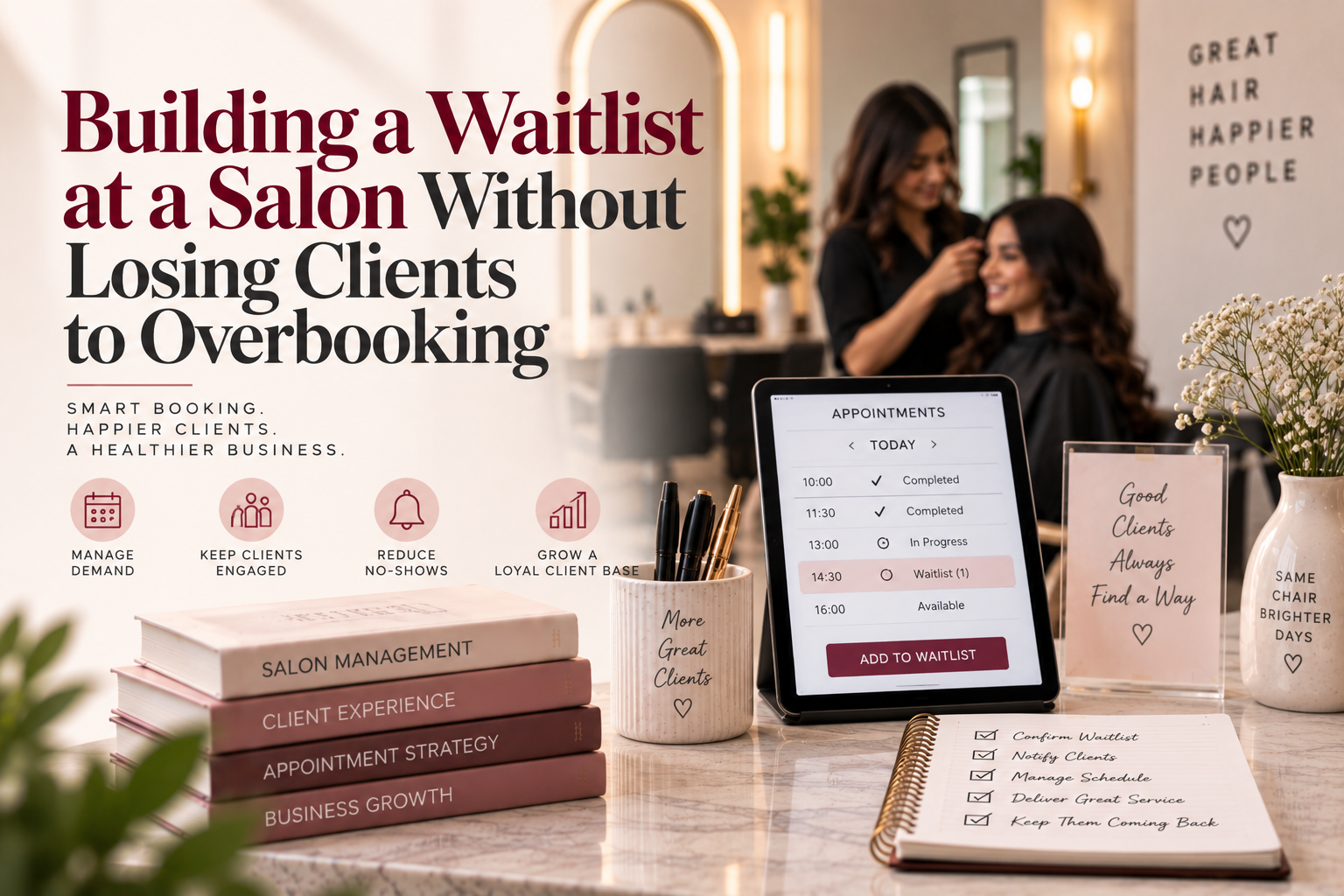
A fully booked calendar looks like success. It can also quietly become a problem. The moment “we’ll squeeze you in somehow” replaces an actual system. That instinct, double-booking a slot and hoping one client cancels, is where a lot of salons accidentally slide from busy into chaotic. A proper waitlist solves the same problem without the risk. The two are not the same thing, and mixing them up costs more than it saves. Let’s understand how to build a waitlist at a salon without actually losing any clients.
Why “Just Squeeze Them In” Backfires
Overbooking means putting two clients in the same slot on the hope that one cancels. When both show up, someone gets rushed and someone waits far longer than expected. On the other hand, the stylist ends up cutting corners to catch up. None of those outcomes build trust. They just move the problem from an empty calendar to a frustrated client sitting in the waiting area.
Waitlist vs Overbooking: They’re Not the Same Thing
A waitlist and overbooking solve the same underlying problem. They make up for unpredictable demand, in completely different ways.
- Overbooking creates a scheduling conflict on purpose. Betting that a cancellation will resolve the problem before it becomes visible to the client is playing unsafe
- A waitlist keeps interested clients in a separate queue that only gets activated when a real slot actually opens up. So, there’s no conflict created in the meantime
- A waitlist protects service quality. Overbooking risks it. A rushed service is rarely as good as an unrushed one
Building a Waitlist System That Actually Works
- Keep a dedicated, running list per stylist or per service. Steer clear of one messy combined list that’s hard to sort through when a slot opens
- Many salon booking platforms now include a built-in waitlist feature that automatically notifies the next person when a cancellation happens. This is a feature worth using instead of a manual notebook or spreadsheet
- Set a realistic expectation upfront about how likely a waitlist spot actually is to open. Don’t leave a client assuming that a spot is guaranteed
Who Gets Priority on the List?
This is a genuine judgement call, and salons handle it differently.
- First-come, first-served is the simplest and most obviously fair default. It’s the easiest to explain if a client questions the order
- Some salons prioritise long-standing, loyal clients over newer ones. That can make business sense, but only works well if it’s applied consistently. It should ideally be communicated openly rather than done quietly
- Ad hoc favouritism, prioritising whoever asks most persistently or is friendliest with staff, is the version that actually damages trust once other clients notice the pattern
Communicating Without Leaving Clients Hanging
- Give a rough timeframe for how long the wait might realistically be. Don’t leave them on an open-ended “we’ll let you know”
- Offer an alternative, a different stylist, a different day, or a slightly different time, rather than presenting the waitlist as the only option
- Follow up proactively when a slot opens, instead of expecting the client to keep checking in themselves
Turning a Full Book Into Future Revenue, Not a Lost Client
A client who’s told “we’re fully booked” and nothing else often just books somewhere else. That’s a missed opportunity that didn’t need to happen.
- Capture the client’s contact details even when there’s no slot available right now, so they can be offered the next realistic opening directly
- Proactively suggest the next available date instead of leaving the client to figure out when to try again
- A full calendar today doesn’t have to mean a lost client permanently, if the follow-up actually happens
At LTA School of Beauty, students learn the operational skills behind managing a busy salon floor, not just the technical services. Through understanding how a proper waitlist protects both service quality and client trust, they are able to confidently handle high demand without compromising either.
Frequently Asked Questions
What’s the actual difference between a waitlist and overbooking?
Overbooking deliberately double-books a slot, hoping one client cancels. A waitlist keeps clients in a separate queue that only activates when a real opening exists, with no scheduling conflict created.
Should loyal clients get priority on a salon waitlist?
It’s a valid approach if applied consistently and ideally communicated openly. First-come, first-served remains the simplest and most transparently fair default if there’s any doubt.
How do you keep clients on a waitlist without losing them to a competitor?
Capture their contact details even without an immediate opening, follow up proactively when a slot appears, and offer the next realistic date rather than leaving them to check back themselves.
Can booking software actually automate a salon waitlist?
Yes, many salon booking platforms include a built-in waitlist feature that automatically notifies the next client on the list the moment a cancellation creates an opening.