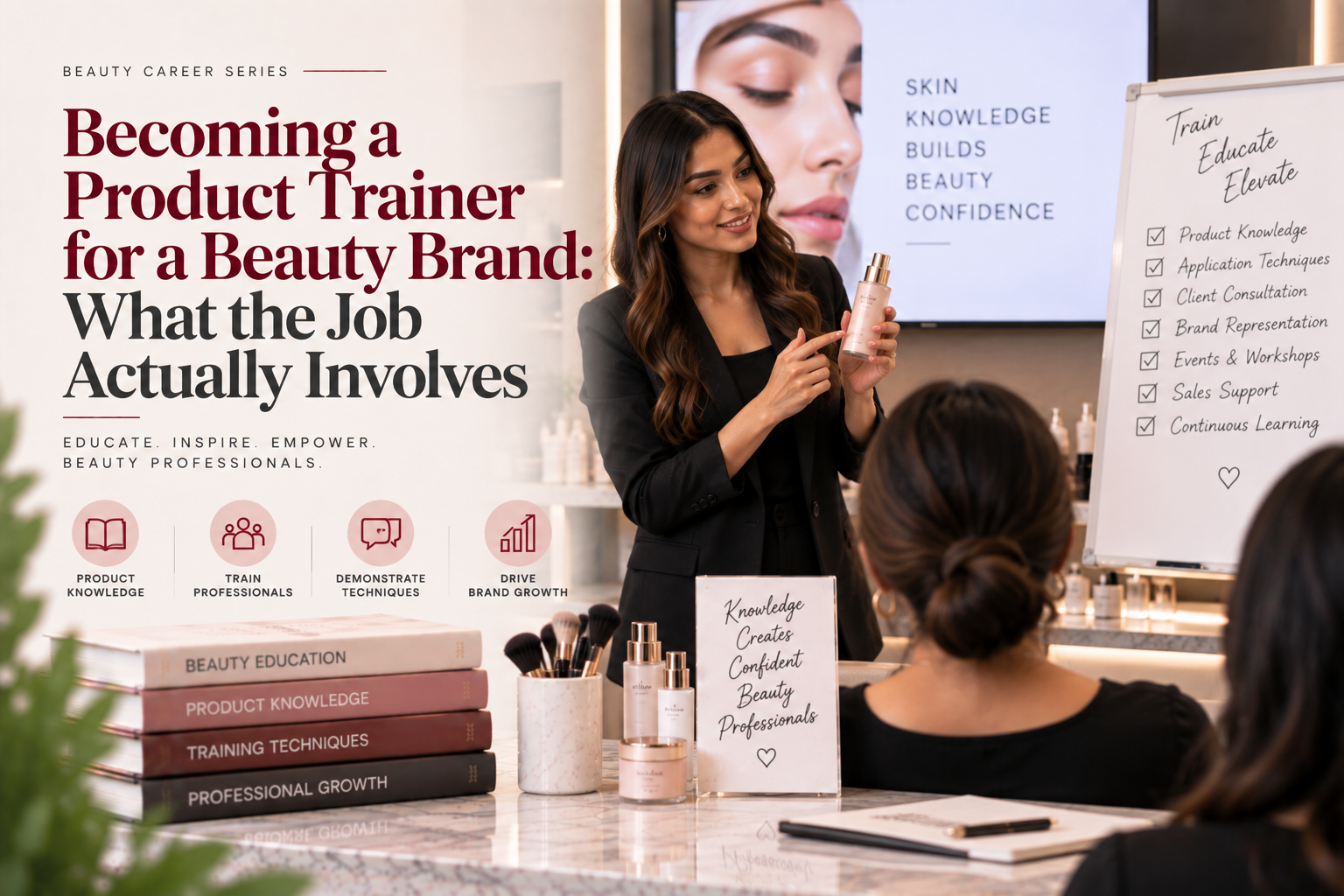
Most beauty professionals know about working in a salon, going freelance, or maybe teaching at an academy. Far fewer think about becoming a product trainer for a beauty brand. It’s a role that sits somewhere between educator, salesperson, and technical expert. It’s one of the more stable, well-paying career paths in the industry, and also one of the least understood.
If you’ve ever had a brand representative walk you through a new skincare line at a salon, or train your team on a new product launch, you’ve already seen a product trainer at work. What’s less visible is everything that goes into actually doing that job well.
What a Product Trainer For a Beauty Brand Actually Does
The job title sounds straightforward, but it covers a surprisingly wide range of responsibilities.
- Training salon staff and retail team: They provide training on how to use, recommend, and sell a brand’s products correctly.
- Running live product demonstrations: They run demos at salons, trade shows, or brand events, often in front of a mixed audience of professionals and the public.
- Creating training materials: They prepare guides, presentations, and sometimes video content that other trainers or staff members use later.
- Answering technical product questions: They solve queries from salon owners, distributors, and sometimes directly from consumers at launch events.
- Gathering field feedback: They accumulate feedback and pass it back to the brand’s product or marketing teams. It’s because trainers are often the closest link between a brand and the people actually using its products daily.
In other words, the role isn’t just “explain the product.” It’s closer to being the brand’s technical voice out in the real world.
Why This Role Exists in the First Place
Beauty brands launch new products constantly — new formulations, new ingredient technology, new product lines. But a product is only as good as how well it’s actually used, and that’s where trainers come in.
1. Salons and staff need accurate, hands-on training
A product data sheet can explain ingredients on paper, but staff need to actually see correct application techniques, understand client-matching, and get their technical questions answered in person.
2. Brands need consistency across regions
A trainer ensures that whether a salon is in Delhi or Mumbai, staff are getting the same accurate information and technique, not a slightly different version passed along informally.
3. Launch events need technical credibility, not just marketing
Anyone can read a script at a product launch. A trained product trainer can answer unscripted, technical questions on the spot, which builds far more trust with salon owners and distributors.
The Skills That Actually Matter for This Role
A lot of beauty professionals assume this job is mostly about presentation skills. That’s part of it, but it’s far from the whole picture.
- Deep technical product knowledge. Trainers need to know not just what a product does, but why — the ingredient science, the formulation logic, and how it compares to competitor products.
- The ability to simplify without dumbing down. Explaining active ingredient interactions to a room of experienced stylists requires a different approach than explaining the same thing to a general audience.
- Comfort with public speaking and live demonstrations. Training sessions often happen in front of groups, sometimes with cameras involved for brand content.
- Strong listening skills. A good trainer picks up on what salon staff are actually struggling with, not just what’s on the training slide.
- Patience with repetition. The same training often gets delivered dozens of times across different cities and teams, and it has to stay accurate and engaging every single time.
How People Actually Get Into This Role
There’s no single fixed path, but a few routes come up repeatedly.
- Salon experience first, brand role second. Many trainers start as working beauticians or stylists, build a strong technical reputation, and get noticed by brand representatives or recruited directly.
- Brand-side entry-level roles. Some professionals start in a junior brand education or retail support role and work up into full training positions.
- Certification-driven transitions. Professionals with strong formal training, especially in skincare science, often have an easier time moving into product trainer roles because brands trust their technical grounding.
What all these paths share is a strong technical foundation first. Brands aren’t just hiring good presenters — they’re hiring people who can be trusted to represent complex product science accurately.
The Real Challenges of the Job
It’s not all product launches and travel glamour. A few things make this role genuinely demanding.
- Constant travel, especially for trainers covering multiple cities or regions, which can be exhausting over time.
- Keeping up with frequent product updates, since brands regularly reformulate or launch new lines, meaning trainers are almost always learning something new themselves.
- Managing varied audience skill levels, from brand-new beauty students to experienced salon owners, often within the same session.
- Balancing brand messaging with honest technical answers, especially when a salon professional asks a pointed question about how a product compares to a competitor’s.
Why Deep Skin Science Knowledge Is What Actually Makes a Good Trainer
Here’s the part that separates an average product trainer from a genuinely respected one: the ability to explain not just what a product does, but why it works the way it does on different skin types. Salon staff can tell fairly quickly whether a trainer actually understands the ingredient science or is just reciting brand talking points.
A trainer who understands how active ingredients interact with different skin concerns can answer a tricky, real-world question confidently like why a product might not suit a particular client, or how to adjust a recommendation for sensitive skin. That kind of credibility is what makes salons trust the training, and trust the brand behind it.
FAQs
Do you need a specific degree to become a beauty product trainer?
Not always a formal degree, but strong, credible training in skincare or cosmetology is usually essential, since brands need trainers who can answer technical questions accurately.
How is a product trainer different from a brand ambassador?
A brand ambassador focuses mainly on marketing and visibility, while a product trainer focuses on technical education, teaching staff and salons how to actually use and recommend products correctly.
Is product training a full-time career or usually freelance?
Both exist. Larger beauty brands often hire full-time regional trainers, while smaller brands or seasonal launches sometimes bring in trainers on a freelance or contract basis.
What industries hire beauty product trainers besides big cosmetic brands?
Skincare device companies, professional haircare brands, and even beauty academies looking for guest trainers also regularly hire people with this skill set.