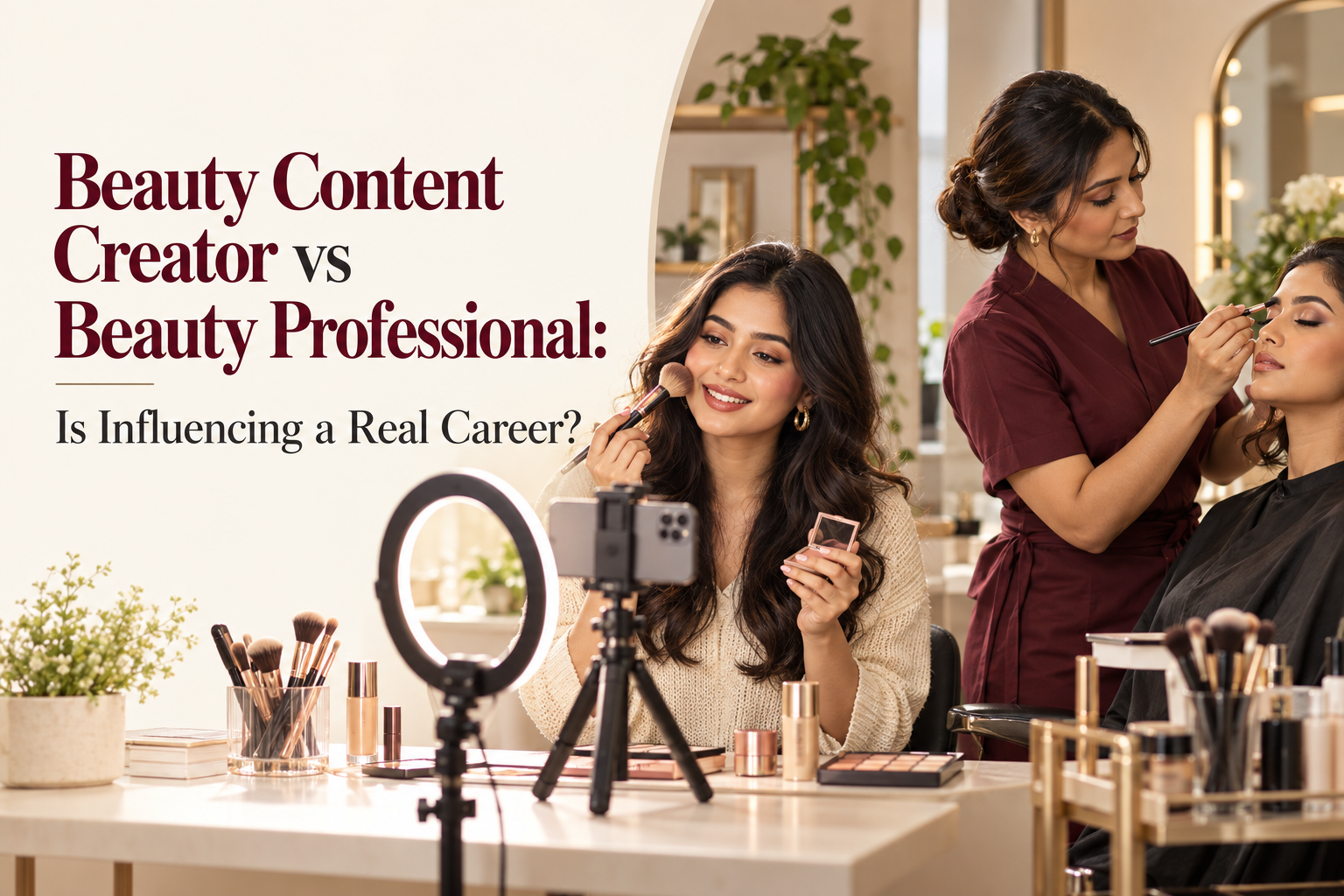
Many beauty students now ask a new question. Why spend years training when someone with a phone and a ring light can gain a million followers in a few months? So, is influencing a real career? Yes, it can be, but it works very differently from a professional beauty career. A beauty content creator earns from attention, brand deals and audience trust. A professional earns from skill, clients and repeat work. Each path has strengths and risks, and the strongest careers often combine both.
What Each Role Actually Means
A beauty content creator makes videos, photos and posts about beauty. They might review products, share tutorials, show routines or tell stories. Their business is an audience. Income comes from brand partnerships, affiliate links, platform payouts, sponsored posts and sometimes their own products.
A beauty professional provides a service or expertise. This could be a makeup artist, hairstylist, skin therapist, nail technician, educator or salon manager. Their business is skill. Income comes from client services, salary, commission or teaching.
The jobs overlap, but the skills and risks are not the same.
Side-By-Side Comparison
| Beauty content creator | Beauty professional | |
| Main asset | Audience and attention | Skill and client trust |
| Income source | Brand deals, affiliate links, platform payouts | Services, salary, commission, teaching |
| Income pattern | Can be very uneven | Steadier once clients are built |
| Entry barrier | Low, anyone can start | Needs training and practice |
| Biggest risk | Algorithm changes and brand dependence | Physical workload and limited hours |
| Credibility based on | Reach, style and personality | Qualifications, results and safe practice |
| Growth path | More reach, bigger brand deals, own products | Specialisation, senior roles, own business, teaching |
The Honest Truth About Influencer Income
Social media shows the success stories and hides the rest. A few things to know before choosing this path:
- Most creators earn little at first. Building an audience takes months or years of regular posting, often with no income.
- Income is irregular. A big brand deal one month does not mean another the next. Payments can also arrive late.
- You depend on platforms. A change in the algorithm can cut your reach overnight, and you cannot control that.
- Followers are not the only measure. Brands often look at engagement, audience quality and how well your content fits their product.
- Creating content is work. Planning, shooting, editing, replying to comments and negotiating with brands add up to a full-time job, often before any money comes in.
None of this means you shouldn’t try. It means you should plan like a business and not like a lottery ticket.
What Creators Need To Succeed
Being good on camera is only the start. Successful creators usually have:
- A clear niche. For example, skincare for Indian skin, budget makeup, or bridal looks.
- Consistency. Regular posting builds trust.
- Real knowledge. Audiences notice when someone is guessing.
- Storytelling and editing skills. The have the art of making every conversation engaging and aesthetic.
- Business sense. Pricing, contracts, invoices and taxes.
- Thick skin. Public comments can be harsh.
What Professionals Need That Creators Sometimes Skip
Beauty work involves real people and real risk. Professionals learn:
- Skin and hair science, so they know why a product works or doesn’t
- Hygiene and safety, including patch tests and consultation
- How to handle different skin tones, hair types and sensitivities
- Client communication, especially when a result is not as expected
- When to refer a client to a doctor
This is why a professional’s advice carries weight. A creator who skips this foundation can give advice that looks confident but is wrong, and followers may act on it.
The Trust Problem
Audiences have become more careful. Many followers now question sponsored reviews and unrealistic before-and-after photos. Trust is the real currency in both careers, and it is easy to lose.
If you create content, keep these rules:
- Disclose paid partnerships clearly. In India, the Advertising Standards Council of India (ASCI) has guidelines for influencer advertising, and the government has issued endorsement guidelines too. Use clear labels such as #ad or “paid partnership” as required, and check the current rules before you post.
- Don’t make medical claims you cannot back up, like promising to cure acne or hair loss.
- Only recommend products you have actually used. Looking at your feed, your generic lifestyle, and usual posts, the users can quickly and easily judge if you really use a product or you’re just recommending it as a brand deal.
- Show real results, with honest lighting and no heavy filters when demonstrating skin or makeup.
- Admit when you don’t know and refer people to a doctor for medical concerns.
The Smart Option: Combine Both
The creators who last the longest tend to have real expertise behind the content. And professionals who share their work online often get more clients without paid ads.
A hybrid career could look like:
- A makeup artist posting tutorials and bridal work, so new clients find her
- A skin therapist explaining ingredients and routines, building credibility before offering services
- A hairstylist sharing transformations and care tips, which brings people into the salon
- An educator building a following and then teaching workshops or courses
In these cases, content becomes a way to market the skill, not a replacement for it.
How To Start, Step By Step
If you want to try both paths:
- Learn the craft first. Good training gives you something real to share.
- Pick one platform and one niche. Do not try everywhere at once.
- Post consistently for a few months before judging the results.
- Keep your income diversified. Do not rely on one platform or one brand.
- Save your best work in a portfolio that lives outside social media.
- Learn the business side: contracts, invoices, taxes and pricing. Speak to an accountant about how your income is taxed.
- Protect your reputation. Be honest, disclose properly and keep learning.
Common Mistakes To Avoid
- Quitting training because “followers matter more than skills”
- Buying followers or using fake engagement
- Accepting brand deals that don’t fit your values or audience
- Giving advice outside your knowledge
- Ignoring contracts and payment terms
- Relying on a single platform for all income
- Comparing your first year with someone’s tenth
At LTA School of Beauty, students build the technical knowledge, hygiene habits and client skills that give their content and their services real credibility. By learning how skin, hair and makeup actually work, they are able to share advice with confidence, whether they pursue a salon career, a freelance practice or an online presence.
FAQs
Is being a beauty influencer a real career?
It can be, but income is uneven and depends on audience size, engagement, niche and brand deals. Many creators take months or years to earn consistently. Treat it as a business, with several income sources and clear contracts.
Do I need qualifications to become a beauty content creator?
No formal qualification is required to create content. But training in skincare, makeup or hair gives you accurate knowledge and credibility, and it helps you avoid giving advice that could harm followers.
Can a beauty professional also be an influencer?
Yes, and it is a strong combination. Sharing your work online can bring new clients, help you build a personal brand and open opportunities in teaching or brand collaborations.
Do beauty influencers in India have to disclose paid promotions?
Yes. The Advertising Standards Council of India has guidelines for influencer advertising, and the government has also issued endorsement guidelines. Creators should clearly label paid or sponsored content and check the current rules before posting.