
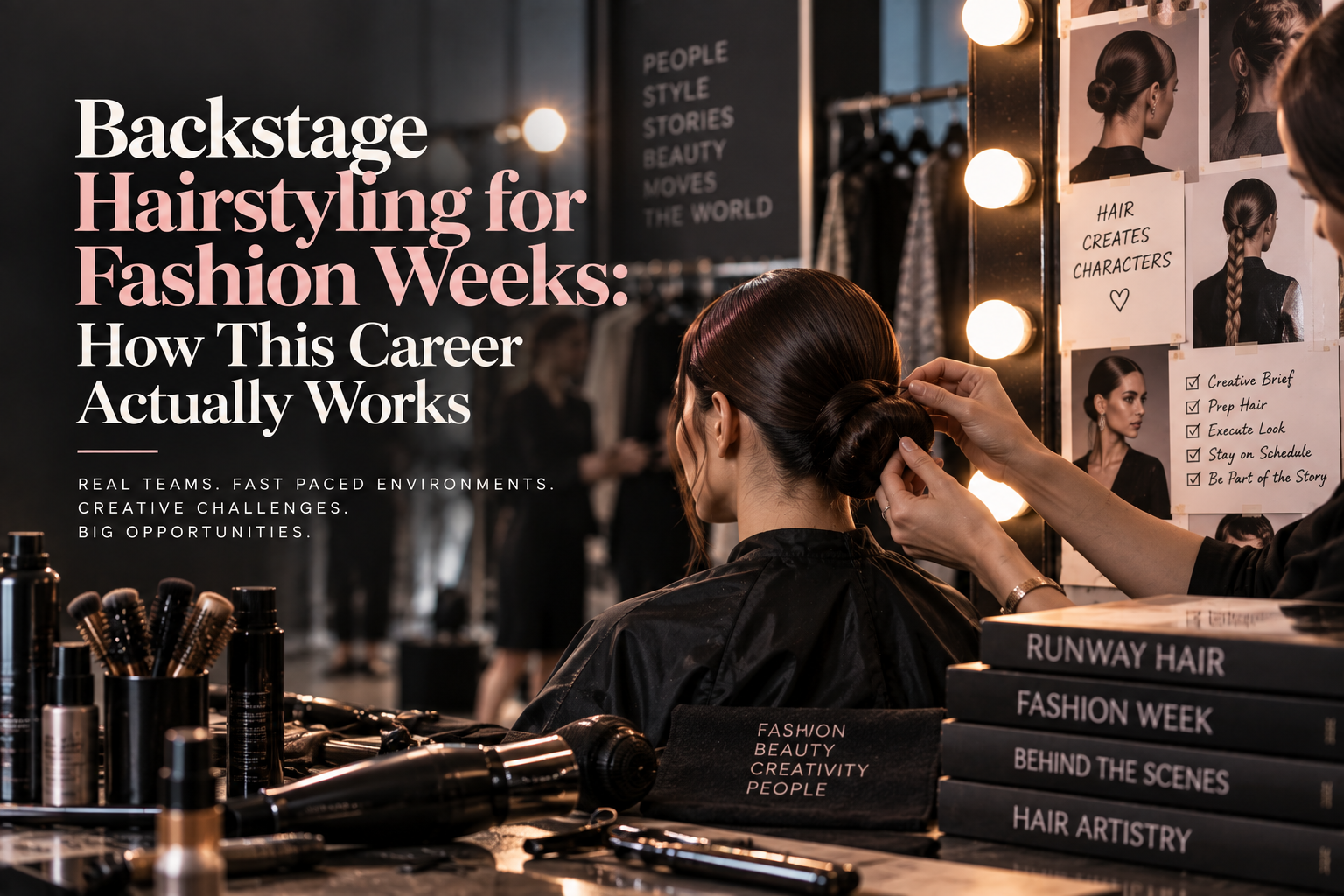
Backstage hairstyling for fashion week looks like pure creative freedom from the outside, a stylist inventing dramatic looks minutes before the runway. The reality is almost the opposite, and understanding that difference early saves a lot of confusion for anyone chasing this specific career path. Backstage session work is fast, disciplined, team-based, and built on precise repetition, not personal artistic expression. Here’s what the job actually involves, and how people genuinely break into it.
What Backstage Hairstyling for Fashion Weeks Actually Looks Like
A single fashion show can involve thirty, fifty, or more models, each needing the exact same hairstyle. These are finished in a matter of minutes per model, with the entire backstage prep completed in a tight window before the show starts. There’s no time for improvisation once the show clock starts running.
- Teams of stylists work simultaneously across multiple models at once. It’s not one stylist slowly perfecting a single look
- Speed and consistency across every single model matter more than any one look being individually perfect
- The environment is loud, cramped, and physically demanding. It involves standing and moving quickly for hours at a stretch
It’s Not Your Creative Vision, It’s Executing Someone Else’s Exactly
This is the biggest misconception about backstage work. The overall hair concept for a show is developed by a key hairstylist, working directly with the fashion designer, well before the show itself. Everyone else on the team is there to execute that single reference look identically across every model.
- A reference board or mood board sets the exact style, texture, and finish every stylist on the team needs to replicate
- Personal creative interpretation isn’t the goal here. Precision matching to the reference is
- This matters for anyone assuming backstage work is where they’ll get to show off their own signature style. That comes later, in editorial or personal client work, not on a fashion week backstage floor
The Real Entry Point: Sponsor Brand Backstage Teams
Major professional haircare brands sponsor fashion weeks and supply the backstage hair teams for many shows. This is the single most concrete, actionable entry path into this world. It is comparatively far more effective than trying to contact designers directly.
- These sponsoring brands recruit session assistants, often through open applications, salon partnerships, or brand-run training academies, specifically to staff their backstage teams
- Working as a session assistant for a sponsor brand is how most people in this field get their actual first fashion week experience
- Building a relationship with a professional haircare brand’s education or session team, sometimes by attending their workshops or events, is a realistic, practical way in, compared to hoping a designer notices an Instagram page
The Rehearsal-to-Show Pipeline Nobody Talks About
The actual show is the visible tip of a process that starts days earlier.
- Hair and makeup fittings happen with models ahead of the show, where the final look is tested, timed, and refined before show day
- A detailed hair chart or reference sheet is typically created, sometimes numbered per model. It helps every stylist backstage on the actual day can match the look exactly without guesswork
- Run-throughs and rehearsals help the entire team. Hair, makeup, and dressers work out the timing needed to get every model out on schedule
Speed Over Perfection: Why Backstage Differs From Editorial Work
Backstage fashion week work and editorial photoshoot styling both fall under “session work.” However, they demand almost opposite skills.
- Editorial work usually has hours to perfect a single look for one model in front of a stationary camera
- Backstage work has minutes per model. It requires repeated identical work across dozens of people. There’s zero opportunity to slow down and fix small imperfections
- Professionals who thrive backstage tend to be fast, calm under real time pressure, and excellent at exact repetition. On the other hand, editorial specialists lean more into patience and fine detail work
The Pay Reality Before the Reputation Pays Off
This part rarely gets said clearly enough. Early backstage assisting work is often low-paid, sometimes just covering travel, or done in exchange for the credit and experience rather than a meaningful fee.
- The real income in this career path builds later. That’s often after a stylist has enough reputation and connections to be booked directly for paid editorial, commercial, or personal styling work
- Treating early backstage work as reputation-building, not immediate income, sets more realistic expectations than assuming fashion week glamour translates to fashion week pay from day one
- Many session hairstylists maintain salon or freelance client work alongside backstage assisting in the early years, precisely because of this income gap
At LTA School of Beauty, students build the technical speed and precision that specialised paths like backstage session work are built on. Through understanding how sponsor teams, rehearsal pipelines, and exact reference execution actually work, they are able to approach fashion week ambitions with a realistic plan, not just a dream.
Frequently Asked Questions
How do hairstylists actually get backstage fashion week jobs?
Most start as session assistants for a professional haircare brand’s sponsored backstage team. That often happens through applications, salon partnerships, or brand training programmes, rather than contacting designers directly.
Do backstage stylists create their own looks for the runway?
No, usually not. A key hairstylist develops the show’s hair concept with the designer beforehand. The backstage team executes that exact reference look identically across every model.
Is backstage fashion week work paid well?
Early assisting work is often low-paid or done for experience and credit. Meaningful income typically comes later, once a stylist builds enough reputation to be booked directly for paid editorial or commercial work.
What’s the difference between backstage and editorial hairstyling work?
Editorial work allows hours to perfect one look for a single model. Backstage work requires repeating the same look accurately across many models in just minutes each, under strict time pressure.