
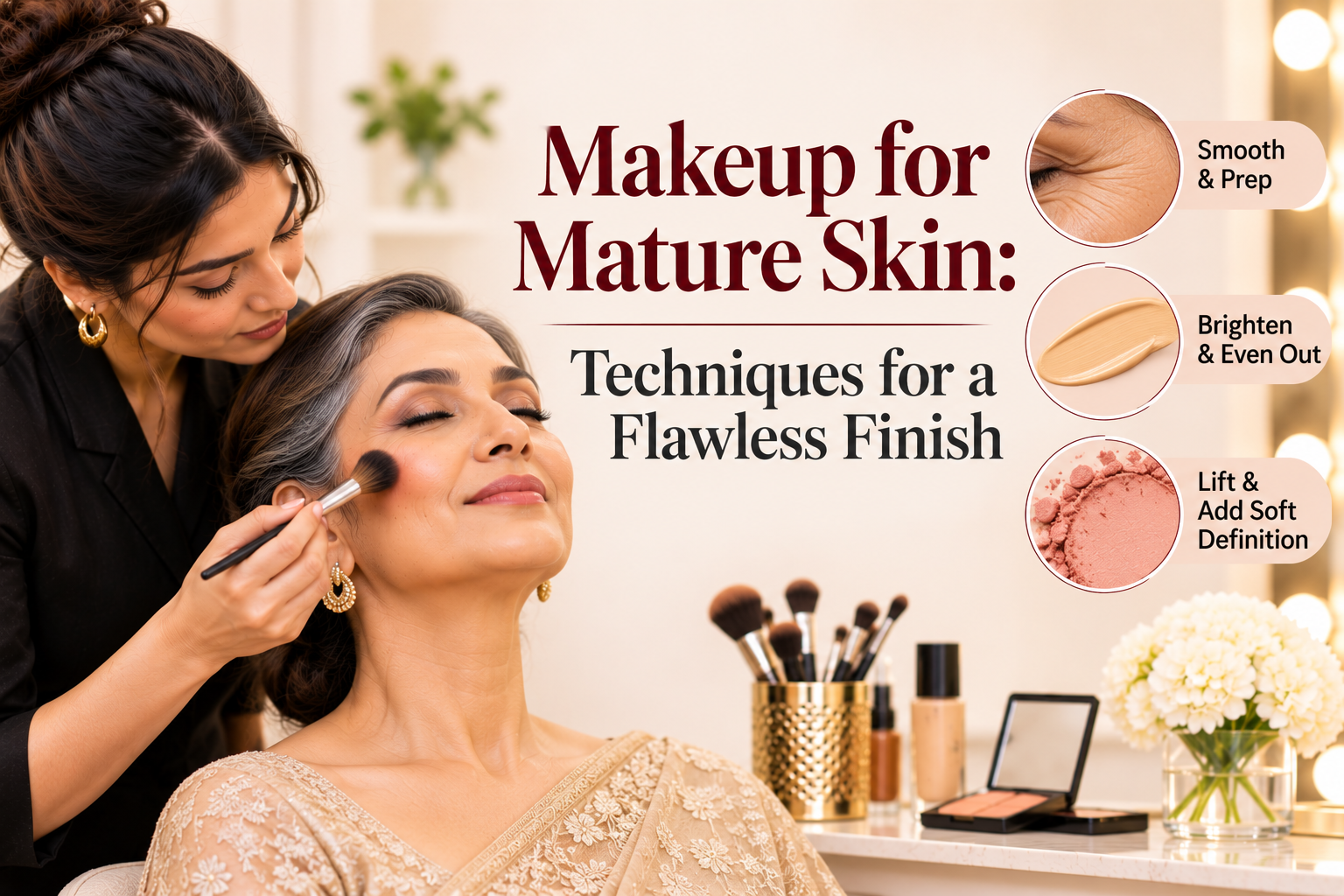
A client in her fifties sits down and says, “Please don’t make me look like I’m trying to look young.” It is one of the most useful briefs a makeup artist can get. She does not want to hide her face. She wants to look fresh, rested and like herself, on a good day. So how do you do makeup for mature skin? Hydrate well, use thin layers of a light, creamy base, concealer only where needed, soft cream colours and a careful hand around the eyes. Heavy coverage and too much powder settle into lines and make skin look older, not younger.
What Changes In Mature Skin
Skin changes with age, and each change affects how makeup behaves. Common changes include:
- Less natural oil and moisture: Skin often feels drier, and makeup can cling to dry patches. Hormonal changes, such as around menopause, can add to dryness.
- Fine lines and wrinkles: This is where product can collect and cause creasing.
- Thinner, more delicate skin: especially around the eyes. This can make the makeup look more cakey and bulky.
- Loss of firmness: This can change the shape of the eyelids and cheeks and hence requires expertise.
- Uneven tone and pigmentation, from years of sun exposure
- Visible veins, redness or broken capillaries
- Larger-looking pores in some people
- Less glow, since skin renews more slowly
Every person ages differently. Genes, sun, lifestyle and skin care all play a part. Assess the skin in front of you instead of assuming.
Start With The Consultation
Ask:
- What do you like and dislike about your makeup now?
- Is this for everyday wear or an event, such as a wedding or a family function?
- Do you have sensitivities, allergies or any recent skin treatments?
- Do you wear glasses?
- How long do you need the makeup to last?
Many clients over 50 have strong opinions about what has not worked for them in the past, such as caked foundation or too-bright lipstick. Listen closely. It tells you what to avoid.
Prep Is Half The Result
On mature skin, prep matters more than any product you add later.
- Cleanse gently. Use a mild cleanser, and avoid harsh scrubbing.
- Hydrate properly. Give the moisturiser a few minutes to absorb. A hydrating serum underneath can help dry skin look smoother.
- Protect. Apply sunscreen if the makeup is for daytime.
- Treat the lips and eye area with a suitable balm or eye cream, if the client uses one.
- Use primer thoughtfully. A hydrating or smoothing primer can help makeup glide. Heavy silicone primers on the whole face can sometimes sit oddly on dry skin, so test and apply only where needed.
- Wait between layers. Rushing leads to patchiness.
If skin is flaky, do not scrub it just before makeup. Moisturise, wait and press the product on gently.
Choose A Base That Moves With The Skin
- Pick a light to medium coverage foundation with a satin or natural finish. Very matte formulas can look flat and can cling to dry areas.
- Avoid heavy, thick foundations. They tend to settle into lines.
- Skin tints and lightweight serum foundations can work well for everyday looks.
- Match the shade at the jaw and neck in natural light. Skin tone often becomes slightly uneven over the years, so choose the shade that suits the face overall.
- Apply with a damp sponge or a soft brush, pressing, not dragging. Start in the centre of the face, and blend outwards.
- Use less around the edges. Thin product at the hairline and jaw avoids a mask effect.
Concealer And Correction
- Conceal only where needed: Dark circles, redness around the nose and any prominent marks.
- Use a creamy, light concealer, not a thick, dry one.
- Apply a small amount, and pat to blend. Too much product under the eyes can crease.
- Colour correct lightly. Pigmentation or dark circles may need a peach or orange corrector on deeper skin tones, as covered in our colour correction post. Use a thin layer.
- Be gentle around the eyes, since the skin is thin and pulls easily.
Set With Care
- Skip heavy powder. It highlights texture and dryness.
- Use a small amount of finely milled, translucent powder only where needed, such as the T-zone or under the eyes.
- Press, do not sweep. Use a small, soft brush or a puff.
- Finish with a light mist of setting spray to help layers melt together, if the skin is dry.
Cheeks, Glow And Contour
- Choose cream or liquid blush. These blend into the skin and look natural. Powder blush can emphasise dry patches.
- Place colour a little higher and more forward, on the apples of the cheeks and blended towards the temples, for a fresh look. Very low placement can look tired.
- Pick soft, warm shades. Peachy pinks, soft corals or rosy tones suit many skin tones. Choose by the client’s undertone.
- Use highlighter lightly. A fine, soft glow on the high points of the cheeks looks good. Glittery or shimmery products can draw attention to lines and texture.
- Keep contour soft. Heavy, dark contour looks harsh. A light touch of bronzer on the outer edge of the face is enough.
Eyes
Eyes often need the most adjustment.
- Brows matter. Brows can thin or lose colour. Fill sparse areas with light, hair-like strokes, using a shade close to the natural colour. Avoid heavy, dark, sharply drawn brows.
- Eyeshadow: Matte and soft satin finishes work best. Heavy glitter and very shimmery shadows can highlight crepey lids.
- Choose neutral, warm shades like soft browns, taupes, rose and bronze. Place the deepest colour in the outer corner and the lid crease, and blend well.
- For hooded or drooping lids, place the crease colour slightly higher than the natural crease so it stays visible when the eyes are open. Ask the client to look straight ahead while you check.
- Eyeliner: Use a soft brown, charcoal or black pencil smudged along the upper lash line instead of a thick, harsh line. A thin line of liner close to the lashes defines without dragging.
- Mascara: One or two thin coats, with a lash curler, open the eyes. Avoid clumps.
- Lower lash line: Go light. A heavy dark lower liner can make eyes look smaller.
- Dark circles and puffiness: Prep gently and avoid layering too many products.
Step 7: Lips
Lips lose fullness and colour, and fine lines can appear around the mouth.
- Exfoliate gently and hydrate before lipstick.
- Use a lip liner in a shade close to the lipstick. It helps keep colour from feathering into fine lines. Fill the lips lightly.
- Choose creamy or satin finishes. Very matte formulas can emphasise dryness, and very glossy ones can bleed.
- Pick flattering colours: Warm berries, rosy pinks, soft reds and nudes with a touch of colour usually work well. Match to the client’s skin tone and outfit.
- Blot and apply a second thin layer for staying power.
Special Considerations
Menopause and dry skin
Skin may feel tighter and drier. Add extra hydration, use cream products and avoid anything that stings.
Pigmentation and sun damage
Many clients have uneven tone. Use light correction and build coverage only where needed. See our pigmentation guide for the difference between types.
Glasses
Check the makeup with the client’s glasses on. Frames can cast shadows, hide eyeshadow or make eyes look bigger or smaller.
Mature bridal makeup
A mother of the bride or an older bride needs makeup that lasts through long hours and photographs well, without looking heavy. Do a trial, as in our bridal trial post.
Sensitive skin
Ask about allergies and past reactions, patch test if needed and avoid heavy fragrance.
Common Mistakes To Avoid
- Applying too much powder
- Using a thick, matte foundation that sits in lines
- Choosing a base that is too light or too pale
- Over-concealing under the eyes
- Using heavy, dark brows
- Glittery shadows on crepey lids
- Skipping skin prep
- Forgetting the neck and ears
At LTA School of Beauty, students learn how skin changes over time and how to adapt products and techniques for every face they work on. By practising on different ages, skin types and tones, they are able to deliver makeup that looks natural, comfortable and flattering for mature clients.
FAQs
What is the best foundation for mature skin?
A lightweight foundation with a satin or natural finish and light to medium coverage usually works best. Very matte or heavy formulas can settle into lines and cling to dry patches. Apply in thin layers with a damp sponge, and match the shade in natural light.
How do you apply makeup to avoid highlighting wrinkles?
Hydrate well, use thin layers of cream products, conceal only where needed and set lightly with a small amount of fine powder. Avoid heavy powder, glittery eyeshadow and thick foundation, which can collect in lines.
What eyeshadow looks best on hooded or mature eyes?
Matte and soft satin shades in neutral, warm tones, such as browns, taupes, rose and bronze. Place the crease colour slightly higher than the natural crease so it stays visible when the eyes are open, and avoid heavy glitter.
Which blush and lipstick finishes suit mature skin?
Cream or liquid blush blends naturally and avoids emphasising dry patches. For lips, creamy or satin finishes work better than very matte or very glossy ones. Use a lip liner to help keep colour from feathering.