
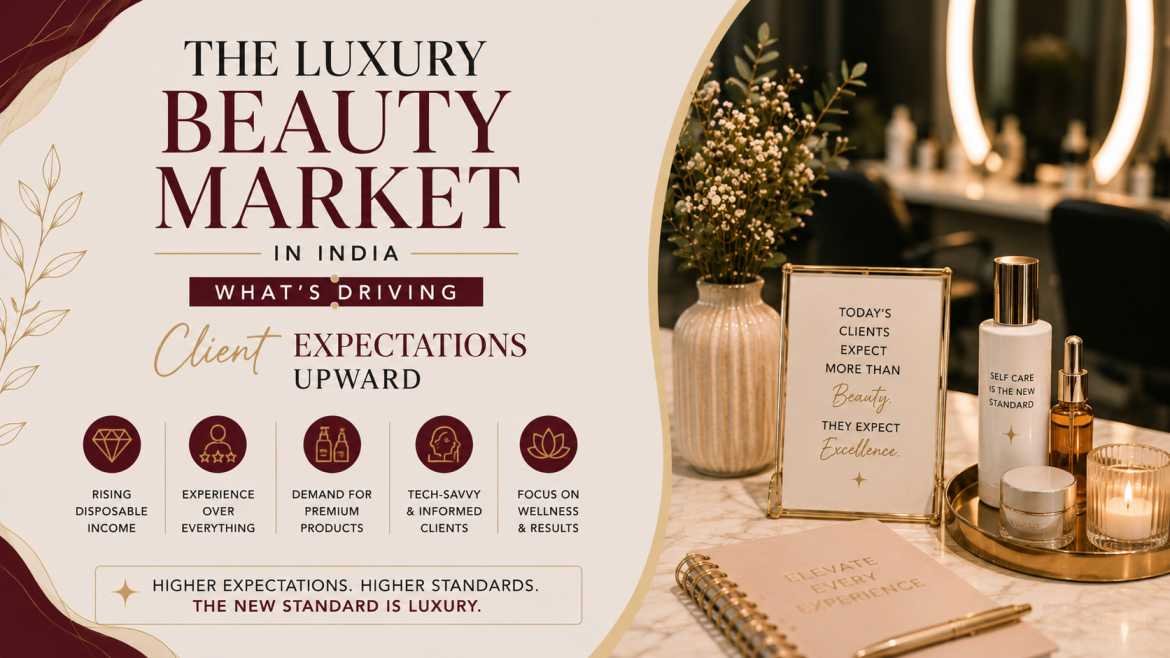
Luxury beauty in India used to mean one thing: a five-star hotel spa that only a small circle of people ever walked into. That picture is outdated now. Premium and luxury beauty are growing faster than the rest of the beauty market, and a lot of that growth is coming from cities that never used to be part of this conversation at all. This shift towards luxury beauty market matters for anyone training in beauty right now, because it’s quietly changing what a normal client, not just a wealthy one, expects to walk into a salon and receive.
What “Luxury” Actually Means in Beauty Right Now
Luxury used to be mostly about price and exclusivity. That definition is shifting.
- Personalisation: a consultation built around one client’s actual skin or hair, not a generic service menu
- Ingredient transparency: clients asking what’s actually in a product and why, not just trusting a brand name. And, experts having detailed, clear answers.
- Experience and ambience: the space, the comfort, and the overall feel of a visit matters as much as the treatment itself
- Expertise: clients increasingly care about who is actually performing the service, and what training or certification they hold
In other words, luxury today is judged as much by how a service is delivered as by what it costs.
The Numbers Behind the Shift Towards Luxury Beauty Market
This isn’t a small, temporary trend. It’s a structural shift backed by real numbers.
- India’s premium beauty segment is projected to nearly double, from roughly 1.6 to 1.8 billion dollars in 2023 to around 3 to 3.2 billion dollars by 2028
- The true luxury beauty segment is projected to grow even faster, roughly fivefold by 2035, as more global luxury brands expand their presence in India
- India’s overall beauty and personal care market is on track to reach close to 40 billion dollars by 2030, with premium and luxury categories growing faster than the market average
What makes this especially relevant for beauty students is where this growth is actually coming from.
Where the Bigger Expectations Are Actually Coming From
- Social media exposure: clients now see global skincare routines, treatments, and standards daily, and they bring those expectations into their local salon
- Homegrown premium brands: many Indian consumers now see Indian premium and luxury brands as equally credible as international ones, which has raised the baseline quality bar across the board
- Non-metro growth: a large share of premium beauty sales now comes from outside the traditional metro cities, meaning premium expectations are no longer just in Mumbai, Delhi, or Bangalore
- Weddings and festivals: spending on beauty services spikes heavily around these occasions, and clients increasingly want premium-level results even for a single event
- Rising ingredient literacy: education from social media and internet has made everyday clients well-aware about actives, formulations, and what actually works, not just what’s doing well in markets
What This Means for What a Client Now Expects in the Chair
- A real consultation, not a rushed five-minute chat before the service starts
- Clear answers about what products and actives services use, and what they can do for that specific skin or hair type
- Visible hygiene and process standards, not just a clean-looking space
- Honest recommendations rather than a generic upsell, since informed clients notice the difference quickly
A client who reads ingredient lists online isn’t going to accept a vague answer about what you’re applying to their skin.
What This Means for a Beauty Professional’s Career
This shift isn’t just a business trend to know about. It directly affects what makes a professional hireable.
- Premium and luxury salons increasingly prefer staff with internationally recognised certifications, since that credential signals a verified standard of training
- Product knowledge is becoming as important as technical skill, since clients expect a professional to explain formulations, not just apply them
- Specialising in a premium service category, like advanced skin treatments or precision colour work, tends to pay more than general, high-volume service work
- This growth is creating real job openings, not just in metro cities, but increasingly in tier 2 and tier 3 cities as premium salons expand there too
At LTA School of Beauty, students learn about evolving industry standards and how to apply them. Through understanding what today’s premium clients actually expect, from ingredient knowledge to genuine consultation, they are able to confidently step into salons that demand a higher standard of skill and service.
Frequently Asked Questions
Is the luxury beauty market in India only growing in big cities?
No. A significant share of premium beauty spending now comes from non-metro cities, driven largely by social media exposure and rising disposable income outside the traditional metro markets.
What actually separates a luxury salon from just an expensive one?
Price alone doesn’t make a salon luxury. Genuine personalisation, ingredient transparency, staff expertise, and overall client experience are what define the category today, not just a high price tag.
Why are Indian consumers trusting homegrown premium brands as much as international ones?
Many Indian premium and luxury brands now match international ones on formulation quality, packaging, and marketing, and consumers increasingly judge brands on results and ingredient credibility rather than country of origin.
Does this trend create more job opportunities for trained beauty professionals?
Yes. As premium and luxury salons expand into more cities, demand is rising for professionals with strong product knowledge and recognised certifications, not just general service experience.