
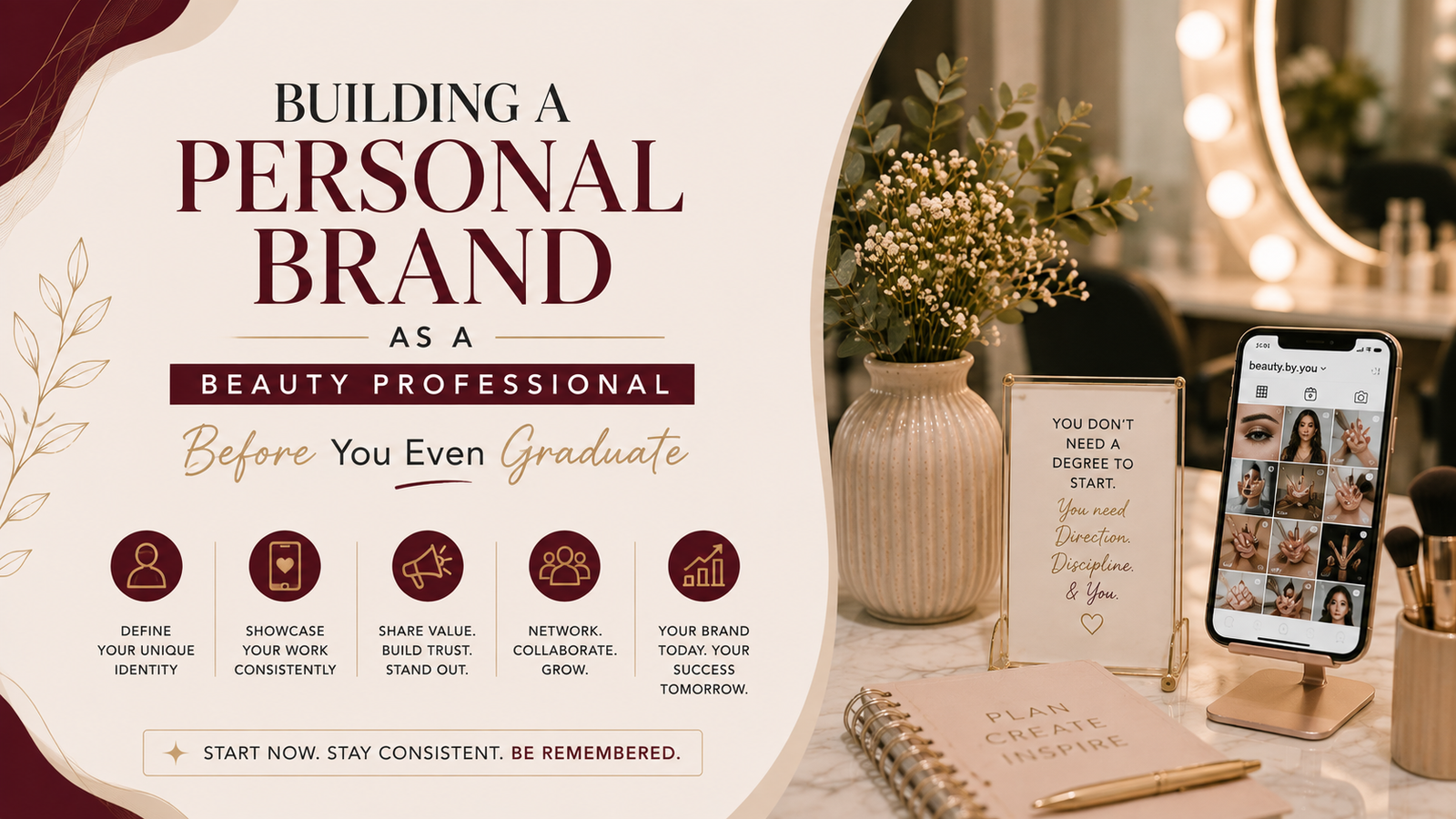
Most beauty students think of personal branding as something to worry about after they get certified and land a job. That order is backwards. By the time you graduate, students who started building a presence during training already have a following, a recognisable style, and clients who ask for them by name. The ones who waited are starting from zero at the exact moment they should be earning their first real income. This guide covers what building a personal brand as a beauty professional looks like while you’re still in class, not after.
Why Waiting Until Graduation Is a Mistake
A personal brand takes time to build. It’s not something you switch on the day you get your certificate. Every practice session, every model client, and every guided project during training is already raw material for a brand, if you treat it that way instead of throwing it away once the class ends.
- Following and trust build slowly, so starting early means you already have both by the time you’re job hunting
- Employers notice candidates who show up with an existing online presence and a body of work, not just a certificate
- Practising in front of an audience, even a small one, builds confidence faster than practising in private ever does
Your Personal Brand as a Beauty Professional Is Not the Same as Your Salon’s Brand
This is the one distinction most students miss. A salon’s Instagram page belongs to the salon. If you leave that job, the followers, the page, and the reputation stay behind. Your personal brand is different. It’s built around your name, your style, and your own account, and it moves with you to every job you take afterward, or into your own business if that’s the eventual goal.
- Post your own work on your own personal account, even while training, in addition to anything the salon later asks you to post on theirs
- Develop a recognisable style or specialty early, whether that’s a particular makeup finish, a colour technique, or a nail art style, so people remember you for something specific
- Think of your salon job as a stage to perform on, not the only place your reputation lives
What to Actually Document While You’re Still Training
A common mistake is only posting the perfect, finished result. That’s not what actually builds trust with an audience.
- Show the process, not just the final look. A quick clip of a technique in progress often gets more engagement than a static after photo, because it shows real skill, not just a filtered result
- Document practice work honestly, and label it as student or practice work where relevant. Overstating results before certification is both misleading and easy for a trained eye to spot
- Keep a simple, consistent way of photographing your work: same lighting setup, same angle, same background where possible, so your page looks like one coherent body of work rather than a scattered collection
Building an Online Presence Without Overpromising
The line between confident self-promotion and misleading marketing matters more in beauty than in most fields. This is because the promises are about someone’s face, skin, or hair. Honesty here isn’t just an ethical nicety, it’s what actually builds long-term trust.
- Never claim a result you didn’t actually deliver, and never edit a before-after photo in a way that misrepresents what the service achieved
- Be upfront that you’re a student or newly qualified professional if that’s genuinely the case. Clients often prefer this honesty over a polished but vague page that hides it
- Credit any guest models, mentors, or salons that gave you the opportunity to practice, since this is also how referrals and repeat opportunities happen
Consistency Beats Frequency
Posting five times in one enthusiastic week and then going quiet for two months does less for a personal brand than posting once a week, every week, without fail.
- Pick a realistic posting rhythm you can actually sustain around class and practice hours, rather than an ambitious one you’ll abandon within a month
- A recognisable, steady presence over months is what an employer or a future client actually notices, not a single viral post
- Engage back when people comment or message. A brand isn’t just posting outward, it’s also the conversations that build around it
Networking Is Part of Your Brand Too
A personal brand isn’t only an online presence. It’s also how you’re known among the people already working in the industry.
- Faculty, guest lecturers, and visiting industry experts are often the first source of referrals for a new professional’s first real clients
- Classmates become a future referral network too, since beauty is a smaller, more interconnected industry than it looks from the outside
- Attending industry events, masterclasses, and competitions while still training builds both visibility and skill at the same time
At LTA School of Beauty, students are encouraged to build their personal brand and professional presence from day one. Through understanding how honest documentation, consistency, and networking build recognition over time, they are able to step into their first job with a reputation and a following that’s already theirs.
Frequently Asked Questions
Should I start posting my work on social media before I’m certified?
Yes, as long as you’re honest that it’s student or practice work. Starting early means you already have a following and a body of work by the time you graduate and start job hunting.
What’s the difference between a personal brand as a beauty professional and just a portfolio?
A portfolio is a document of your best work. A personal brand is a reputation and following built around your name, which moves with you between jobs and grows over time through consistent presence, not just a one-time collection of photos.
Won’t building my own following annoy the salon I eventually work for?
Most salons appreciate staff with an existing following, since it brings clients in. Keep your personal account separate from the salon’s official page, and be clear about which content belongs where.
How often should a beauty student post to actually build a following?
A realistic, sustainable rhythm, such as once a week, consistently maintained for months, builds more trust and recognition than posting heavily for a short burst and then going quiet.