
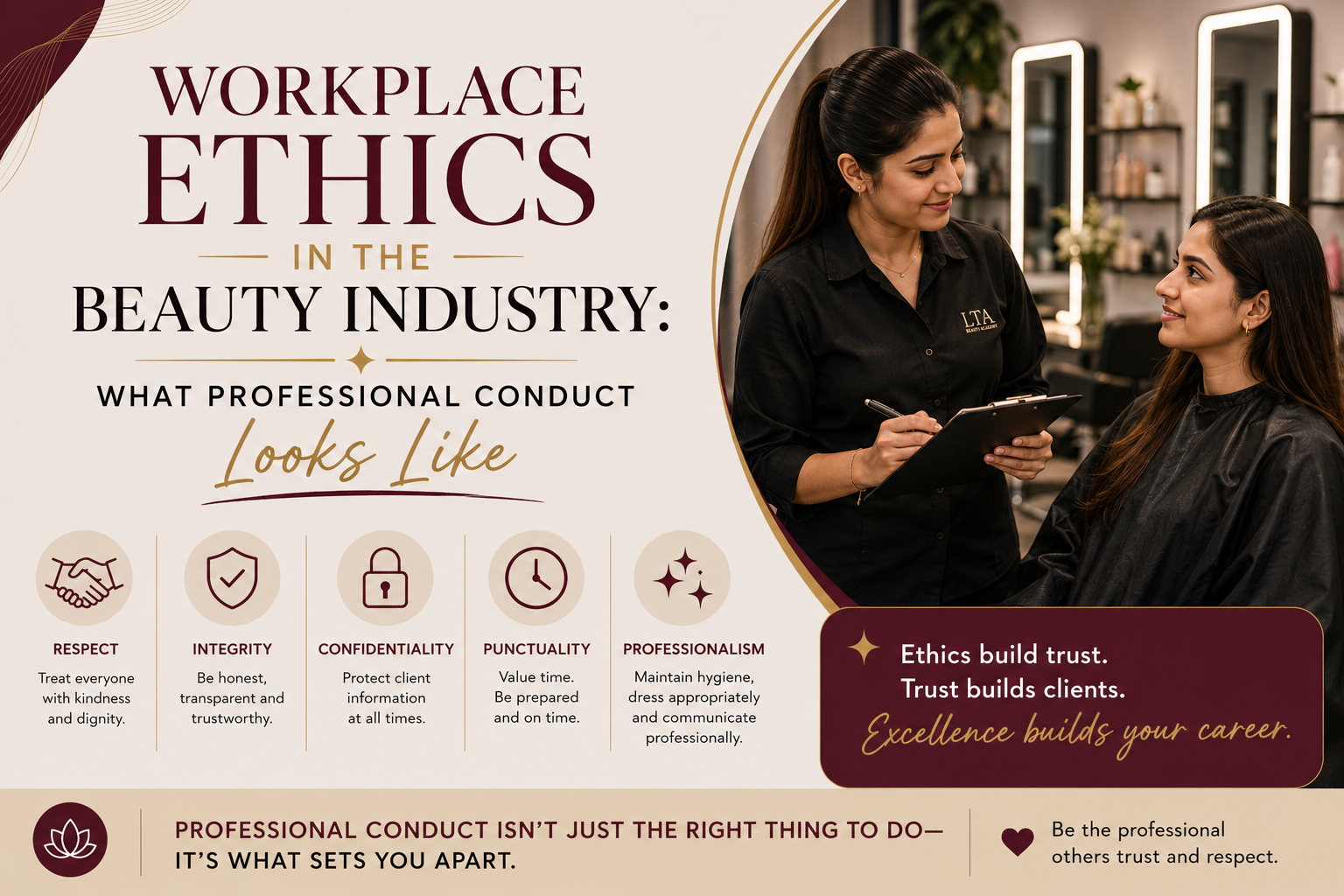
A great facial or a flawless haircut isn’t the only thing that keeps a client coming back. Trust matters just as much. Clients share personal things with their beauty professional, their skin concerns, their insecurities, sometimes even things about their personal life. They also hand over their safety, since a wrong product or a careless technique can genuinely hurt someone. Workplace ethics in beauty industry isn’t a vague idea about being a good person. It’s a set of specific, practical standards that protect both the client and the professional’s own reputation.
Why Ethics Matter as Much as Skill
Technical skill gets a client in the chair once. Ethical conduct is what brings them back, and what makes them recommend you to someone else. A technically brilliant service from someone who oversells, gossips, or cuts corners on hygiene will still lose that client eventually. Word travels fast in the beauty industry, especially locally, and a reputation for honesty is often what separates a professional with a full booking calendar from one who’s always chasing new clients to replace the ones who quietly stopped coming back.
Client Confidentiality: What Should Stay Private
Clients often talk during a service. They might mention a health condition, a personal problem, or something about their appearance they feel insecure about. None of that should ever be repeated to other clients, coworkers, or on social media, even as a funny story.
This also applies to their beauty routine itself. If a client is colouring grey hair or getting a treatment they’d rather keep private, that stays between the professional and the client. Confidentiality is what allows a client to be honest during a consultation, which is exactly what a professional needs to do their job well.
Honest Recommendations vs Upselling
There’s a real difference between recommending a treatment a client actually needs and pushing extra services just to increase the bill. A client can usually tell the difference, even if they don’t say anything at the time.
Good practice means suggesting an add-on only when it genuinely helps the result, and being upfront when something isn’t necessary.
For example, telling a client honestly that their hair doesn’t need a keratin treatment this month builds far more trust than selling them one they didn’t need. That trust is what turns a one-time client into someone who returns for years.
Consent Comes Before Everything
Consent isn’t just for medical procedures. It applies in a salon too, in more places than people usually think.
- A patch test should be explained and agreed to before a chemical service, not skipped to save time.
- A new technique or product should be explained before it’s used, not tried quietly to see how it goes.
- And before-and-after photos are a big one. Posting a client’s face or hair on social media, even to show off great work, needs their clear permission first.
Skipping these steps, even with good intentions, is a real ethical lapse, not a small oversight.
Respecting Colleagues and the Salon You Work In
Ethics also apply between coworkers, not just with clients. This means not badmouthing a colleague to a client to look better by comparison, and not taking clients away when leaving a salon by contacting them privately before officially resigning. It also means respecting shared resources, like not using salon products for personal use without permission, and showing up on time so a colleague isn’t left covering a shift alone. A salon runs on trust between staff just as much as trust with clients, and one dishonest habit tends to spread if it isn’t addressed early.
Handling Mistakes and Complaints the Right Way
Mistakes happen, even to experienced professionals. What separates an ethical response from a poor one is what happens next. Owning the mistake honestly, rather than blaming the client or making excuses, is the right first step.
Offering a fair fix, like a redo or a partial refund where appropriate, matters more than getting defensive. Clients remember how a problem was handled far longer than they remember the mistake itself.
A professional who takes responsibility calmly often keeps that client for years. One who argues or deflects usually loses them for good, along with anyone that client talks to afterward.
At LTA School of Beauty, students will learn about professional ethics and how to apply it in a real salon. Through understanding consent, confidentiality, and honest client care, they are able to confidently build a reputation clients trust for years, not just for one visit.
Frequently Asked Questions
What counts as a breach of client confidentiality in a salon?
Sharing anything a client said during a service, their health details, personal problems, or what treatment they’re getting, with other clients, coworkers, or on social media, without their permission.
Is it ethical to recommend extra services during an appointment?
Yes, if the recommendation genuinely helps the client’s result. It becomes unethical when it’s suggested mainly to increase the bill, especially if the professional wouldn’t recommend it to someone they weren’t charging.
Do salons need client consent before posting before-and-after photos?
Yes. A client’s face or identifiable features should never be posted without their clear permission, even if the intention is simply to showcase good work.
What should a professional do if they made a mistake during a service?
Acknowledge it honestly instead of making excuses, and offer a fair fix like a redo or partial refund. Clients generally judge the response more than the original mistake.