
Ask a client what colour they want and you’ll usually get a shade name off a box or a screenshot from Instagram. Ask a trained colourist the same question and they’re already thinking about three other things: what level the hair is starting at, what underlying pigment is going to show up once it’s lightened, and whether the client’s hair has been coloured before. Hair colour theory isn’t really about matching a swatch. It’s about predicting a chemical outcome before you ever mix the bowl. And, that’s the difference between a colour that holds and one that turns brassy, ashy, or patchy within three washes.
The Level System: Why Colour Starts With a Number, Not a Name
Every professional colour line is built on a level system running from 1 (black) to 10 (lightest blonde). And this number matters more than the shade name printed on the tube. Two products both called “caramel brown” can sit at completely different levels depending on the brand. So, a colourist reads the level number first and treats the name as marketing.
Lifting hair means moving it up this scale. Every level you lift strips away a different layer of natural pigment. Which is exactly why the process gets complicated the further you push it.
Underlying Pigment: The Colour That Was There All Along
Natural hair isn’t just “brown” or “black.” It’s built from a mix of eumelanin, which produces brown and black tones, and pheomelanin, which produces red and gold.
Lightening hair doesn’t remove colour, it exposes what’s underneath. What’s underneath follows a fairly predictable sequence: black and dark brown lift and shows red and orange before landing on gold, then pale yellow.
This is why a box dye gone wrong often turns hair orange instead of blonde. The formula lifts the hair, but nobody accounts for the underlying red-orange pigment sitting at that level. And nothing neutralises it.
Tone, Undertone, and the Hair Colour Theory That’s Used
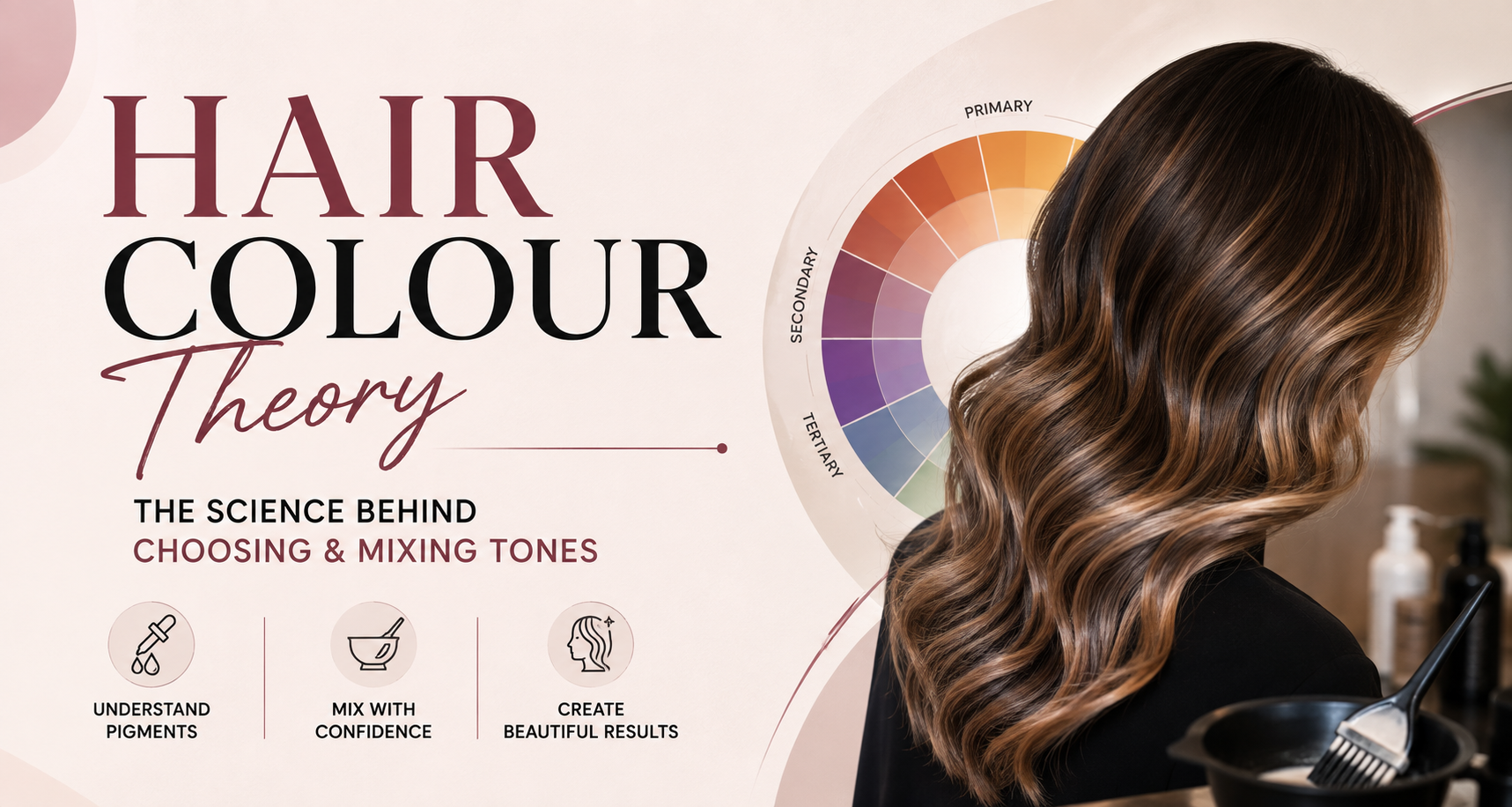
Level tells you how light or dark. Tone tells you the temperature, warm, cool, or neutral, and this is where the colour wheel comes in.
Blue-based ash tones neutralised orange, violet neutralises yellow, and green neutralises red. A colourist reaching for a blue-based toner on brassy orange hair isn’t picking it because it’s fashionable, they’re applying a specific pigment to cancel out a specific unwanted tone underneath.
Skipping this step, or misreading which undertone is actually present, is the single most common reason a colour service disappoints a client who swears they “just wanted it lighter.”
Developer Volume: The Quiet Variable Clients Never Ask About
When we mix the developer into a colour formula, it controls how much lift happens. It’s measured in volumes, typically 10, 20, 30, or 40. Higher volumes lift more but also cause more damage and more unpredictable underlying pigment exposure. So choosing the right volume is a judgment call based on the starting level, the target level, and the condition of the hair, not just “stronger is faster.” This is usually the part a client never sees or thinks about. Yet, it’s often the single biggest factor in whether a colour service damages the hair or leaves it in good condition afterward.
Why Identical Formulas Produce Different Results on Different Heads
Hand the same colour formula to ten clients and it won’t come out identical on all ten, because porosity and colour history change how the hair absorbs pigment. Highly porous hair, often from previous bleaching or heat damage, grabs colour faster and can end up darker or more saturated than intended.
Hair with prior colour on it has a colour history that a fresh formula has to work around, which is why a proper consultation involves checking a strand test and asking what’s been done to the hair in the last year, not just what colour is coming next.
At LTA School of Beauty, students will learn about the science of hair colour theory and how to apply it. Through understanding how level, pigment, and porosity interact across different hair types, they are able to confidently formulate custom colour and deliver predictable, evidence-based results.
Frequently Asked Questions
What is the level system in hair colour?
It’s a numbered scale from 1 (black) to 10 (lightest blonde). Professional colourists use it to describe how light or dark hair is, independent of the shade name printed on a product.
Why does the same hair colour formula look different on two clients?
Porosity and colour history change how hair absorbs pigment. More porous or previously coloured hair takes colour differently than virgin, low-porosity hair, even with the exact same formula.
What’s the difference between level and tone in hair colouring?
Level describes lightness or darkness on a numbered scale. Tone describes temperature, warm, cool, or neutral. This is what a colourist adjusts using the colour wheel to neutralise unwanted undertones like orange or brass.
Why does developer volume matter in a colour service?
Developer volume controls how much the hair lifts. Higher volumes lift faster but increase damage and expose more underlying pigment, so the right volume depends on the hair’s starting level and condition, not just how fast the client wants results.