
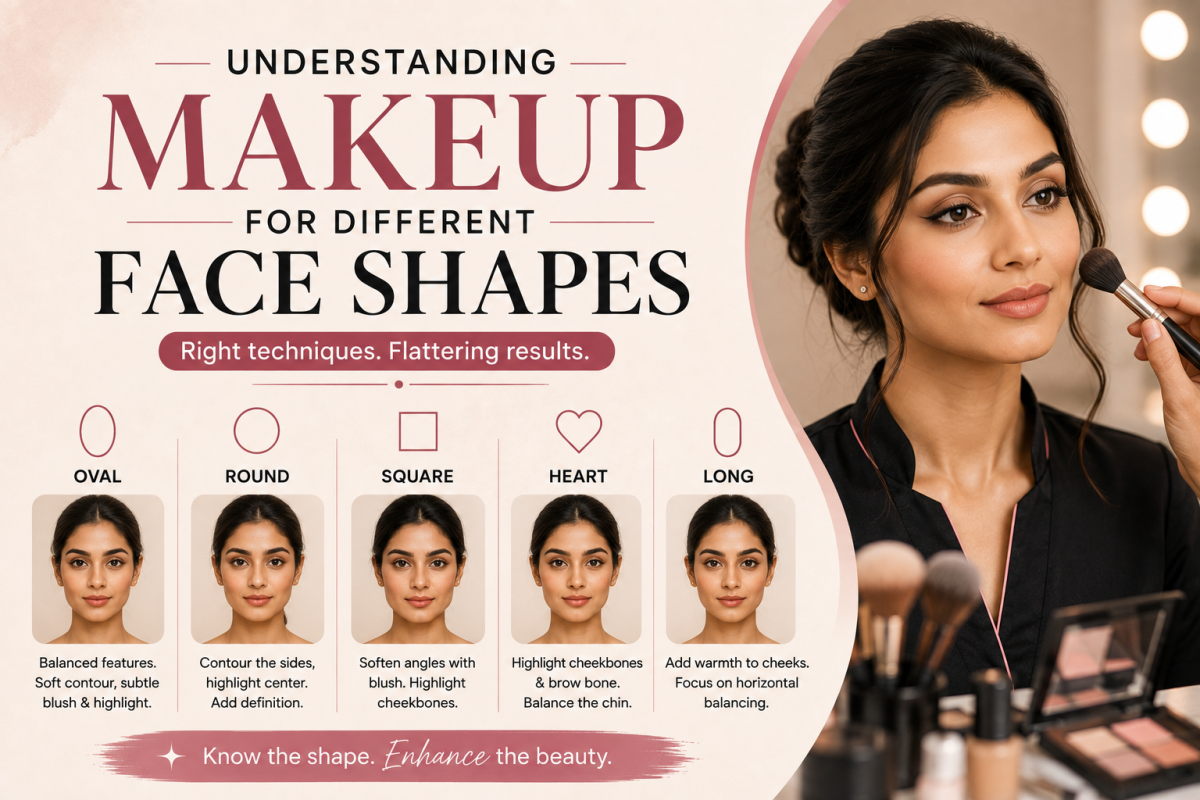
Two clients can ask for the same makeup look, but a professional makeup artist will rarely do it the same way. Wondering why? It all boils down to understanding makeup for different face shapes.
Great makeup isn’t about copying a trend; it’s about adapting techniques to the individual. A makeup artist first notices the shape of a client’s face during a consultation. It influences everything from where contours are placed, to blush, to designing eyebrows, to highlighting.
This isn’t done to change a person’s face. It’s to accentuate natural features and provide visual balance.
Why Your Face Shape is Important When Doing Makeup
Professional makeup artists don’t use one-size-fits-all techniques.
There are a variety of ways to apply contour, blush, highlighter and even to do brows to achieve different visual effects. Knowing face shape helps artists know where to add dimension, where to soften features and where to draw attention.
Face shape is, of course, only one element of the consultation. Facial features, eye shape, skin type, occasion, and personal preferences all add to the final look.
So let’s look at how understanding makeup for different face shapes can help artists to achieve perfect looks
Oval Shape
Main features
- Proportions in balance
- Soft jaw line
- Face is a bit longer than its broad
The aim
Don’t contour too much, and maintain the natural symmetry of the face.
Effective make-up techniques
- Light contour beneath the cheekbones
- Blush swept slightly upwards
- Soft highlighting on the high points of the face
- Most eyebrow styles are flattering
What to avoid
Heavy contouring that creates unnecessary definition.
Round face
Main features
- Chubby cheeks
- Soft jaw line
- Width and length are similar
The aim
To add length and definition to the face.
Effective make-up techniques
- Contour along the temples and jaw line shape
- Blend contour just under cheekbones; a little lower
- Blush goes further up on the temples
- Highlight the chin and centre of the forehead
What to avoid
Concentrating the circular blush application on the apples of the cheeks, which can emphasise the roundness of the face.
Square Face
Main Features
- High hairline
- Well-defined jawline
- Angular face shape
The aim
Tame down the hard edges and enhance the natural definition of the face.
Effective make-up techniques
- Contour blending along jaw line
- Soft diffused placement of blush
- Slightly arched or rounded brows
- Soft highlighting to the centre of the face
What to avoid
Hard contour lines that make the face look more angular.
Heart Face
Main features
- Broad forehead
- Defined cheek bones
- Pinched chin
The aim
Balance the upper and lower parts of the face.
Effective make-up techniques
- Light contouring at temples
- Blush applied a bit lower down on the cheek
- Focus on cheekbones, not forehead
- Softer lip colours can help create overall balance
What to avoid
Too much highlighting across the forehead.
Oblong Face
Main features
- Larger in length than width
- Prolonged forehead and chin
The aim
Create an illusion of width and shorten the visually.
Effective make-up techniques
- Soft contour across hairline and chin
- Blush applied horizontally across the cheeks
- Emphasis on the cheekbones rather than the forehead
What to avoid
Draw long contours vertically which make the face even longer.
Diamond Face
Main features
- High, broad cheekbones
- Forehead is narrow
- Slim jaw
The aim
Accent the cheekbones but soften the forehead and chin to add balance.
Effective make-up techniques
- Gentle sculpting of the cheekbones
- Forehead and chin area to be highlighted
- Softening blush outwards
- Gently defined brows
What to avoid
Strong contouring highlighting prominent cheekbones that can make them appear more angular.
Professional Makeup Is About Balance, Not Changing the Face
One of the most common misconceptions about makeup is that there are set rules for every face shape.
In reality, professional makeup artists treat face shape as a guide, not a limitation. Two clients with the same face shapes may need totally different techniques depending on their features, skin texture, occasion and finish they want.
That’s why consultation is one of the most valuable skills a makeup artist can learn. Knowing where to place product is important, understanding why you’re putting it there is what elevates professional makeup artistry to the next level.
At LTA School of Beauty, students are learn to analyse facial proportions before picking up a brush. They blend technical skill with facial analysis, crafting bespoke makeup looks that highlight each client’s unique features rather than simply chasing trends.
Frequently Asked Questions
Why is understanding makeup for different face shapes important for makeup artists?
Face shape can help dictate where to place contour, blush, highlighter and brows to create balance and enhance natural facial features.
Does every face shape need contouring?
No, professional makeup artists contour selectively. The placement and amount will depend on the client’s face shape, features and desired makeup look.
Can two people with similar face shape get different makeup applications?
Yes. Factors that influence how makeup is personalised include eye shape, skin type, facial proportions, age and the occasion.
Do professionals only think about face shape during a makeup consultation?
No. Makeup artists look at skin condition, undertones, facial features, lighting, outfit, occasion and the client’s likes before they settle on the final approach to makeup.