
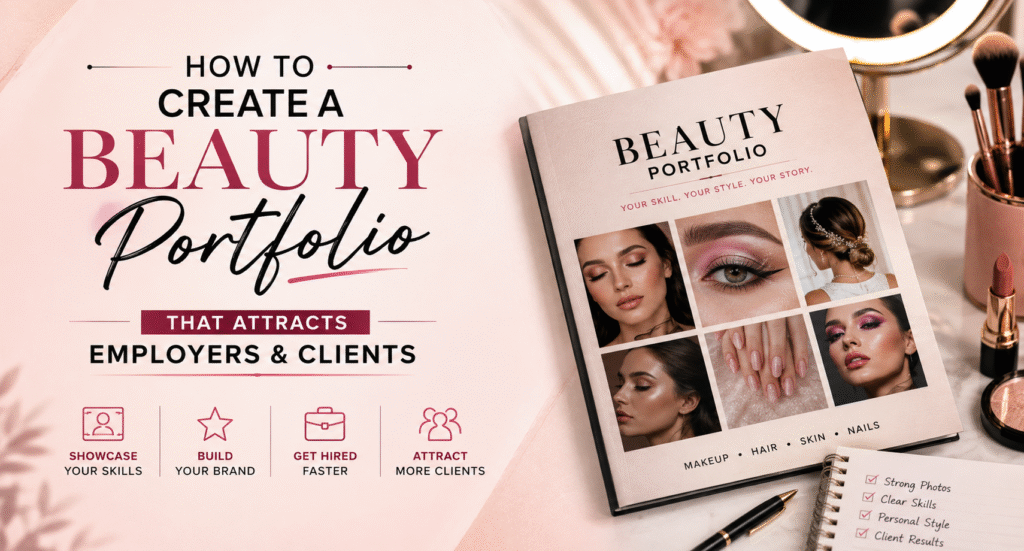
Imagine you’re giving an interview at your dream salon and the interviewer asks, “Can I see your work?” Will you have be able to present your beauty portfolio with confidence? Will it be able to do the talking on your behalf?
Beauty industry is all about giving results that are visually appealing. The employers and clients would love to hear what you’ve learnt but what they’ll be really interested in is what you can do. And, that’s where a portfolio comes in picture.
A well-curated portfolio showcases your technical skills, creativity, attention to detail and professional attitude. The work is shows is usually the deciding factor between two candidates with similar qualifications.
Whether you’re applying for a job at a salon, building your freelance career, or starting your own venture, a strong portfolio can help materialise opportunities that a résumé alone cannot.
Your Portfolio Is More Than a Collection of Photos
Many students, and even beginners, think that a portfolio is a collection of photos of their best hair and makeup looks. But, it’s much bigger than that.
It can reflect how you approach your work, solve client concerns and grow as a professional. It should show consistency, versatility and a willingness to keep learning. Wondering how?
Think of it as your visual résumé. Every page should answer an employer’s silent questions. It should be able to tell whether you can work with different clients? Are your techniques clean and professional? Do you work around the current trends without relying entirely on them? And, most importantly, would they trust you with their clients?
When it comes to a good portfolio it’s always quality over quantity.
What Every Strong Beauty Portfolio Should Include
Start with a Professional Introduction
Start by short introducing yourself in short. Mention your name, area of interest, qualifications, certifications and career aspirations. If you specialise in bridal makeup, hairstyling, skincare or nail artistry, mention it clearly.
You can also include links to your professional social media pages if they showcase your work.
Show Your Best Work, Not All Your Work
People assume that more photographs mean a stronger portfolio. In reality, a few carefully selected pictures of your best work are enough. You need to include those that demonstrate different skills and techniques and your versatility.
For example, a makeup artist might include bridal, editorial, natural and party looks. A hairstylist could showcase precision cuts, colouring, styling and textured hair. A beauty therapist may highlight skincare consultations, facials or brow transformations.
Quality images matter just as much as quality work. Use clear lighting, neutral backgrounds and avoid excessive filters that alter the final result.
Whenever possible, include before-and-after photographs. They help employers understand not only the finished look but also the transformation you’ve achieved.
Highlight Your Learning Journey
Those who continue to learn, have a better chance at success and employers know it. Showcase that in your portfolio.
Mention if you have done any certifications, workshops, masterclasses, competitions, or training programmes.
If you have taken part in fashion shows or photoshoots or an industry event, mention that too.
Include Client Feedback and Real Projects
Client testimonials, educator feedback or internship reviews: they help employers understand how professional and well-conducted you are. Even short comments about punctuality, professionalism or client satisfaction add credibility to your portfolio.
If you’ve worked on collaborative projects with photographers, stylists or fashion designers, include a few testimonials from them too.
A Common Mistake Many Beginners Make
Don’t just focus on creating dramatic looks as employers often look for versatility. They want to also know if you can create clean, consistent looks for everyday clients and not just for editorial shoots.
Your portfolio should have a balanced mix of bridal looks, everyday makeup, hair services, skincare treatments and corrective work.
Another common mistake: heavily edited photographs. Over-editing can make it difficult for employers to assess your actual skills. Natural, well-lit images are far more effective than pictures altered with filters.
Digital, Printed or Both?
A digital portfolio is essential because many employers and clients discover talent online. Your work can be shared quickly through a personal website, a professionally organised PDF or carefully curated social media profiles.
A printed portfolio remains valuable during interviews, consultations and networking events. It demonstrates preparation and allows employers to review your work without relying on internet access.
We suggest have both.
Keep Your Portfolio Growing with Your Career
Don’t treat a portfolio as a one-time project. As your skills improve, your portfolio should evolve too.
Replace older work with stronger examples. Add new certifications, competition entries, internships, client testimonials and specialised techniques as you gain experience.
At LTA School of Beauty, students are encouraged to build their portfolios from the very beginning of their training. Through practical sessions, live demonstrations, industry exposure and hands-on projects, they develop not only technical expertise but also the confidence to present their work professionally. By the time they graduate, they are equipped with a portfolio that reflects real-world skills and industry readiness.
Frequently Asked Questions
1. What should a beauty portfolio include?
A professional beauty portfolio should have a short introduction, high-quality photographs of your work, before-and-after transformations, certifications, testimonials, project experience and your areas of specialisation.
2. Do I need a portfolio if I’m a beauty student?
Yes. Even when you’re just starting out, a portfolio showcases your practical training, assignments, workshops and developing skills. It improves your chances during internships and job interviews.
3. Should I use edited photos in my beauty portfolio?
In a professional portfolio, basic edits for brightness or colour correction are okay. Avoid heavy filters or excessive retouching.
4. How often should I update my beauty portfolio?
Review your portfolio every few months or whenever you complete new certifications, projects or client work. Replacing older examples with stronger, more recent work keeps your portfolio relevant and reflects your professional growth.