
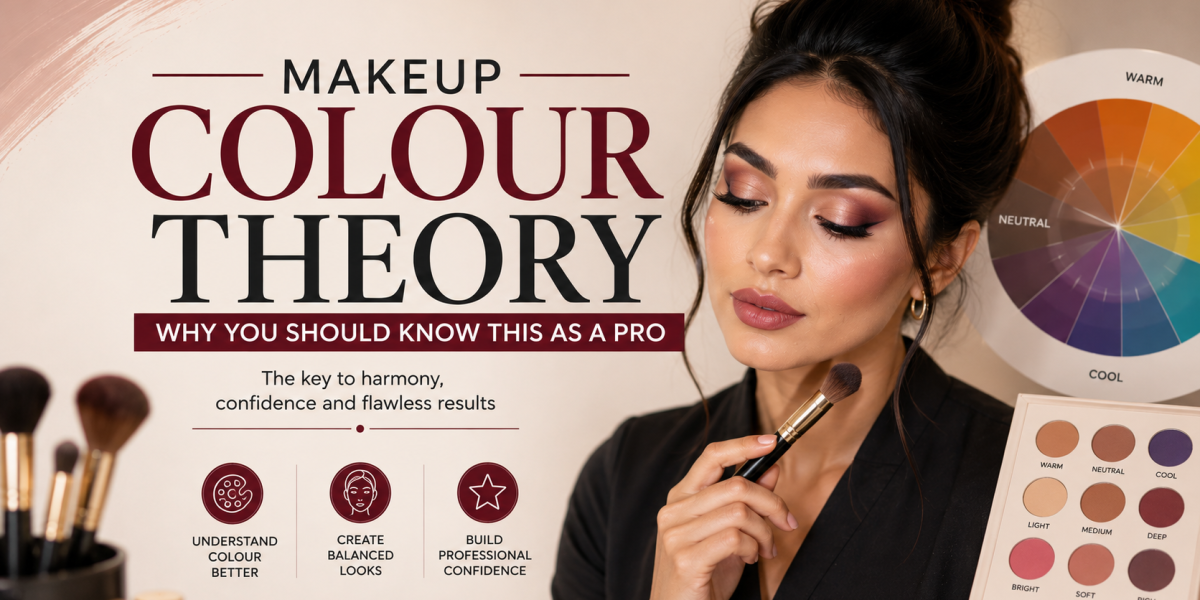
Being able to do impeccable makeup is more than about knowing latest trends or having a makeup kit full of exquisite products. It also means being able to make colours work together. Let’s delve into what is makeup colour theory and why it is one of the most useful skills for an aspiring makeup artist.
Colour theory helps professionals choose the right shades to enhance a client’s natural features. From picking the best foundation shades to choosing appropriate colour correctors as per skin conditions, and creating balanced eye looks. All of this happens perfectly with the right knowledge of makeup colour theory. Be it a bridal makeup, an editorial shoot, or a simple everyday look, honing this skill will help you get the precision, creativity and consistency right.
What is Colour Theory in Make up?
Colour theory is the study of how colours work together. In makeup artistry, it is helpful for professionals to know which shades complement, contrast or neutralise each other to achieve the desired result.
Instead of going through rounds of trial and error, one can rely on colour theory to choose products that will complement different skin tones, eye colours and facial features. It also helps in correcting common concerns such as redness, pigmentation and dark circles.
Colour theory is one of the best ways to understand how professionals can customise each makeup application rather than following a one-size-fits-all approach.
Understanding the Colour Wheel
Colour wheel is an important tool in makeup artistry. It shows the relationship between primary, secondary and tertiary colours. It helps artists to find complementary colours which lie opposite to each other on the wheel.
These complementary colours are especially useful in colour correction because they cancel each other out:
- Green can help to tone down redness from acne or rosacea.
- Peach or orange will neutralise the blue or purple of under eye circles depending on your skin tone.
- Yellow enhances dull complexions and softens light purple tones.
- Lavender or purple can help balance yellow or sallow skin and add brightness.
If an artist knows the relationships, they can easily treat discolouration due to different conditions. Thus, they can have a flawless base for a natural-looking makeup.
The Significance of Skin Undertones
A common makeup mistake that most artists commit is choosing products based on depth of skin, not undertone.
Skin tone is how light or deep the complexion is. Undertones are the subtle hues under the surface of the skin. Generally, there are three classes of them:
- Warm undertones: Golden, peach or yellow tones.
- Cool tones: Pink, red or bluish hues.
- Neutral undertones: Equal parts warm and cool.
If one can identify these undertones, they can choose the right shades of foundation, concealer, blush and lipstick. A well-chosen base should blend seamlessly into the skin. Furthermore, colours that complement the client’s natural complexion should enhance it rather than overwhelm it.
How Colour Theory Helps Colour Correction
Colour correction is one of the most useful applications of colour theory in makeup. Instead of heavy foundation to hide imperfections, professionals use colour correctors to cancel out unwanted tones before applying the complexion products.
This technique can be used to handle:
- Dark circles
- Hyperpigmentation
- Redness of acne
- Contusions
- Uneven skin colour
When done properly, colour correction creates a smoother, more even base, with less product overall. It also helps to make the makeup application last longer and look better.
Select Makeup Shades That Suit the Client
Colour theory isn’t just for foundation and concealer. It touches every single element of makeup from eyeshadow to blush to lip colour.
Professional make-up artists take skin tone, undertone, eye colour, hair colour and the occasion into consideration before choosing shades.
For instance, warm bronze and copper tones tend to look good with brown eyes, while jewel tones can make green or hazel eyes pop. Similarly, lip colour should enhance the client’s complexion and the overall makeup look rather than compete with it.
It’s not about adhering to strict rules, but about creating harmony and balance, while highlighting the individual features of every client.
Why Colour Theory Is An Important Skill For Beauty Professionals
As beauty trends change, one thing is always true: Good makeup starts with knowing colour.
For aspiring make-up artists, learning colour theory improves technical accuracy, improves client consultations and means more personalised make-up applications. It also boosts confidence working with different skin tones, facial features and creative looks.
At LTA School of Beauty students receive hands-on on such foundational concepts. Learning concepts such as colour theory prepares future beauty professionals to deliver personalised, high-quality results and adapt to the needs of each client.
Frequently Asked Questions
Makeup colour theory is the knowledge of how colours relate to and complement each other. It helps makeup artists to pick suitable shades, do colour correction and create balanced, flattering makeup looks.
Makeup artists apply colour theory when choosing products according to a client’s skin tone, undertone and facial features. It also enhances colour correction techniques for more natural and professional looking results.
Colour wheel helps to identify complementary colours which neutralise unwanted tones. Green helps to counteract redness, while peach or orange correctors help to disguise the look of dark under-eye circles.
No, but knowing the basics of colour theory is a vital skill for professionals, and can help anyone choose more flattering foundation, lipstick, blush and eyeshadow shades based on their skin tone and undertones.