
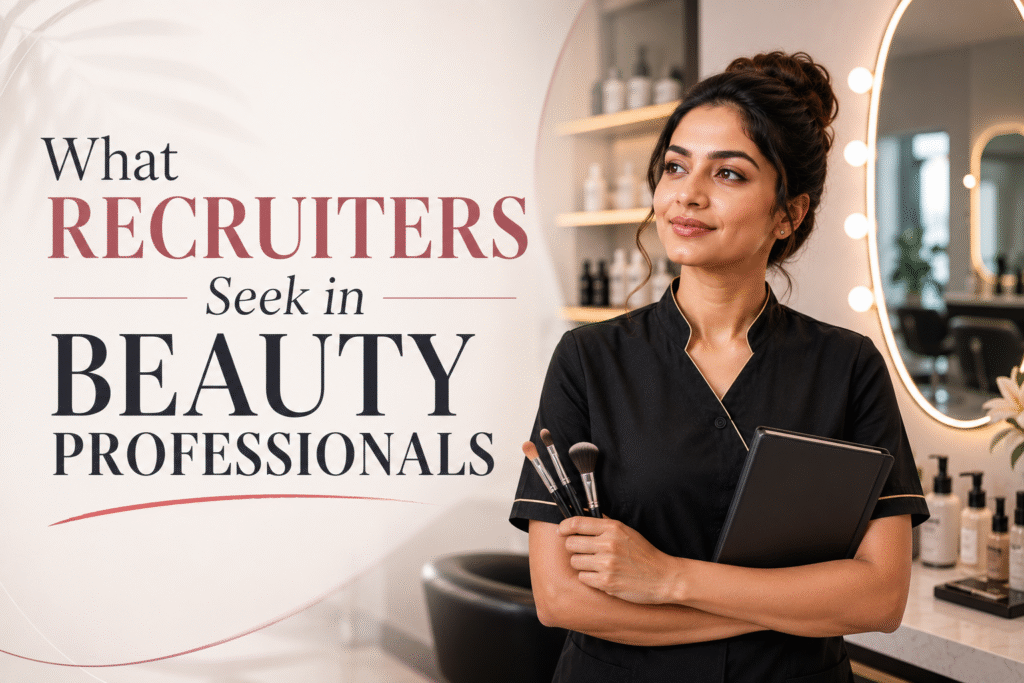
Technical skills may get you shortlisted, but the right attitude, professionalism, and industry readiness can get you hired as beauty professional.
Imagine walking into a job interview with a portfolio full of certifications and technical skills. You feel confident because you have mastered facials, makeup techniques, nail services, or beauty treatments. But here’s the question: Is that enough to secure the job for a beauty professional?
In today’s beauty industry, recruiters are looking for much more than technical expertise. While practical skills remain essential, employers increasingly seek well-rounded beauty professional who can deliver exceptional client experiences, adapt to industry trends, and represent their brand with confidence.
So, what exactly catches a recruiter’s attention?
Technical Skills Are Just the Beginning
There’s no denying that strong technical knowledge is the foundation of a successful beauty career. Whether it’s skincare, makeup artistry, nail technology, or beauty therapy, employers want professionals who can perform treatments safely, effectively, and consistently.
However, technical skills are often considered the starting point—not the deciding factor.
Most recruiters assume that candidates applying for beauty roles have received basic training. What sets candidates apart is how they apply those skills in real-world situations.
Communication Builds Client Trust
Beauty is a people-focused profession.
Clients don’t just remember a great facial or makeup application; they remember how they were treated throughout the experience.
Recruiters value candidates who can communicate clearly, listen actively, understand client concerns, and build trust. A beauty professional who can create meaningful client relationships often contributes significantly to business growth and client retention.
Professionalism Matters More Than Ever
Employers pay close attention to punctuality, grooming, attitude, and workplace etiquette.
A candidate who demonstrates professionalism during an interview often leaves a stronger impression than someone who relies solely on technical achievements.
According to Vaishali Shah, Founder & Director, LTA School of Beauty, “Beauty professionals represent more than their skills. They represent the standards, values, and reputation of the businesses they work for.”
The Importance of Continuous Learning
The beauty industry evolves constantly. New treatments, technologies, skincare ingredients, and client expectations emerge every year.
Recruiters are increasingly drawn to candidates who show a commitment to ongoing education and professional development. International certifications such as VTCT and CIDESCO often demonstrate a willingness to learn and meet global industry standards.
Digital Awareness Is Becoming a Valuable Skill
Today’s beauty professionals are expected to be comfortable with online booking systems, digital consultations, social media engagement, and client management tools.
A strong digital presence can showcase expertise and make candidates more attractive to modern employers.
The most successful beauty professionals combine technical excellence with communication, professionalism, adaptability, and a passion for continuous learning.
At LTA School of Beauty, students are trained not only to perform treatments but also to develop the confidence, industry knowledge, and professional skills that employers value most.
If you’re ready to build a career that stands out, book a consultation with LTA School of Beauty and explore internationally recognised training programmes designed for the future of the beauty industry.
FAQs
1. What qualities do recruiters look for in beauty professionals?
Recruiters look for technical expertise, communication skills, professionalism, adaptability, and a commitment to continuous learning.
2. Are certifications important when applying for beauty jobs?
Yes. Recognised certifications demonstrate professional training and can improve employability in both local and international markets.
3. Why are communication skills important in the beauty industry?
Strong communication helps build client trust, improve customer experiences, and encourage repeat business.
4. How can beauty students improve their employability?
Students can improve their employability by gaining practical experience, pursuing recognised certifications, developing soft skills, and staying updated with industry trends.
5. Do recruiters value international beauty qualifications?
Absolutely. International certifications such as VTCT and CIDESCO can enhance credibility and demonstrate adherence to global industry standards.