
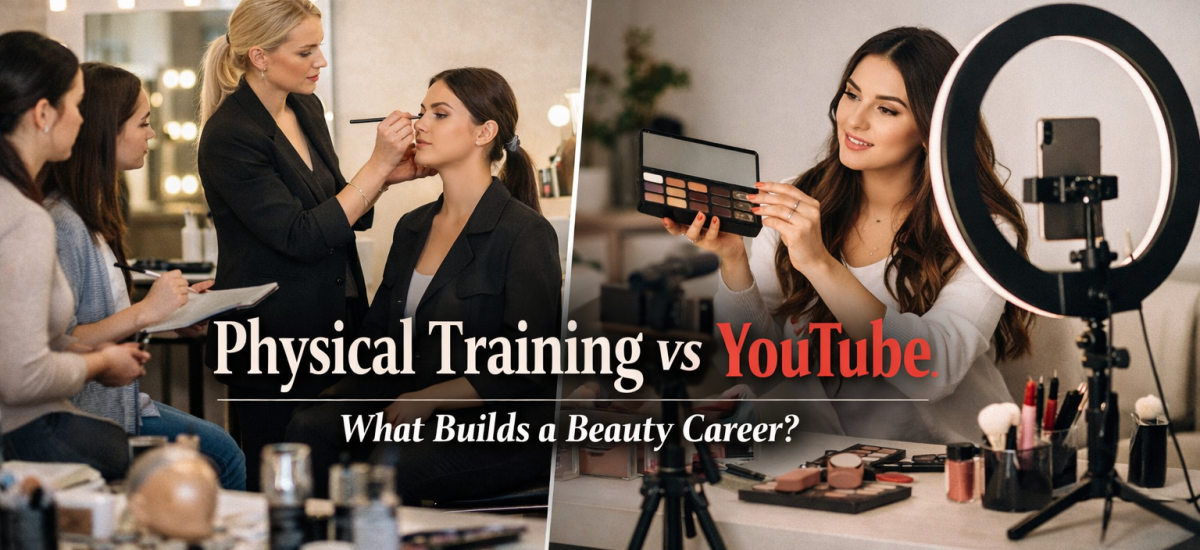
Choosing the right path in beauty education can define your career. Priyanka Parshurami highlights why structured, physical training still leads the way.
Beauty education has evolved rapidly in the digital age. Today, YouTube tutorials are easily accessible and widely consumed. They offer inspiration, global trends, and basic demonstrations. However, when the goal is a professional career, you must evaluate learning formats more carefully.
Digital learning supports awareness. It helps beginners understand techniques and terminology. Yet beauty education is a hands-on profession. Skills improve through practice, repetition, and expert correction, not passive viewing.
“Since this is a digital-first age, LTA has thoughtfully introduced basic learning modules on YouTube to make education more accessible. However, digital learning can never replace physical beauty education,” says Vaishali Shah, Founder, LTA School of Beauty.
Physical beauty training provides structured learning. Students move from fundamentals to advanced techniques in a planned manner. Instructors address errors instantly. They teach hygiene standards, posture, tool handling, and client interaction in real time. Online learning often overlooks these aspects.
In an academic environment, discipline becomes part of education. Attendance, assessments, and certifications build accountability. This professional grooming directly impacts employability and client trust.
“YouTube can complement learning, but physical training builds confidence, consistency, and professional readiness,” adds Biju Nai, Co-Founder, LTA School of Beauty
Another major distinction lies in career preparation. Physical academies expose students to live models, industry protocols, and real salon environments. Mentorship and placement guidance help learners transition smoothly into the professional world.
At LTA School of Beauty, beauty education is designed with long-term careers in mind. Courses combine practical training, expert-led instruction, and industry-recognised certification. Students are trained not only to perform services but also to sustain and grow in the industry.
Digital platforms have value. They support ongoing learning. Still, when compared closely, physical beauty training leads by decisive factors, skill mastery, professional credibility, and career outcomes.
FAQs
- Is YouTube sufficient for professional beauty education?
YouTube is useful for basics and exposure, but it cannot replace hands-on training and certification. - Why does physical beauty training matter more?
It offers live practice, expert feedback, structured progression, and career support. - Does LTA School of Beauty integrate digital learning?
Yes. LTA offers basic digital modules alongside comprehensive physical training programs.